


Taiwan Telecom’s trio of low-orbit satellite layout competition has officially entered a new stage. Far EasTone Telecom announced on May 19 that it signed a cooperation agreement with Amazon Leo, a low-orbit satellite network service, and officially became its authorized distributor in Taiwan to introduce high-speed low-orbit satellite network to the Taiwan market. The enterprise-class flagship terminal Leo Ultra has download speeds of up to 1 Gbps and upload speeds of 400 Mbps, targeting high-resilience demand scenarios such as enterprise backup, disaster prevention communications, and government critical infrastructure.
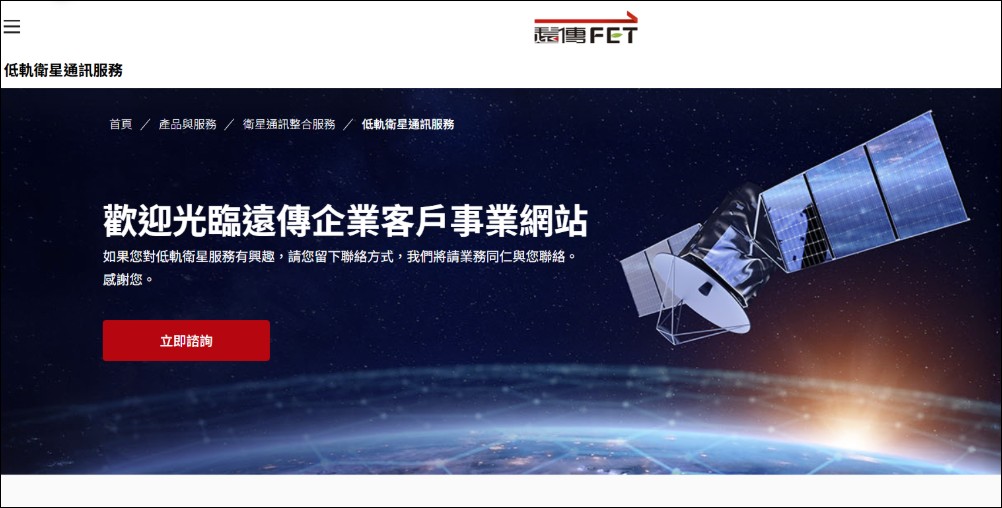
Cooperation details: Far EasTone becomes the first Amazon Leo reseller in Taiwan
Far EasTone will use its rich network operation experience and information and communications integration capabilities to provide low-orbit satellite network connection services to Taiwanese customers. Jing Qi, General Manager of Far EasTone, said, “Far EasTone has long-term investment in network construction and new technology research and development, continues to strengthen the resilience of communication infrastructure and expands its service portfolio. We are pleased to become an Amazon Leo authorized partner and work together to introduce its high-speed low-orbit satellite network services to Taiwan.”

Jing Qi further explained that low earth orbit satellites are designed to support wide coverage, low latency, and connection needs in areas where terrain or extreme weather may limit the performance of traditional networks. Special service designs are also designed to meet the needs of special industries such as maritime, agriculture, and mining. By integrating Amazon Leo into the overall network architecture and telecommunications service portfolio, Far EasTone will help public sector livelihood applications and enterprise users maintain the network connections required for critical systems and operational processes to ensure uninterrupted services.
What is Amazon Leo? Differences from Starlink
Amazon Leo is a low-orbit satellite network service owned by Amazon. It was originally named Project Kuiper and was officially renamed Leo in 2025. The plan plans to deploy more than 3,200 low-Earth orbit satellites to build a global satellite broadband network, directly challenging the dominance of SpaceX’s Starlink in the satellite network market.
Amazon launched the enterprise-level flagship terminal Leo Ultra at the end of 2025, equipped with a 19 x 30-inch flat-panel phased-array antenna, with a download speed of up to 1 Gbps and an upload speed of 400 Mbps. It is currently the fastest terminal device produced by Amazon. There are also smaller terminals available such as the Leo Pro aimed at general consumers.
According to Amazon’s official information, the Leo service is expected to officially launch commercial operation in mid-2026, taking the lead in launching enterprise version test solutions in the United States and other places. In Taiwan, Far EasTone estimates that it still needs to pass the review process of NCC and other regulatory agencies. Jing Qi recently revealed in an interview that “the application process still needs to pass six levels.” The service may not be officially launched until 2027 at the earliest.
The strategic significance of low-orbit satellites to Taiwan
Low-orbit satellite communications are not restricted by terrain and can quickly provide stable connections, making up for the difficulty in comprehensive coverage of terrestrial networks. Compared with traditional geosynchronous orbit satellite solutions, Amazon Leo low-orbit satellites have lower latency, higher bandwidth, and wide coverage, meeting the high standards of performance and reliability required by enterprises.
In the context of rising global geopolitical risks and frequent extreme climate events, low-orbit satellites have been regarded by governments as a key part of communications resilience. From the war between Ukraine and Russia to conflicts in the Middle East, all countries have realized that once submarine cables are cut off and base stations are damaged, low-orbit satellite networks are likely to be the only ones that can maintain national operations. Jing Qi also positioned low-orbit satellites as “the third layer of protection for communications resilience”: the first layer is fiber optic fixed networks, the second layer is mobile networks, and the third layer is low-orbit satellites to ensure that basic communications can still be maintained under the most extreme circumstances.
As an island country, Taiwan is highly dependent on submarine cables. Coupled with the threat of natural disasters such as frequent earthquakes and typhoons, low-orbit satellite networks have irreplaceable strategic value in strengthening the coverage of the Internet of Things, disaster relief and remote communications.
The low-orbit satellite battle situation of Taiwan Telecom’s three heroes
With Far EasTone taking the lead in seizing the distribution rights of Amazon Leo in Taiwan, the low-orbit satellite layout of Taiwan Telecom’s trio has gradually become clearer.
Chunghwa TelecomOn the other hand, as Taiwan’s telecommunications leader, it is also actively deploying satellite communications in low, medium and high orbits. Chunghwa Telecom continues to pay attention to the development of Amazon Leo and Starlink, and is also evaluating maritime satellite cooperation options, but there is currently no specific distribution or cooperation signing news.
Taiwan Big BrotherSatellite communication layout has also been launched, but currently it is mainly focused on mobile communications and enterprise solutions. The specific partners for low-orbit satellites are not yet clear.
FarEasTone was the first to get a seat on Amazon Leo this time, gaining a lead in time. However, judging from the time from application to official launch, the actual service may not be fully launched until 2027. During this period, various operators will still have the opportunity to adjust their strategies.
Amazon Leo terminal product specifications at a glance
- Leo Ultra (enterprise flagship model): Download up to 1 Gbps, upload up to 400 Mbps, 19×30-inch flat panel phased array antenna[7], suitable for government agencies, large enterprises, and data center backup
- Leo Pro (general enterprise/advanced user): Small and medium-sized terminals, providing hundreds of Mbps level connections
- Leo Standard (consumer grade): Home lightweight terminal, expected to be Amazon Leo’s main consumer product
- customer terminal equipment: The design is lightweight and efficient. Users can connect through a variety of devices of different sizes and choose a suitable solution according to their needs.
Conclusion
Far EasTone’s becoming an authorized distributor of Amazon Leo in Taiwan is not only a cooperation case between a single enterprise, but also marks Taiwan’s official entry into the Warring States Period of low-orbit satellite communications. At a time when Starlink has deployed thousands of satellites around the world and has more than millions of users, the addition of Amazon Leo has brought a healthier competitive landscape to the market.
For Taiwanese companies and government agencies, having one more low-orbit satellite service provider means more choices and more competitive prices. As the last line of defense for communications resilience, low-orbit satellites will only have increasing strategic value in an environment where Taiwan faces dual risks of natural disasters and geopolitics. Although the official opening will not be until 2027, the cooperation between Far EasTone and Amazon has already kicked off Taiwan’s space communications era.
Source: KOCPC Chinese