


At the beginning of the Internet, humans created the World Wide Web (World Wide Web) and needed a way to navigate in it. Over the decades, countless Internet browsers were born to achieve this purpose, including Netscape Navigator, Internet Explorer, Chrome, Safari, etc. Next, we will tell the historical story of the entire browser, starting with the desktop icon.

Learn the history of web browsers from desktop icons
The first web browser
Tim Berners-Lee, the same man who invented the World Wide Web, is credited with developing the first web browser. The browser he launched in 1990 was aptly named “WordWideWeb”, but the first widely popular web browser was NCSA Mosaic, launched in 1993. Early browsers would display an icon in the location of the image, which would open the image in an auxiliary application outside the browser. Mosaic was the first web browser to display images and text on the same page, which was a crucial event for the development of browsers.
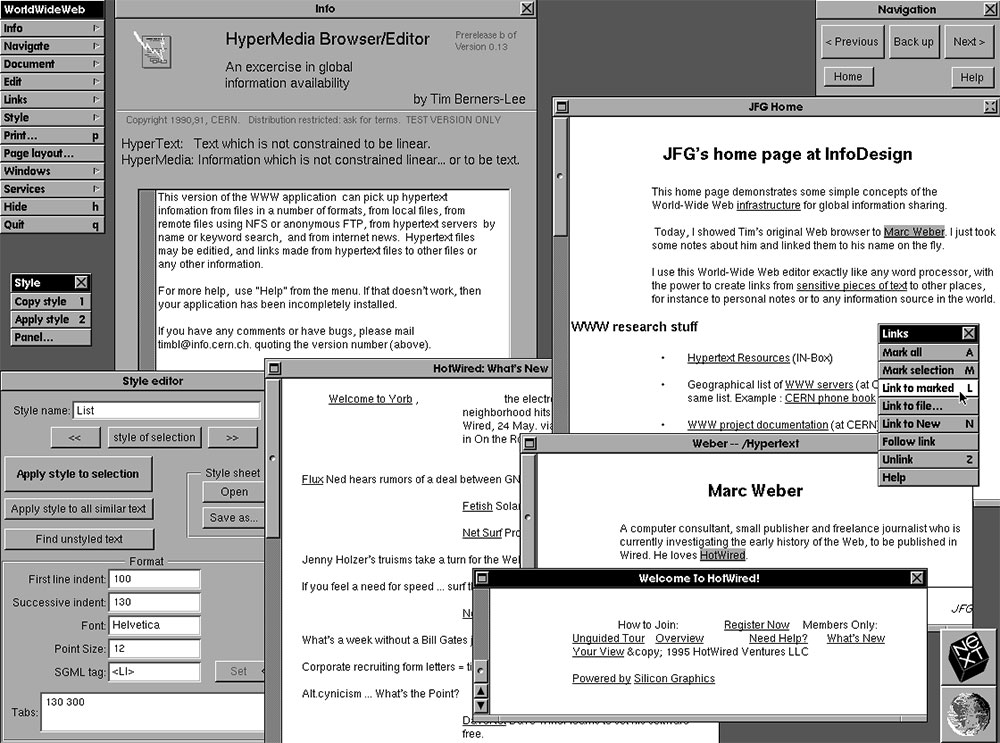
Several companies license Mosaic to build their own browsers, including Marc Andreesen, one of Mosaic’s developers. He created Mosaic Netscape in 1995, later renamed “Netscape Navigator”, and the browser wars began. You may not remember the name of the browser, but you must be familiar with the icons. Let’s take a look at the history of web browsers and their rise and fall on computers through the iconic desktop icons that millions of people use every day to launch their web experiences.
1996: Netscape is king
Web usage did grow significantly throughout 1995, with Netscape Navigator being the most popular browser at the time and Microsoft entering the space with Internet Explorer 1.0, also licensed from Mosaic. Before Internet Explorer, Windows’ built-in browser was actually an icon labeled “The Internet.” Microsoft heavily updated Internet Explorer, and by 1996 it was nearly as functional as Netscape Navigator. Still, in early 1996, Netscape dominated the entire web browser market with more than 80% of the market, while Internet Explorer had only about 10%. However, the tide changes all the time, and by the end of 1996, Internet Explorer had surpassed 20%.
1998: Internet Explorer Dominates
Microsoft released multiple versions of Internet Explorer from 1996 to 1998, and began to integrate the browser more closely with the Windows system (to put it bluntly, the built-in browser was not deleted). This also led to Microsoft being sued by the U.S. government for illegally restricting PC manufacturers and users from uninstalling Internet Explorer. Although Microsoft faced legal troubles, its strategy apparently worked. After “Netscape Navigator” changed its name to “Netscape Communicator”, the popularity of the Netscape browser quickly declined. In the third quarter of 1998, Netscape and Internet Explorer were basically the only browsers people were using, and their market share was around 48% and constantly changing. By the end of 1998, Internet Explorer’s market share jumped to 65%, while Netscape’s market share plummeted to below 40%. Netscap would never slow down, and Microsoft won the first browser war.

2004: Firefox is born from the ashes of Netscape
Internet Explorer dominated the browser space for years, peaking at around 95% market share in 2003, around the same time a new name finally entered the browser fray: Firefox.
In 2003, a non-profit organization called the Mozilla Foundation was formed to become the successor to Netscape. The browser was first named “Phoenix”, then “Firebird”, and finally “Firefox” (from birds to mammals). Version 1.0 of the browser was released in November 2004. In addition to Windows systems, Netscape and Internet Explorer are also popular browsers in the Mac ecosystem. In January 2003, Steve Jobs released the Safari browser, and launched the first public version in June 2003. Since then, Apple has also begun to get involved in the browser field.
By the end of 2004, Internet Explorer still dominated, with about 90% of the market share. Due to lack of competition, Firefox quickly rose to second place with only about 5% share, and Safari ranked third with only 1% share. The browser war began to heat up again.
2008: Say hello to Google Chrome
Firefox slowly grew in popularity in the years after its launch; Apple’s Safari made its way to Windows XP and Windows Vista. By the end of 2008, Internet Explorer still had about 65% of the market, while Firefox had jumped to 20% and Safari about 5%. A new competitor is now about to enter the fray.
Google Chrome was released as a Windows beta in September 2008, and by the time it was released to the public as a stable version in December 2008, it had reached 1% of the market. The following year, Google released beta versions of Mac OS X and Linux, and by the end of 2009, the browser’s market share climbed to 5%. Meanwhile, Firefox has made significant progress on Internet Explorer. During the brief transition from Internet Explorer 7 to 8, Firefox 3.5 was the most popular browser version. , however, it was not Firefox that eventually replaced IE.
2012: Internet Explorer is dead
After 14 years of dominance (largely thanks to the default browser on Windows), Internet Explorer finally stopped being the most used browser in 2012. It took just three years for Google Chrome to surpass Firefox, and less than a year later, it beat Internet Explorer. How did this happen? A lack of competition caused Internet Explorer to slump over the years, with only one new version coming out between 2001 and 2006, lagging far behind all other browsers, so people were more than happy to ditch IE in favor of Firefox and Chrome.
One of the big reasons Chrome has quickly become the most popular browser in the world is its intensive update cycle. Despite being released only four years ago, Google rolled out version 23 in late 2012, and people also like that Chrome is faster and lighter than other browsers. Chrome’s popularity led Mozilla to adopt a similar update strategy for Firefox, and Apple discontinued Safari for Windows in 2012.
2017: Chrome continues to dominate
By 2017, it was clear that Chrome had won what some were calling the “second browser war,” with Internet Explorer and Firefox usage falling below 5%, and even Opera, which had been a niche player for years, surpassed Internet Explorer. Chrome holds over 50% of the market, with its closest competitor being Apple’s Safari at around 15%. Realizing that Internet Explorer was essentially a dead brand, Microsoft moved to Microsoft Edge with the launch of Windows 10 in 2015, but by the end of 2017, its usage was only around 1%. The once mighty browser giant is trying to achieve a fraction of the success it had in the first browser war.
At the same time, mobile browsers became particularly popular. As mentioned before, Chrome was overwhelmingly the most popular browser in 2017, but Chrome for Android accounted for more than half of the browser’s total users. Safari on iPhone and iPad is used nearly 6 times more than Safari on macOS. Over the past decade, browser usage has shifted dramatically from PCs to smartphones.
2023: Android and iPhone, Chrome and Safari
Not much has changed in the web browser world since Chrome won the second browser war. As of June 2023, Chrome accounts for just over 60% of the market, while Apple’s Safari is the closest competitor but far behind, accounting for only 20%. Microsoft has managed to move back into third place, with Edge accounting for around 5%.

The most important thing is still the mobile browser. Chrome and Safari dominate the market thanks in large part to the dominance of Android and iPhone, with Android being the most widely used operating system in the world, surpassing Windows and macOS. Chrome comes preloaded on nearly all Android devices, and Safari comes preloaded on all iPhones and iPads. Some government agencies around the world have pushed for these practices, but by and large, Google and Apple are doing something similar to what Microsoft was in trouble for in the 1990s. Microsoft has had success over the years with Internet Explorer because it was difficult to get people to go out of their way to use a browser that wasn’t already available on their devices, and the same thing happened with Chrome and Safari.

The good news is that these browsers haven’t stagnated in the same way that Internet Explorer did when competition declined. Chrome is still known for its frequent updates and new feature rollouts, while Apple has turned Safari into a reliable browser by focusing on hardening security. Microsoft Edge has also become a decent browser, even if Microsoft can’t stop adding unnecessary features. Sadly, Firefox never returned to its popular good days in the early 2000s, and as of June 2023, Firefox only held about 3% of the market, similar to Opera and Samsung Internet.
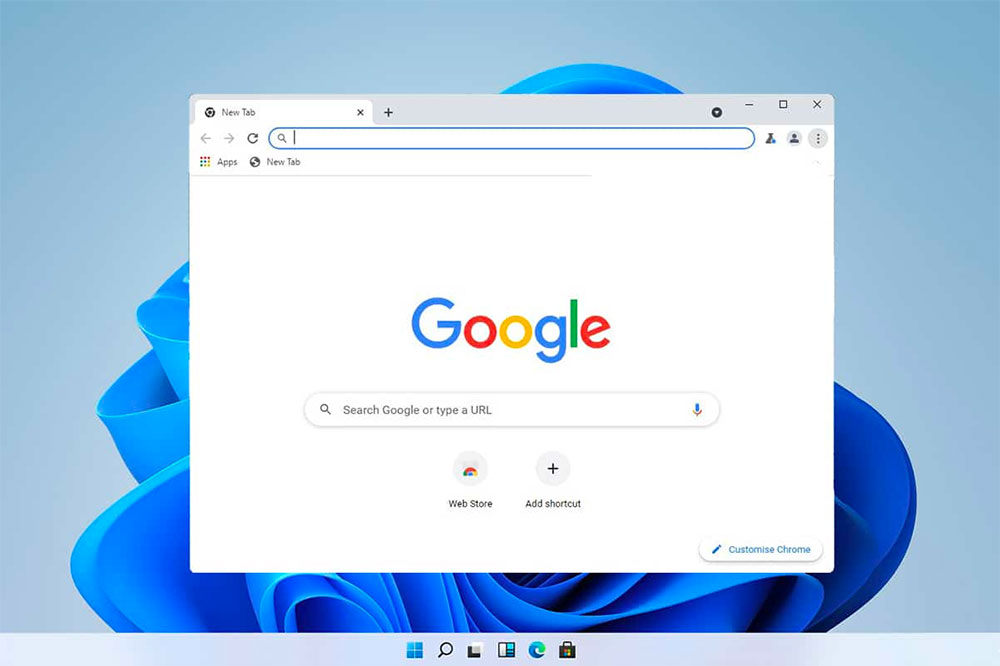
A third browser war doesn’t look like it’s coming anytime soon, but history tells us that no matter how big a technology company seems to be, it’s likely to be defeated in the war. Thirty years ago, publications proclaimed Mosaic the new face of the web, ushering in a new era of World Wide Web dominance and ushering in the demise of online service providers like CompuServe and Prodigy. But now Mosaic (and other early browsers like Netscape Navigator) are as much a ghost in history as the big companies they defeated in the first place.
Source: KOCPC Chinese