


After Apple introduced their first “spatial computing device” Vision Pro hardware to many developers who support the application ecosystem at WWDC. Although the system it runs on, visionOS, was also released simultaneously. However, the developer tools corresponding to developing applications for this system were only officially announced recently. Continue reading The visionOS software development tool is officially launched, providing three experiences of “window”, “three-dimensional” and “space” for Apple Vision Pro.
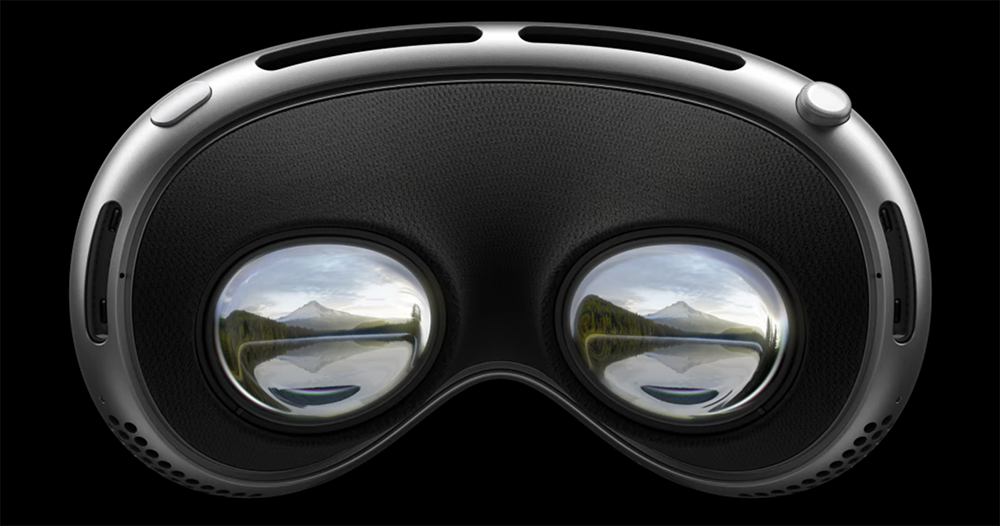
▲Picture source for this article: Apple
The visionOS software development tool is officially launched, providing three experiences of “window”, “stereoscopic” and “space” for Apple Vision Pro
After the release of Apple Vision Pro, the most eye-catching product at the 2023 Apple Developer Conference WWDC, in addition to the curious experience effects. What everyone should be more interested in is how Apple will make the so-called “metaverse” applications that have always seemed to prefer big thunder and small rain over the years to drive real popularity through the power of their powerful ecosystem.
In the same rhythm as the initial development of Apple Silicon chip computers, Apple introduced the hardware of their first “spatial computing device” Vision Pro to many developers who support the application ecosystem at WWDC, although it also announced the system it runs on, visionOS. However, the developer tools corresponding to developing applications for this system were only officially announced recently.
Not surprisingly, the software development tools provided for Apple Vision Pro are called visionOS SDK and API.
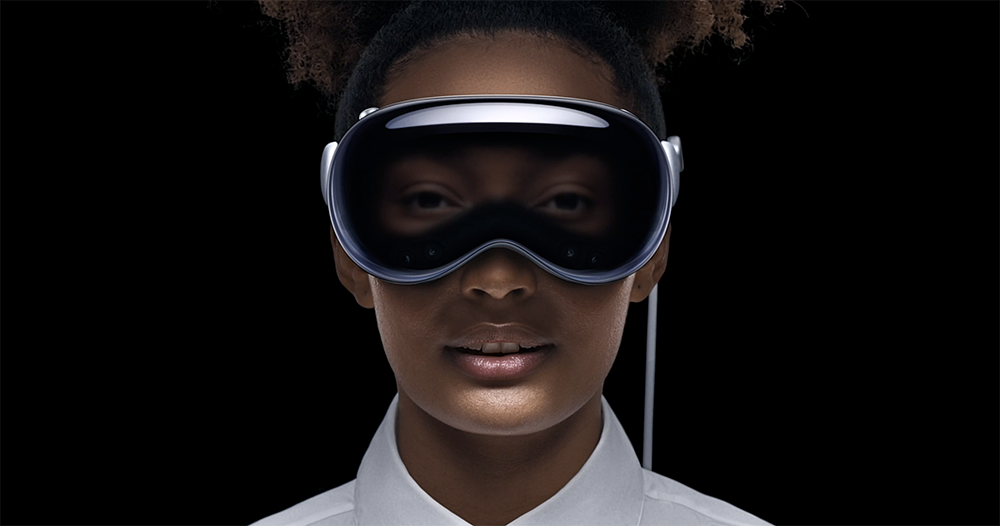
In fact, Apple has been developing augmented reality and 3D content for many years, and has already had rich basic frameworks such as ARKit and RealityKit (I won’t talk about Xcode, SwiftUI and TestFlight – actually, I will talk about it anyway).
This time, a new tool, Reality Composer Pro, has been added to Xcode that can preview and prepare 3D models, animations, images and sounds for Apple Vision Pro. In fact, according to the information, there was a Reality Composer before. It seems that the Pro version is probably designed for visionOS, right?
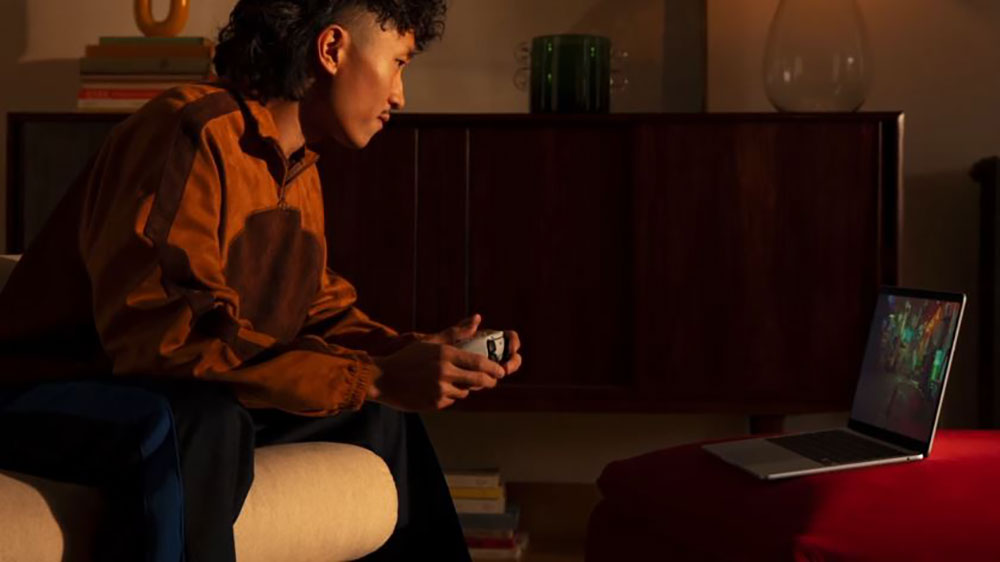
Interestingly, Apple seemed to place less emphasis on and display of gaming applications in the early days of the Vision Pro. In this press release for developer tools, Apple not only proactively mentioned new app experiences including productivity, design, games, etc. It is also announced that next month developers who use Unity creation tools to build 3D apps and games will be able to more easily port their existing Unity apps to Apple Vision Pro.
Coupled with the most amazing foreshadowing in macOS this time – Windows games can be easily ported (or even directly played first) Game Porting Toolkit development tools. To be honest, except that Mac will have a good chance to solve the pain point of lack of games in the past. Plus Vision Pro can view demonstrations from a Mac device into a virtual space similar to AirPlay desktop.
My personal guess is that in the near future, Vision Pro may be able to use more powerful Mac devices to achieve a more powerful gaming experience that exceeds the performance of M2 SoC?
Of course, the first paragraph is basically just the editor’s guess. But to a certain extent, if it can be used with other devices for collaborative computing, in addition to strengthening the tight integration of the ecosystem, maybe lower-priced visionOS devices will not be too far away?
Seriously, except for “hard to say” applications (you know). If all kinds of PC games can be easily brought to Mac or even Vision Pro to play. I believe it will definitely create another wave of topics and make consumers want to invest in this valuable device and integrate it into their daily lives in addition to the current main applications including medicine, music creation and marketing production.
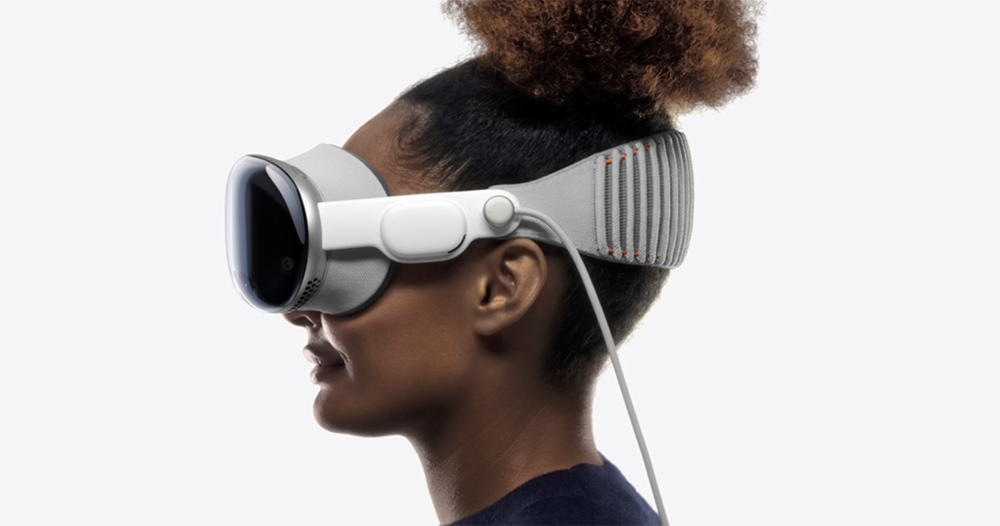
You may also be curious that the relatively expensive and rare Apple Vision Pro may not be available to developers in advance as in the past. So how do you actually verify the development results on the device after developing the visionOS app?
In fact, starting next month, Apple has planned to open developers to the developer labs specially opened for Vision Pro applications in Cupertino, California, London, Munich, Shanghai, Singapore and Tokyo to conduct actual experience verification of their applications – and to obtain relevant development support from Apple engineers on the spot. In addition, the official press release also mentioned that teams interested in developing visionOS apps will be able to apply for a development tool set to quickly build, iterate and test apps.
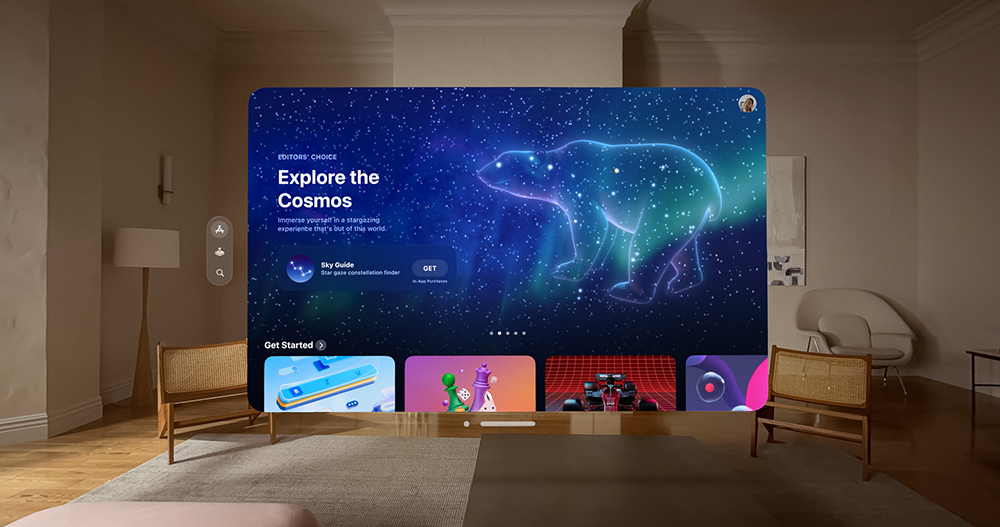
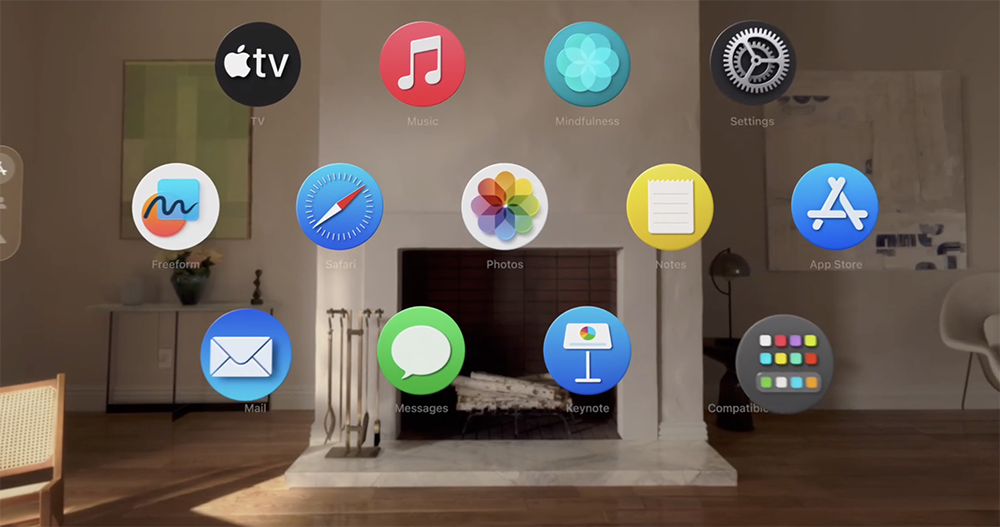
Oh, by the way, we also learned in this press release that visionOS applications are roughly classified into three types: “Window”, “Stereoscopic” and “Space”.
Among them, it seems to be the most common. It feels like just moving ordinary desktop or mobile applications directly into the “window” of visionOS. Apple has mentioned that objects with depth and 3D content can still be brought into this window – it should be like holding an iPad or iPhone to experience AR applications in real life, right?
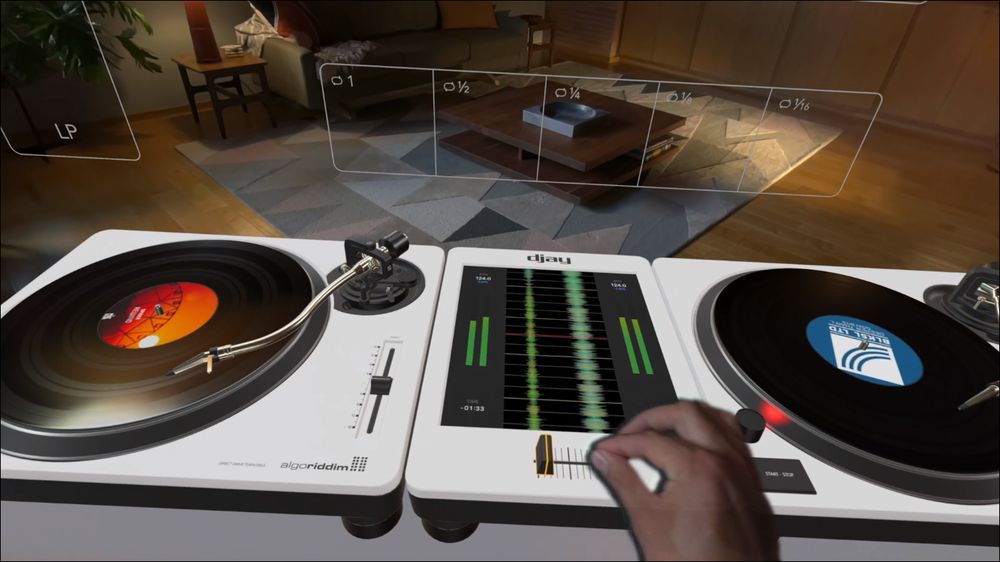
As for “three-dimensional”, you can pull the object out of the window so that people can directly pull the object in front of you and view it from any angle; “space” should not be difficult to understand – according to Apple’s explanation, it is an experience that “allows users to be completely immersed in a boundless 3D content environment.”
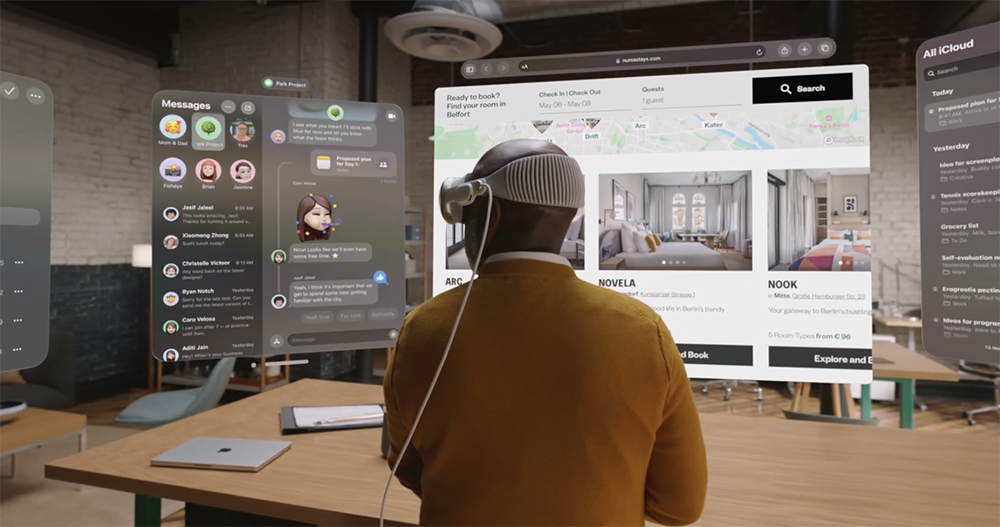
In short, the first two are basically based on mixed reality applications (unless you turn the knob to enter the visionOS virtual world that is completely isolated from the environment); the “space” should be a complete virtual reality experience.
What’s interesting is that even the “Complete HeartX”, “djay” and “JigSpace” released in this press release seem to still be of the “window” and “three-dimensional” type, which means that they tend to be mainly applications or tool windows that mix AR elements into the real space.
“PTC” can bring interactive 3D content ranging from a single product to an entire production line to visionOS. At first glance, you might think that you can use “space” to achieve a full-reality experience of the factory. But in the text description, it is mentioned very directly that it is an AR solution.
Therefore, it is currently known to be biased toward an edgeless experience, which is probably the visionOS version of “Sky Guide” that was mentioned at the press conference where you can lie down and watch the stars, as well as the experience of watching super-large-screen videos in the beautiful scenery. Even Apple’s NBA basketball game demonstration at the press conference was very conservative and stayed in the “window”.
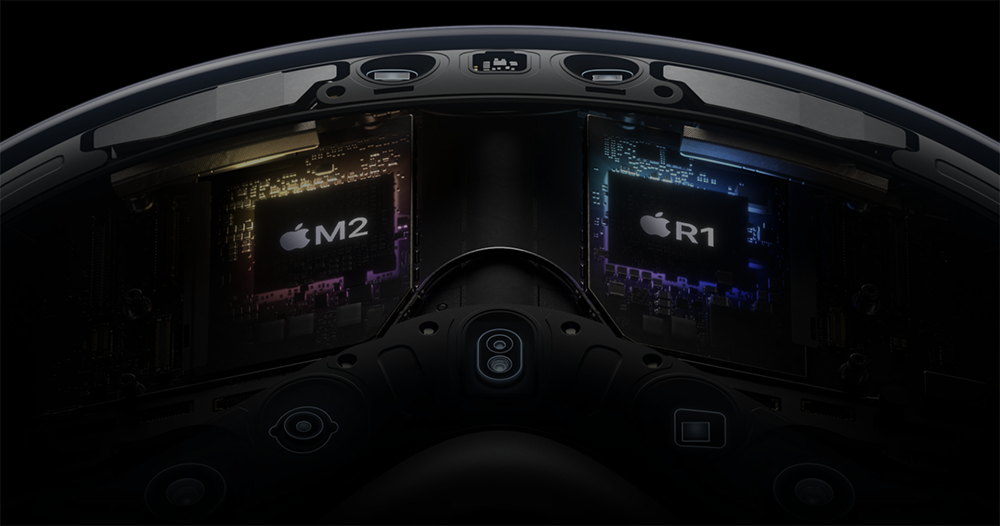
This makes people curious whether this so-called “spatial” experience of the boundless 3D content environment, after the release of the visionOS SDK and API, and the opening of the porting path with the Unity app, will bring more “spatial” applications that take advantage of the Vision Pro’s high refresh rate display panel and desktop-level processing performance.
The author speculates that Apple will have a dedicated demonstration for visionOS applications in the future – maybe it will be released together with the Apple Arcade lineup that supports Vision Pro? Personally, I think that at this stage, we should focus on the virtual reality that is still very reserved at this stage, which is the “space” application part of Vision Pro. I believe that, like the personal workspace solution introduced at the WWDC 2023 conference, some “very Apple” solutions will also be proposed for the most questioned problems of current head-mounted devices, such as 3D halo, right?
Further reading:
Source: KOCPC Chinese