


OpenAI officially confirmed that it is working with former Apple chief designer Jony Ive to develop a mysterious AI device. OpenAI announced it will acquire LoveFrom.io (abbreviated as “io”), an AI hardware company founded by Jony Ive, for $6.5 billion. According to reports from The Wall Street Journal, The Verge, and other authoritative media outlets, this AI device, which has not yet been officially unveiled, will challenge the usage logic of existing smartphones and wearable devices, with the goal of “freeing humans from screens.”

OpenAI and Jony Ive team up to create a groundbreaking AI device, expected to debut in 2026.
Jony Ive was the creative force behind the design of Apple’s iconic products, including the iPod, iPhone, and MacBook, and is widely recognized for his distinctive design vision. Sam Altman, as CEO of OpenAI, not only led the launch of ChatGPT but has also been actively pushing to bring AI into more use cases. While announcing the acquisition of io, OpenAI stated that Ive will play an “extremely broad” role in the company’s creative and design efforts, signaling that this partnership goes far beyond a single device project and represents a full-scale commitment to the future of AI hardware. Altman also told employees in an internal meeting: “This could be the greatest achievement in our company’s history.”
thrilled to be partnering with jony, imo the greatest designer in the world.
excited to try to create a new generation of AI-powered computers. pic.twitter.com/IPZBNrz1jQ
— Sam Altman (@sama) May 21, 2025
According to an in-depth report by The Wall Street Journal, the development philosophy behind this AI device is to “keep users away from screens.” It is neither in the form of smart glasses nor a traditional smartphone. In fact, Ive has long held reservations about wearable devices, which means he has extremely high standards for design form. Altman has previously mentioned his deep fascination with Apple’s philosophy of “hardware-software integration,” and this has become one of the product design directions for OpenAI’s device. He stated clearly that such a product must be developed under strict secrecy to prevent competitors from copying it.
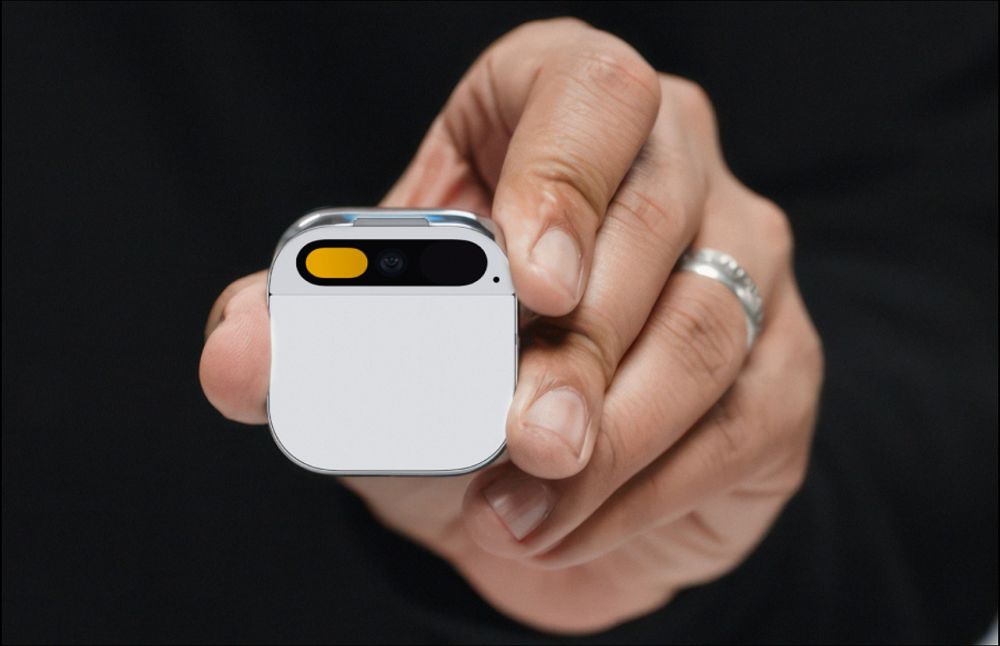
In the internal video made public from the io acquisition, Altman said: “Jony recently let me bring back a prototype of this device for the first time. I’ve been living with it for a while now, and honestly, it’s the coolest piece of tech I’ve ever seen.”

The new device could look and function as follows: compact, screenless, and wearable.
According to market research by Apple analyst Ming-Chi Kuo, this AI device is expected to begin mass production in 2027. Its size will be slightly larger than Humane’s AI Pin, but it will still be an extremely compact device, with a design language possibly similar to the iPod Shuffle, combining simplicity and elegance.
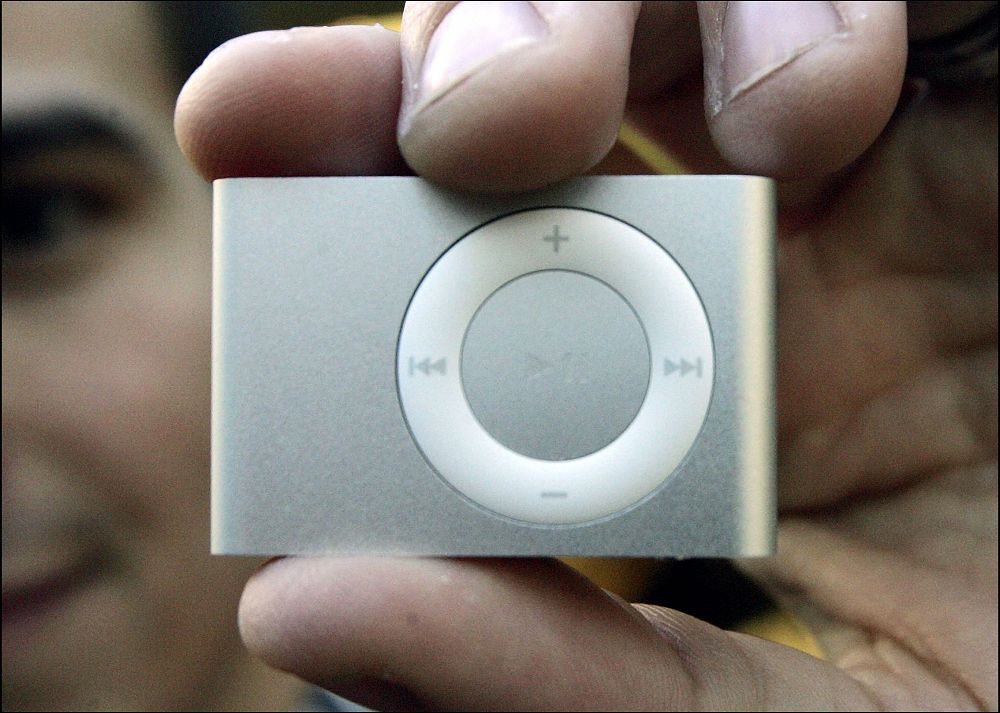
The device is expected to have the following features:
-
Without a display screen
-
Equipped with a microphone and camera for environmental perception.
-
Can be worn around the neck or on clothing.
-
Connect to a smartphone or computer, using external devices for computing and display.
-
The device assembly location is not in China; Vietnam is seen as the preferred site to reduce geopolitical risk.
It is worth noting that the device is still in the prototype stage, and the appearance and features of the final mass-produced version may still change.
My industry research indicates the following regarding the new AI hardware device from Jony Ive’s collaboration with OpenAI:
1. Mass production is expected to start in 2027.
2. Assembly and shipping will occur outside China to reduce geopolitical risks, with Vietnam currently the… pic.twitter.com/5IELYEjNyV— 郭明錤 (Ming-Chi Kuo) (@mingchikuo) May 22, 2025
According to reports, Ive’s design team has already been in talks with several major manufacturers to prepare for future mass production and supply chain setup. Although Altman said OpenAI won’t ship 100 million devices on the first day, he added: “We will reach the scale of shipping 100 million devices faster than any other company.” This bold shipping goal reflects OpenAI’s confidence in its AI device and its strong ambition to drive widespread adoption. Altman estimates the device will officially hit the market as early as the end of 2026.
According to a Wall Street Journal analysis, OpenAI is expanding multiple product lines, including data centers, enterprise technology solutions, chatbots, and personal robotics, and this hardware device is precisely the key vehicle for materializing AI capabilities and user interaction. What Altman is pursuing may be building a super platform like Apple—one that extends from software services to hardware platforms and ultimately establishes an AI ecosystem. This device could become people’s first “AI companion” in daily life, offering suggestions, reminders, and information access through a screen-free interface.
Source: KOCPC Chinese