


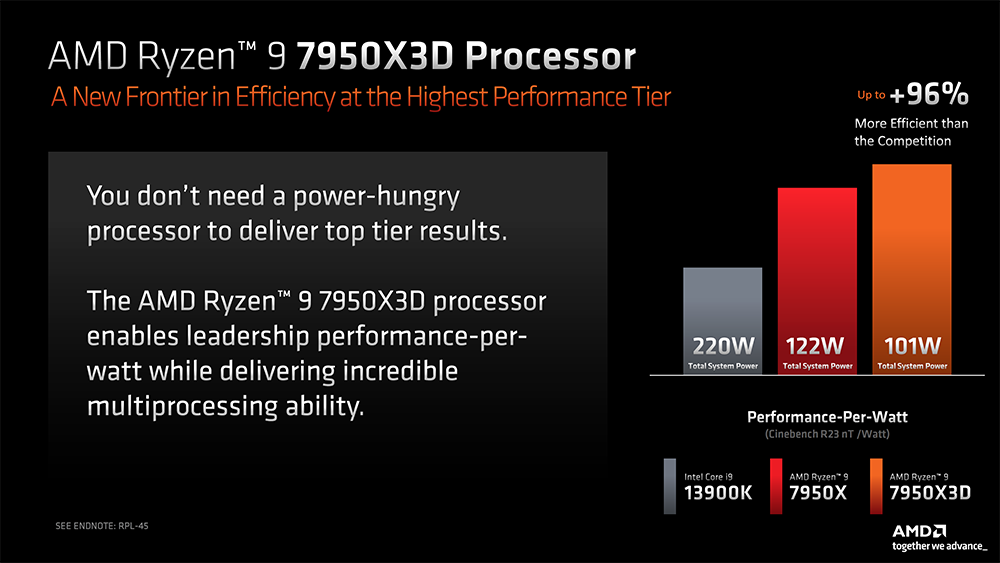
As CPU processors become more and more powerful, power consumption also increases, which has always been unavoidable. However, AMD’s latest flagship processor Ryzen 9 7950X3D is not only very powerful, but also has low power consumption, which is quite amazing. In a recent online seminar, AMD provided a chart to show how efficient Ryzen 9 7950X3D is.

AMD demonstrated the high efficiency of Ryzen 7000 and said: “You don’t need to use a power-hungry processor to get the strongest performance.”
AMD recently held a Meet The Experts webinar where they shared several good presentation pictures, such as this one, which tells you which Intel processors are currently compared to the AMD Ryzen 7000 series, including the Ryzen 7 7800X3D, which is expected to be launched next month:
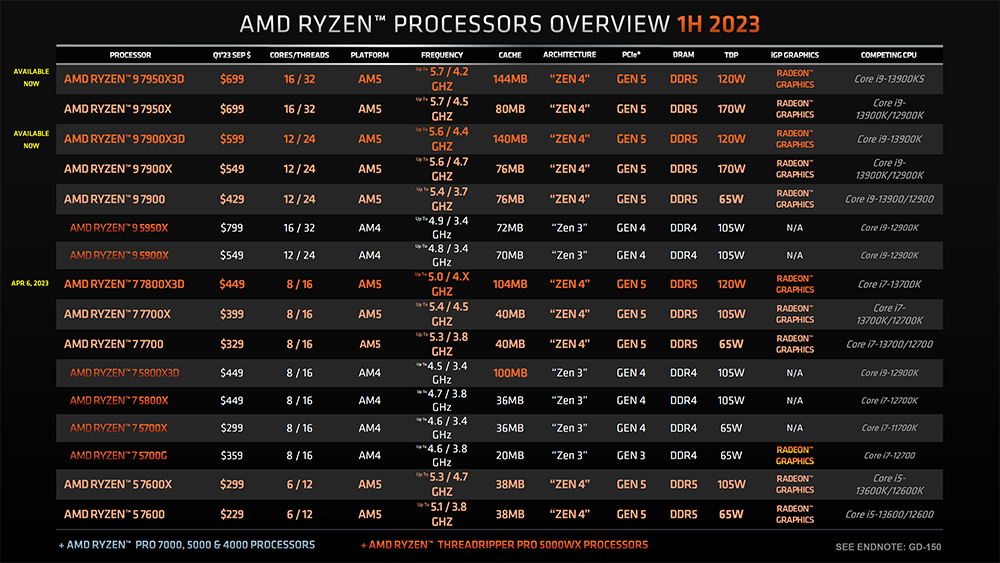
The first is the most powerful Ryzen 9 7950X30 in the AMD Ryzen 7000 series. Not surprisingly, it chose the Intel i9-13900KS as its opponent. In the actual game test, the Ryzen 9 7950X3D did win most of them, but it should be noted that the productivity performance of the i9-13900KS is still relatively high, and it has won many test software.
The system power consumption of Ryzen 9 7950X3D is 101W, which is not only lower than Ryzen 9 7950X, but also much lower than i9-13900K, which means Ryzen 9 7950X3D is 96% more efficient than its competitors:
However, the ones that really compete with the i9-13900K are the AMD Ryzen 9 7590X, AMD Ryzen 9 7900X3D and AMD Ryzen 9 7900X. It should be because of the price. The Ryzen 9 7900 competes with the i9-13900.
The AMD Ryzen 7 7800X3D is expected to be launched on April 6. It will compete with the Intel Core i7-13700K, and the price will be much cheaper, but the productivity performance of the i7-13700K should also be better.
In addition, in addition to the Ryzen 7000 series, AMD also promises support for the AM5 platform, ensuring that it can support future CPUs, so users can buy with confidence. The I/O aspect is also better than the Intel Z790 and Z690 platforms:
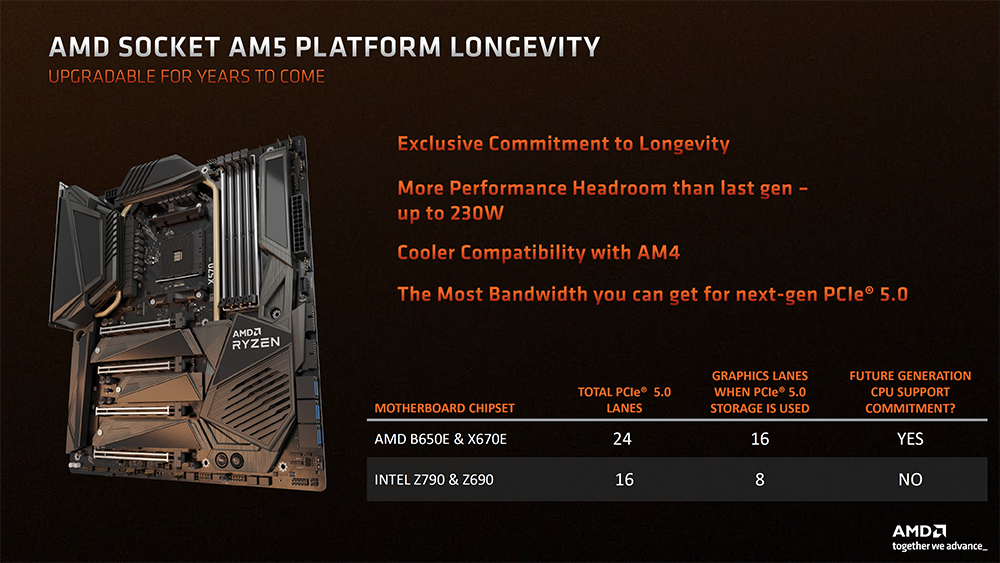
It seems that the Intel part will not support the next generation, because there is now a new socket/platform plan, which is Z890 (LGA 1851). In the past, AM4 did support four generations of CPUs, including Zen 1, Zen 2, Zen 3, and Zen 4, so AMD’s promise can be trusted.
It is worth noting that Intel plans to update the 13th generation Raptor Lake processor in the third quarter of this year, so it may be different by then.
Generally speaking, the power consumption of the AMD Ryzen 7000X3D series is indeed much lower than that of the Intel Core i9 series. However, for desktop computers, I think power consumption is not that important, because desktop computers are always plugged in and used, while laptops need to be treated with caution.
Source: KOCPC Chinese