


The fisheye lens is a super wide-angle lens. Its field of view can be close to 180 degrees, so the captured images will be severely distorted and deformed. This article will introduce some uses and effects of fisheye lenses. If you are interested in this kind of special-purpose lens, remember to share it with your friends, so that I will know that this article has good traffic.
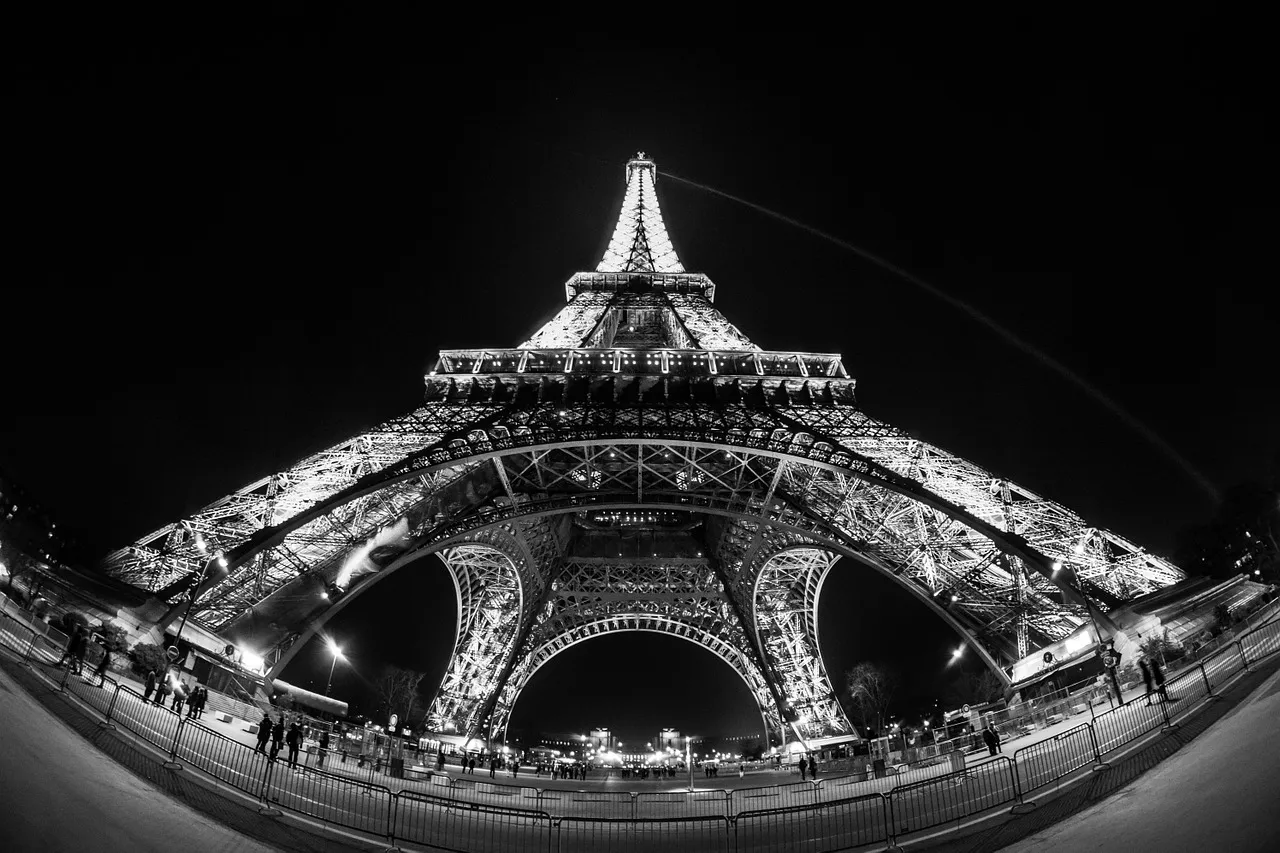
It’s so fun to shoot with a fisheye lens! /From Pixabay
If you think the content of the article is helpful to you, thenSubscribe to my contentBar! It’s free! When I publish a new article, it will be pushed to your inbox immediately. This is the easiest and most convenient way to encourage me!
What can a fisheye lens do?
The biggest difference between a fisheye lens and an ordinary lens is its appearance. It has a very obvious convex lens that looks like a fish’s eye. In addition to the difference in appearance, the fisheye lens can capture more images. When you find that when shooting majestic buildings, you may need to use this type of fisheye lens to shoot due to site restrictions and no escape route.
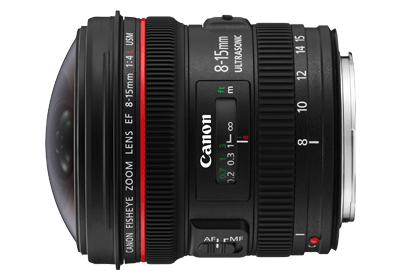
Fisheye lens EF8-15mm f/4L Fisheye USM/from Taiwan Canon official website
The fisheye lens can produce exaggerated deformation effects, take interesting photos, and create a tense atmosphere.
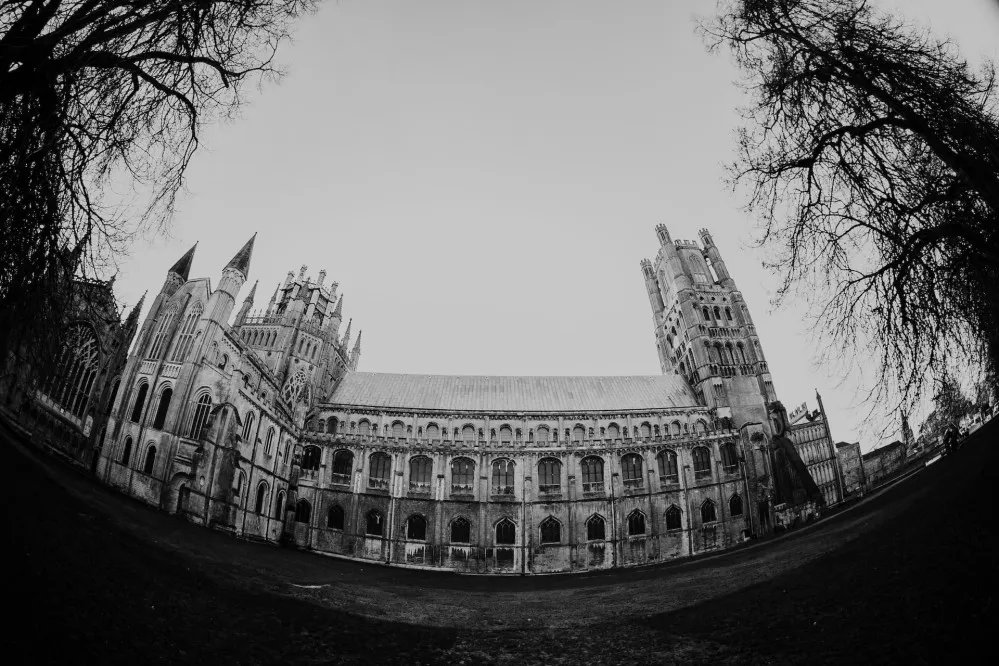
Ely Cathedral/from Unsplash
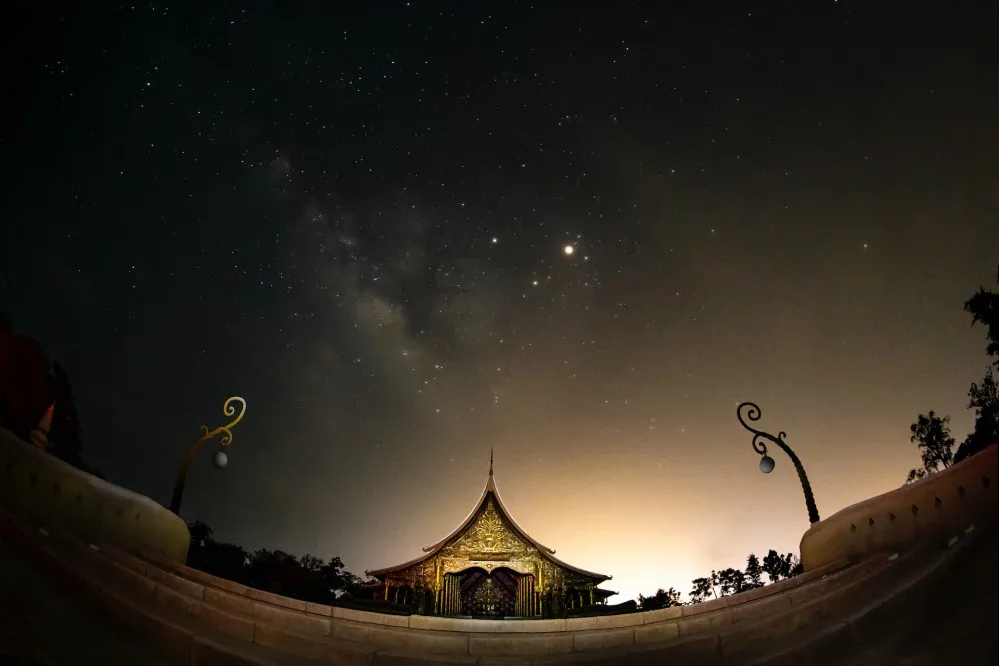
Wat Sirindhorn Wat Lam/from Unsplash
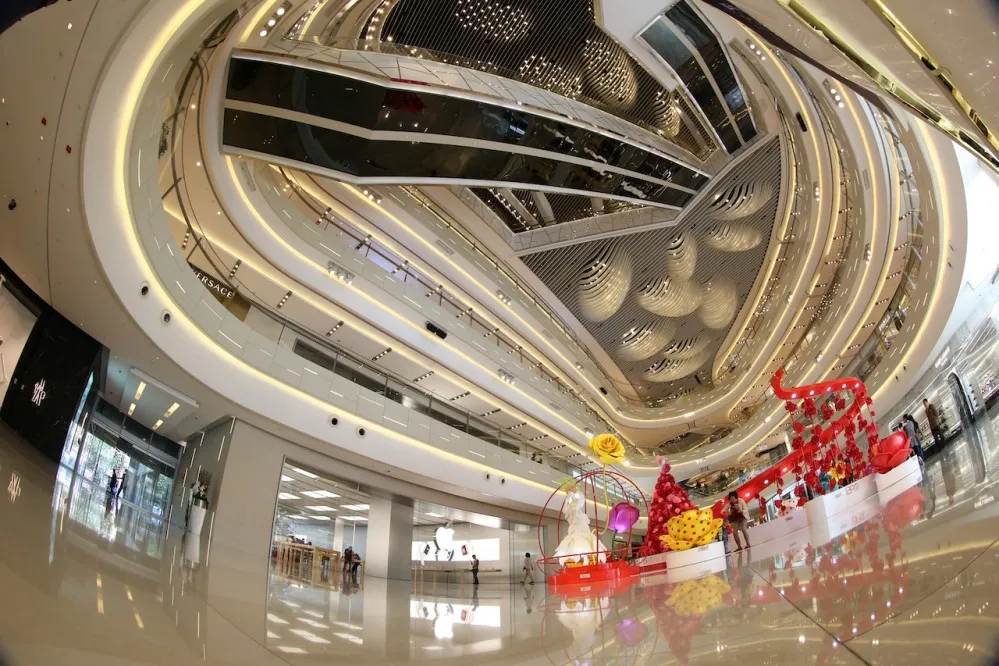
Department store interior/from Pexels
In the past, when you needed this kind of ultra-wide-angle picture, you had to collage multiple photos together. Now you only need a fisheye lens to achieve the effect, making the narrow picture look more spacious. This is also a major advantage of fisheye lenses, which reduces the trouble of post-production processing.
Two types of fisheye lenses?
Fisheye lenses are divided into two categories, one is diagonal fisheye (Full-frame) and the other is circular fisheye (Circular).
- Diagonal fisheye (Full-frame): captures the entire hemispherical image and projects it onto the camera’s sensor, producing a rectangular photo with significant distortion and deformation of the image at the corners.
- Circular: Captures light from all directions and projects the entire hemispherical image onto the camera, producing a circular imaging effect. The photo will have varying degrees of vignetting (or black frame).
In the early days, fisheye lenses were all fixed-focus lenses, and most of them were manual focus lenses. The 2 lenses are not interchangeable with each other as the focal length cannot be changed. In 2011, Canon launched the EF8-15mm f/4L Fisheye USM, a zoomable fisheye lens. Nikon also launched the AF-S FISHEYE NIKKOR 8-15mm zoom lens in 2017.
Take the Nikon AF-S FISHEYE NIKKOR 8-15mm as a fisheye lens. Because it can zoom, it can interchange the fisheye effect.
If used with full frame body:
- Focal length is 8mm: creating a circular fisheye effect
- The focal length is 15mm: creating a diagonal fisheye effect
From the photos below you can clearly distinguish the effects of these two fisheye lenses. The diagonal fisheye is more like a super wide-angle field of view, but the width is a little more.

Shops on the street/from Pixabay
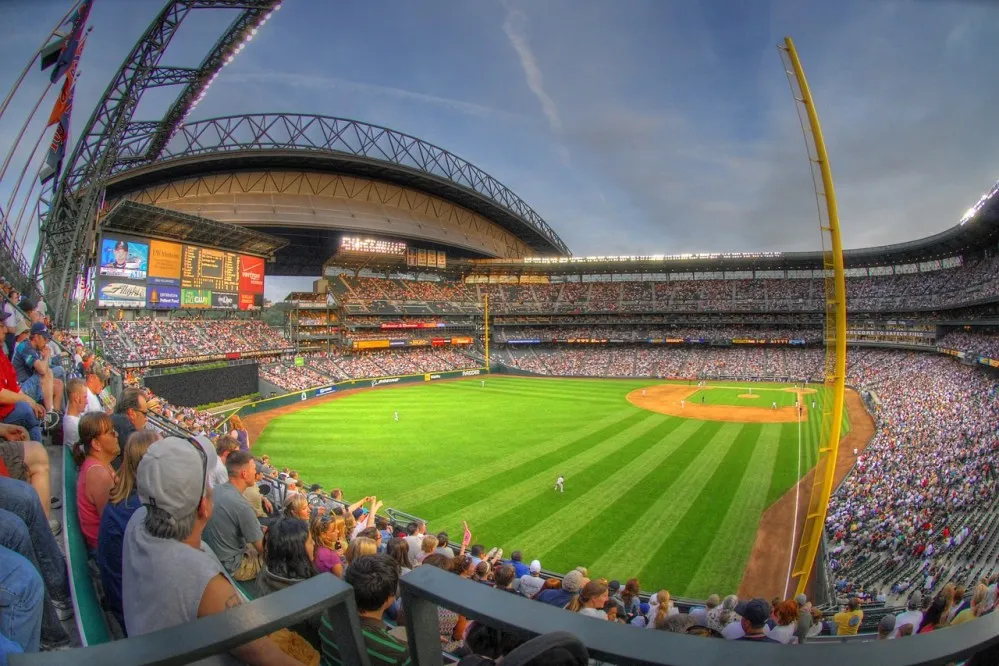
Baseball Stadium/from Pixabay
The effect of round fish eyes is very obvious! It feels like you are standing on the moon looking at the earth, and the deformation effect is also very interesting.

Blue sky/from Pixabay
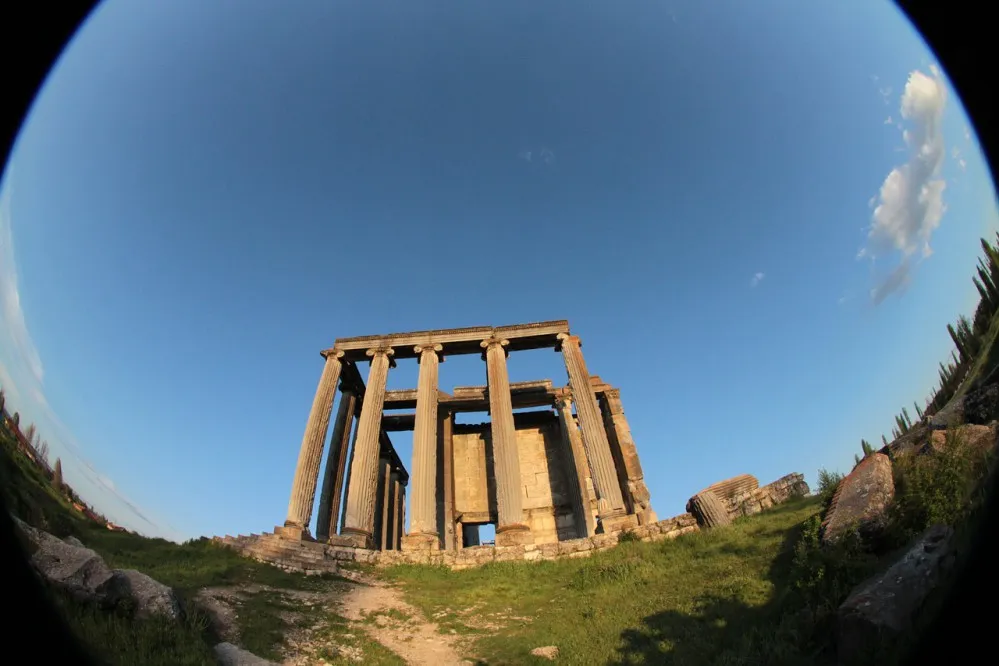
The ancient city of Ezanoi/from Pixabay
If you want to know more lens types, you can refer to this article!
What fisheye lens models are available?
- Canon EF8-15mm f/4L Fisheye USM
This Canon fisheye lens is specially designed for full-frame cameras, providing the widest 180-degree viewing experience at the wide-angle end (8mm). Use ultra-low dispersion lenses to effectively suppress chromatic dispersion. According to official information, the maximum viewing angle is 180 degrees at 8mm, and about 175 degrees at 15mm.
Canon EF8-15mm f/4L Fisheye USM/from Taiwan Canon official website
-
Nikon AF-S FISHEYE NIKKOR 8-15mm
This fisheye lens launched by Nikon can be used on full-frame cameras. This fisheye lens is specially designed at the telephoto end (15mm) to effectively minimize the distortion of the overall image and avoid excessive distortion.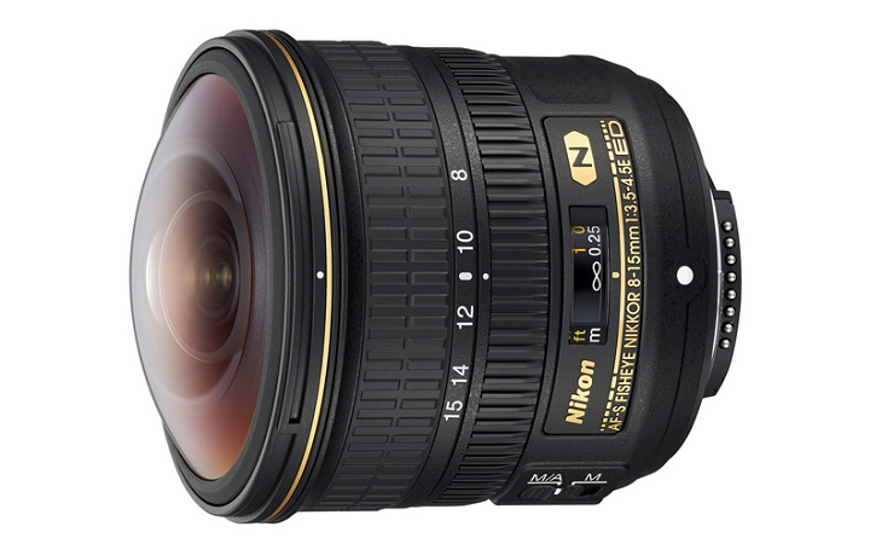
Nikon AF-S FISHEYE NIKKOR 8-15mm/from Taiwan Nikon official website -
Sigma 15mm f/2.8 EX DG Diagonal Fisheye
This Sigma is a diagonal fisheye lens that can be used on Nikon or Canon full-frame cameras. I chose this fisheye lens because I wanted it to be cheaper than the original one, but at the same time, I wanted it to have a professional quality. This Sigma fisheye lens is a good choice. It also has a 180-degree viewing angle and the maximum focal distance is the same as the previous two fisheye lenses.
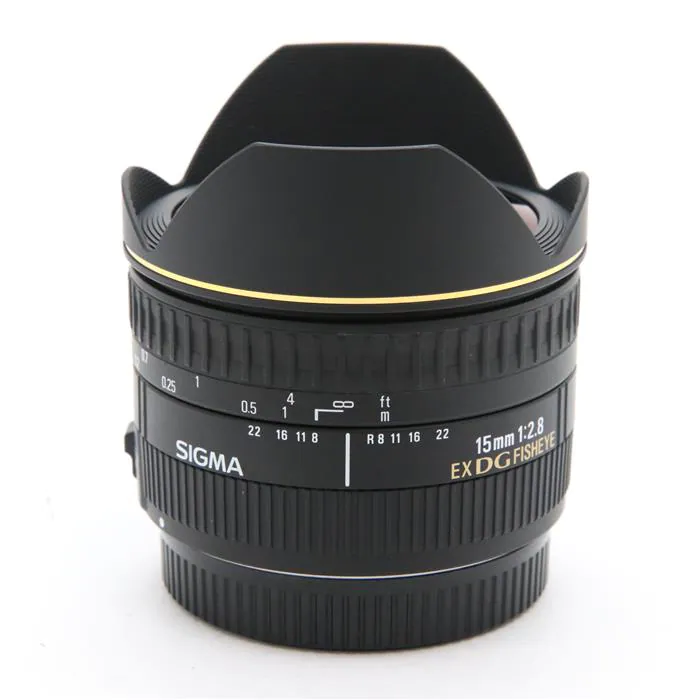
Sigma 15mm f/2.8 EX DG Diagonal Fisheye/From MapCamera
- 7artisans 7.5mm f/2.8 Mark II APS-C lens
The Chinese brand 7artisans is a subsidiary lens manufacturer for Sony, Nikon, and Canon.
This is an APS-C system lens that can be used on Sony E Mount, Canon EOS-M Mount and Nikon Z Mount. As an affordable accessory lens, it offers a focal length of 7.5mm and a viewing angle of 190 degrees.

7artisans 7.5mm f/2.8 Mark II APS-C lens/from 7artisans official website
- Olympus M.Zuiko Digital ED 8mm f/1.8 Fisheye PRO
This lens is suitable for the Olympus M43 system. It is the world’s first fisheye lens with an f/1.8 aperture and is dustproof and water-resistant. If you put the camera in a waterproof case, you can use it to explore the underwater world. It is really the world through the eyes of a fish.

Olympus M.Zuiko Digital ED 8mm f/1.8 Fisheye PRO/from Hong Kong Olympus official website
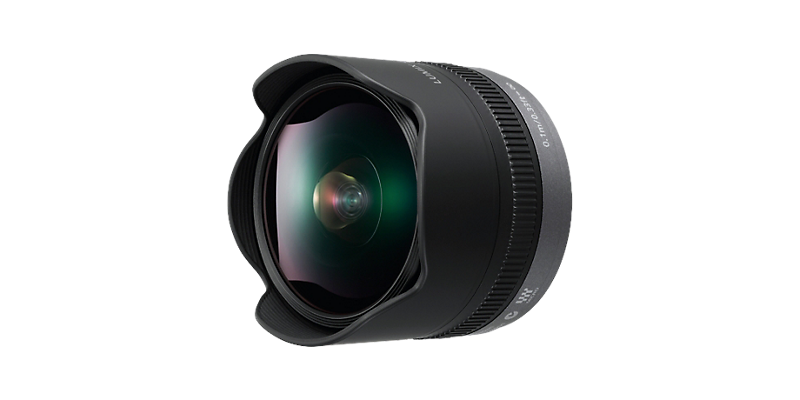
- Panasonic LUMIX H-F008E Micro Four Thirds 8mm
This lens has a minimum focusing distance of only 10cm, provides a 180-degree field of view and a focal length of 8mm, and weighs only 165g. When it was launched, it could be said to be a photographer’s secret weapon!
Panasonic LUMIX H-F008E Micro Four Thirds 8mm/From Panasonic official website
The editor has shared affordable and easy-to-use lenses before, the link is here.
How to use fisheye lens?
We have already seen the functions of the fisheye lens before. Here we will share some interesting uses to let you know more about this lens.
-
Wider field of view: The main purpose of the fisheye lens is to capture a wider field of view, which is especially suitable for photography of landscapes, architecture, sky night scenes, the Milky Way, etc. If you like this kind of theme, you can collect one and use it.
-
Photographing buildings: The fisheye lens is also a super wide-angle lens, which is particularly suitable for shooting inside buildings, such as churches, stadiums, warehouse spaces, etc. However, when it comes to real estate, you must pay attention to whether it is suitable.
-
Close focus: The closest focus of the fisheye lens is very short, almost 15cm, which can be used to highlight the subject you want to present.

Photographing leaves with a fisheye/from Pixabay
- Change the worldview: Has it been a long time since you lay down on the grass and looked at the sky? If you feel the huge trees from a fish-eye perspective, you will feel how small you are.

The forest world from a fish-eye perspective/from Pixabay
- The art of distortion: Many fish-eye photography works use strong distortion to achieve the feeling that the scenery is surrounded by the center, as if you are standing outside in space looking at the earth.
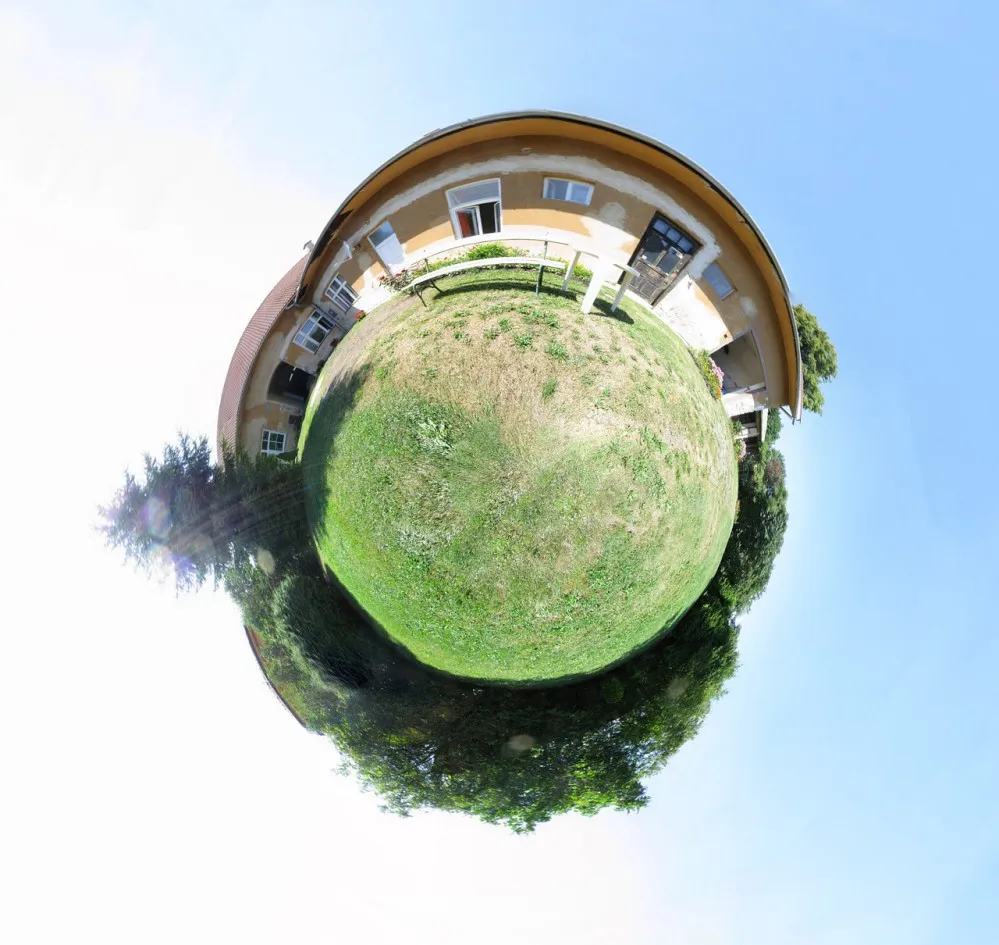
Photographing your backyard with a fisheye lens / from Pixabay
Conclusion
Although the opportunities for using fisheye lenses are not comparable to ordinary lenses. However, some scenes just need a fisheye lens to make them more interesting, and the results are fantastic. The picture above is a good example. What kind of lens can achieve such strong deformation?
If you like the above article, welcomeSubscribe to newsletter, and you will receive photography-related teaching articles!
by Engineer Blake
Source: KOCPC Chinese