


As we all know, torrenting is not entirely legal in the true sense of the word, and you may get into trouble for downloading copyrighted content, but there are ways you can protect yourself. There are always people on Reddit forums or some websites who think that you can protect yourself by using the incognito mode in the browser, but is the incognito mode really so powerful?
Can incognito mode protect your privacy when downloading torrents?
Learn what incognito mode does
Incognito mode, also known as privacy mode, anonymous mode, etc., is a special mode built into the browser that can erase your digital footprints. When you exit all content, your browser will delete your history in incognito mode, as if you have never appeared at all. When you open it next time, it will be like starting over on a brand new browser. Incognito mode works just like standard mode, except it prevents the browser from recording your every move. When you start a new incognito window, it does not actually isolate you from the outside world in any way. This “temporary amnesia” mechanism will not have any impact on the actual network connection.
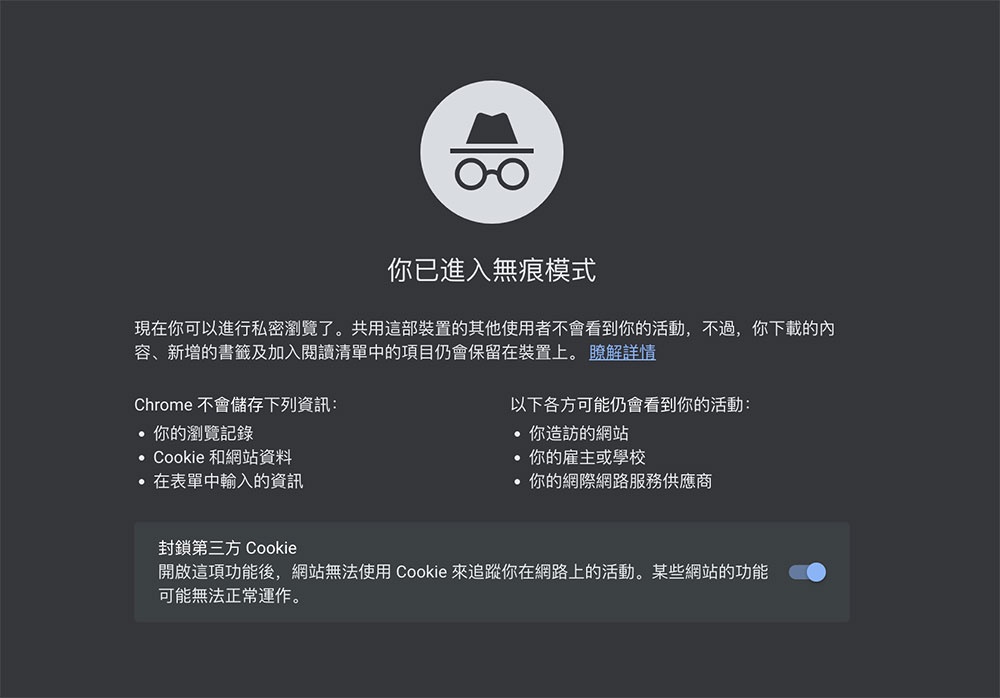
The privacy that comes with using incognito mode is a sensory thing. Since anyone using the computer can’t see what you’ve done before, it’s natural to assume that no one else saw, which is why so many people think that just using Incognito mode will prevent tracking. But it’s not just the people you share a computer with who are tracking you.
How tracking works
In fact, the way you track incognito mode is completely different from how others share your computer. Suffice to say, anyone tracking you from the outside can see exactly what you’re doing online. For example, the websites you visit can still know where you came from, and your Internet Service Provider (ISP) can still log your browsing information. This is a problem in itself in some countries or regions. For example, in the United States, the law allows ISPs to sell user data. If you then download through torrents, it will be an even bigger problem. In this case, tracking is usually done by copyright regulatory agencies such as the DMCA. Usually their approach is to attach a tracking code to the torrent to track the whereabouts of the torrent. Once they find the downloader, they can issue a warning or impose penalties such as fines.

The tracker only needs to have your IP address, which shows you your location and automatically broadcasts it when you use the Internet. Logically, changing your IP in some way is an effective way to avoid tracking, but using incognito mode doesn’t do that, because incognito mode just stops your browser from recording, and trackers can still track you in incognito mode.
So what should you use to evade tracking?
The best way is to enter a virtual network. The most well-known tool is VPN. By connecting to the service provider’s server and then redirecting, you can add a layer of mask to your original IP address and protect your connection. If downloading torrents in incognito mode is like putting on a blindfold in the hope that it will prevent others from seeing you, using a VPN turns you into an online ninja that is virtually undetectable to anyone. While a VPN isn’t perfect for heavy torrenting users, it is the most convenient solution. In addition to providing disguise for your IP, they also encrypt your connection, which means that even if the tracker attempts to trace your connection through other means, the information found will not be truly useful.
However, this does not mean that incognito mode is completely useless. When used with a VPN, the digital footprint left on the Internet will be very small. One of the most convenient features of incognito mode is that it will automatically log you out of various social platforms when you close the window. Although it is not very helpful for torrent downloading, it is a good way to avoid advertising companies and browser cookies.
Source: KOCPC Chinese