


We’ve shared many real-world applications of AI robots, such as working as nannies, factory workers, and more. Many people might think these aren’t very relevant to our daily lives and aren’t that interesting. Today, let’s share something everyone should find intriguing. A video recently released by China’s Lingchu Intelligent Technology company caught our editor’s attention—not because the robot can fly or scale walls, but because the robot can actually play mahjong now. In the future, if you’re one player short in a mahjong game, you can just ask a robot to join—no more hunting around for friends!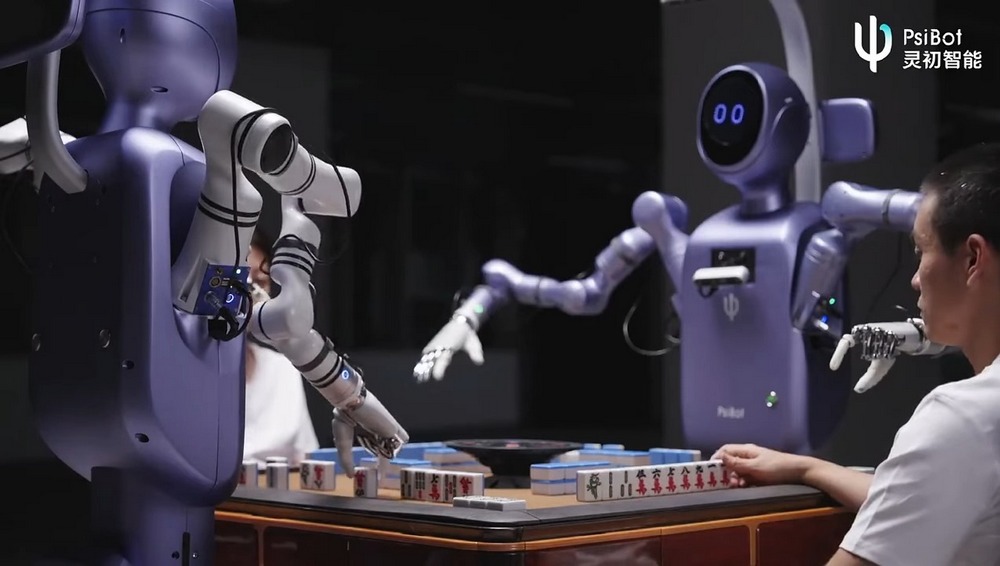
No more begging for a fourth player! Chinese tech company demonstrates robot mahjong-playing technology.
Recently, Lingchu Intelligent Technology Co., Ltd. (hereinafter referred to as PsiBot), a Chinese company focused on developing embodied AI, released a video in which PsiBot claims its robot can now play Mahjong, a task that requires prolonged concentration and complex execution. In the video, PsiBot’s robot is able to autonomously think and execute actions such as pong, kong, and self-drawn wins. Except for being a bit slower in its movements, it looks almost no different from a real person.
As a strategic and multi-layered game, Mahjong requires players to perform actions such as drawing tiles, discarding tiles, and arranging their hand. Beyond using your hands, you also need to use your mind—thinking about how to play your tiles, observing which tiles have already been discarded on the table, and analyzing the discard patterns of other players. PsiBot believes that Mahjong, with its need for agile movements and complex reasoning, is precisely one of the most challenging tasks facing today’s robots.
The Psi-R1 model provided by PsiBot enables robots to complete L3 tasks in the robot intelligence grading. It employs a reasoning approach similar to human “thinking + acting” (CoAT), allowing it to autonomously decide what to do in real, ever-changing environments and carry out operational tasks that are highly difficult and require many steps. In the mahjong scenario provided by PsiBot, Psi-R1 can simulate the human brain’s thinking process, drawing a tile and then playing one according to its own plan.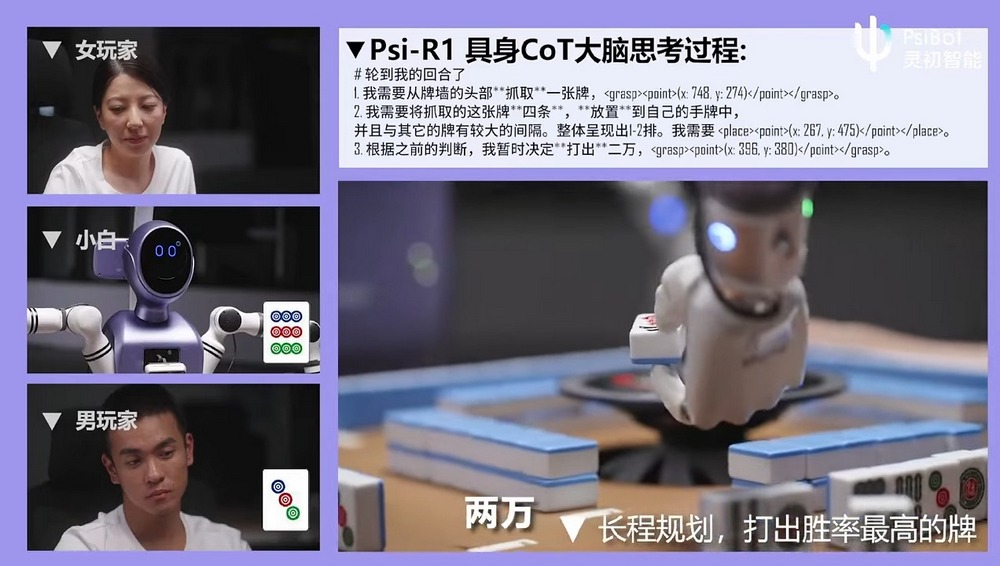
It can also judge whether to call a pung or a kong. Since you’re not going for a pure flush, and punging or konging speeds up reaching tenpai, it decides to pung or kong. 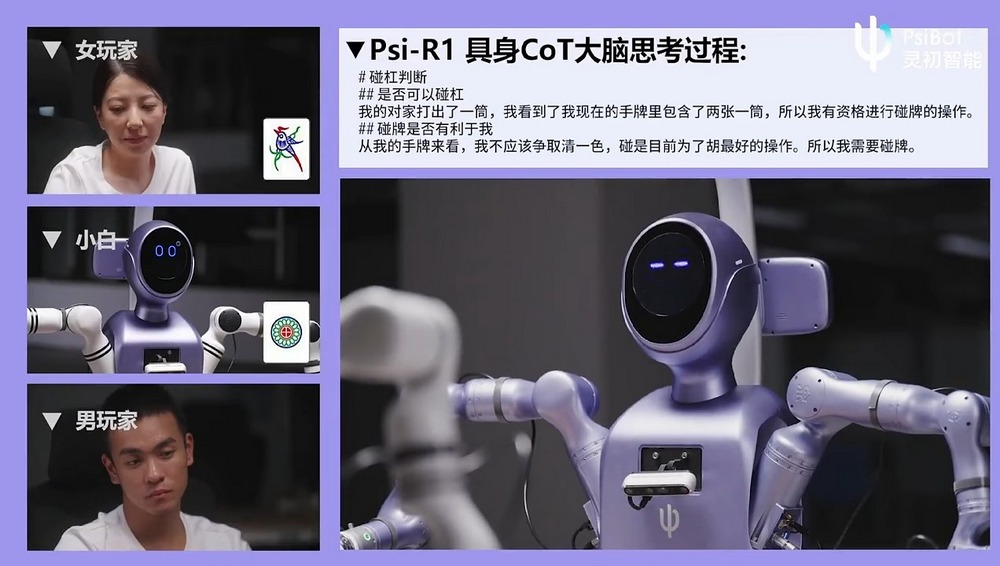
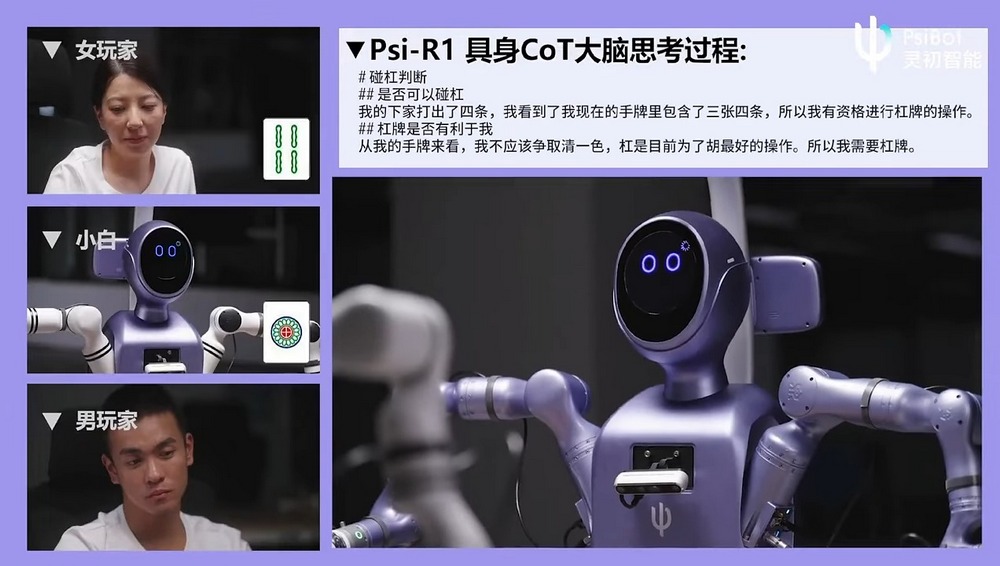
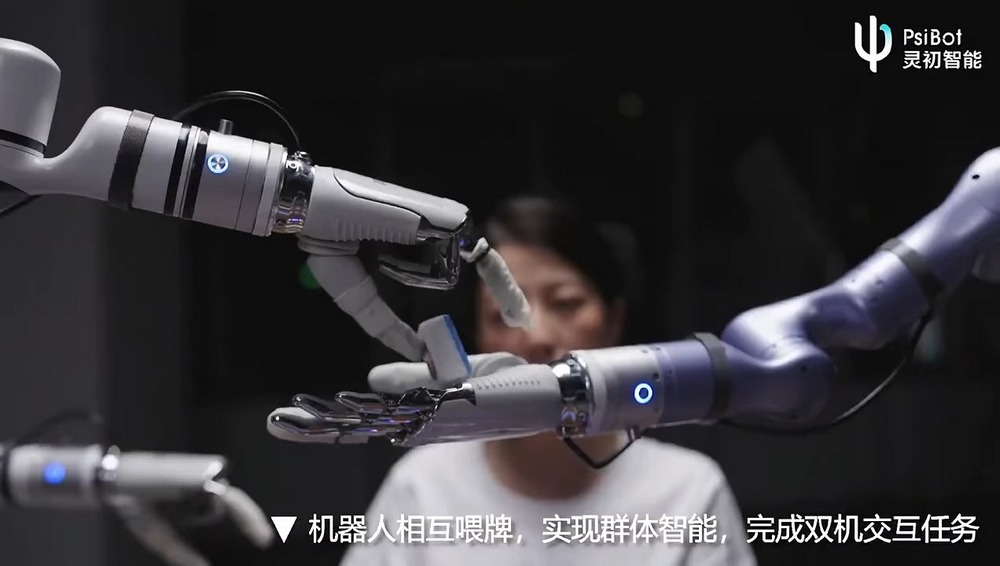
It can even make corresponding facial expressions based on the situation at the table, making the poker games livelier. The robots can also feed cards to each other, demonstrating collective intelligence and completing dual-machine interaction tasks.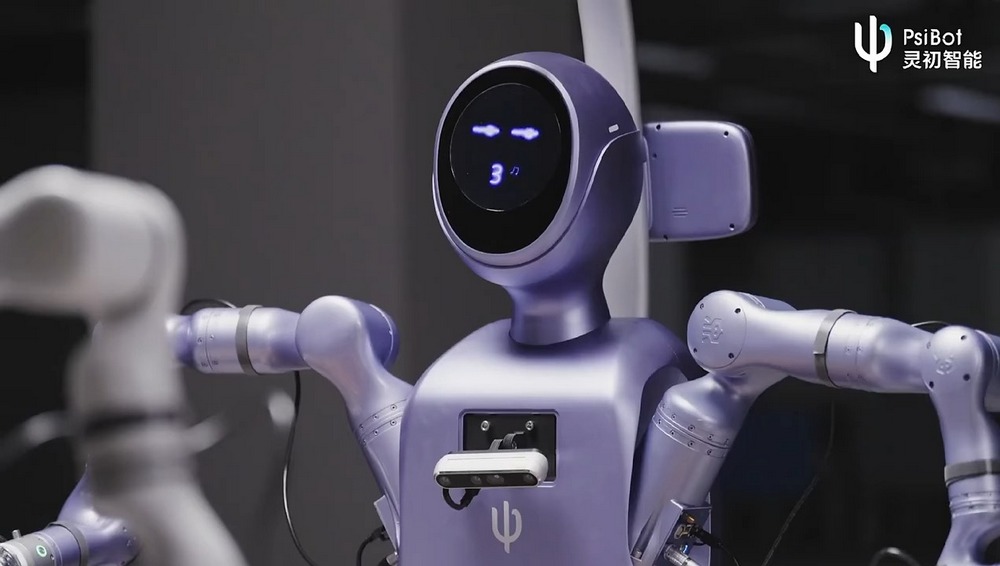
Finally, upon drawing the winning tile, they will first check whether they have a valid winning hand, and only after confirming this will they declare their self-draw win. This actively eliminates the possibility of a false win.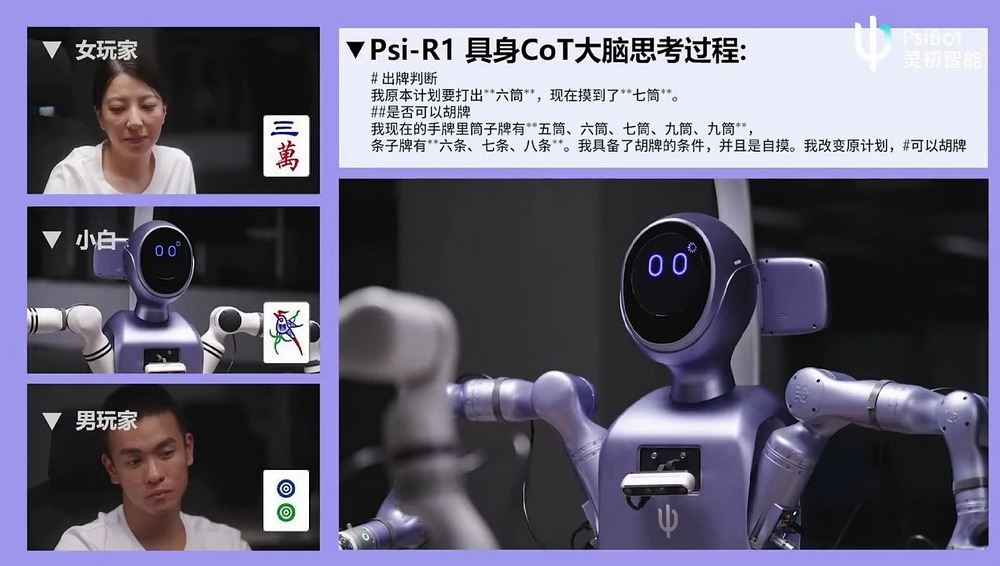
PsiBot is promoting its robots’ L3 capabilities by introducing a video of their robot playing mahjong, letting everyone know that PsiBot’s robots can perform reasoning, adaptation, and long-duration manipulation in open environments. They also mentioned that beyond playing mahjong, the technology can be applied to industrial, logistics, retail, and consumer-facing scenarios. After watching PsiBot’s introduction, I wonder if everyone would want to own a robot that can play mahjong? For an editor like me who often can’t find a fourth player for mahjong, a robot that can play mahjong is way more appealing than a robot that can do housework!
Source: KOCPC Chinese