


Recently, netizens abroad have discovered that ChatGPT’s newly released o3 model has a very strong ability to identify where a photo was taken. I just tested it myself, and it really is quite impressive, especially with photos that have clear landmarks or buildings. And it’s not limited to famous landmarks—even the names of ordinary buildings are no problem. If you’re interested, I highly recommend giving it a try.
However, the o3 model is currently only available to paid users like ChatGPT Plus. Free users can try o4-mini instead.
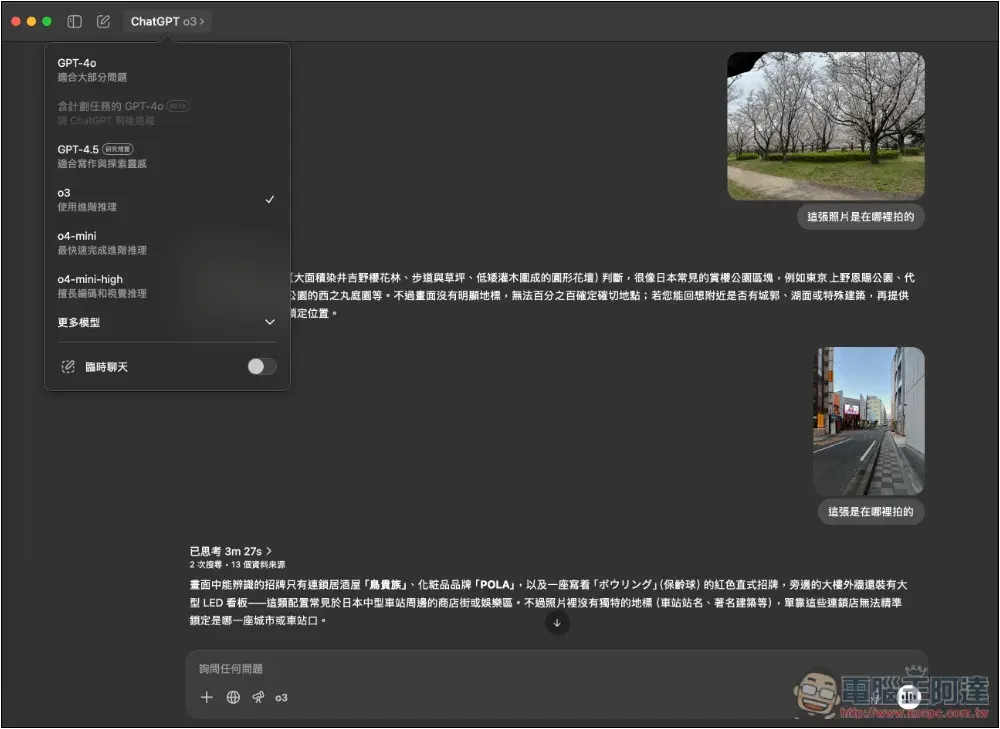
How to use ChatGPT to find out where a photo was taken?
Although ChatGPT’s previous models could already analyze where a photo might have been taken, this time the o3 and o4-mini models incorporate image reasoning capabilities. They analyze each part of the image, extract useful information, and then reason and think through it. During the process, they also search the web to check whether their reasoning is correct, which ultimately makes the final identification of possible locations more accurate.
The usage is simple—just give the photo you want to look up to the o3 model and enter a prompt like “help me find the location where this photo was taken.” No need for anything too complex. But there’s one key point: the photo needs to have fairly prominent buildings or landmarks. If it doesn’t—like a vast forest, for instance—the results won’t be as good.
Taking the following images as an example, I gave ChatGPT two photos and asked it to find where they were taken. In one photo, the building had THE QUBE HOTEL on it, and ChatGPT successfully determined the location was near Chiba Port Square plaza (the building next to it was indeed Chiba Port Square). The other photo had no clear landmarks; although it correctly guessed it was in Okinawa, Japan, it got the hotel name wrong, so it was incorrect. Still, I think that’s already quite impressive:
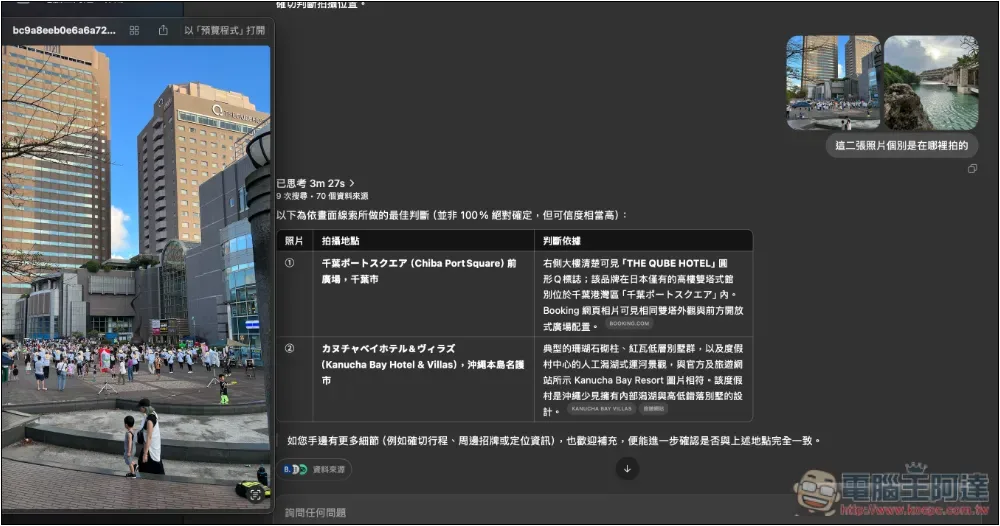
Looking at the expanded thinking process, o3 did catch the hotel name in the image, but it initially thought it was Kaohsiung, and in the end it actually managed to reason its way to Chiba, Japan.
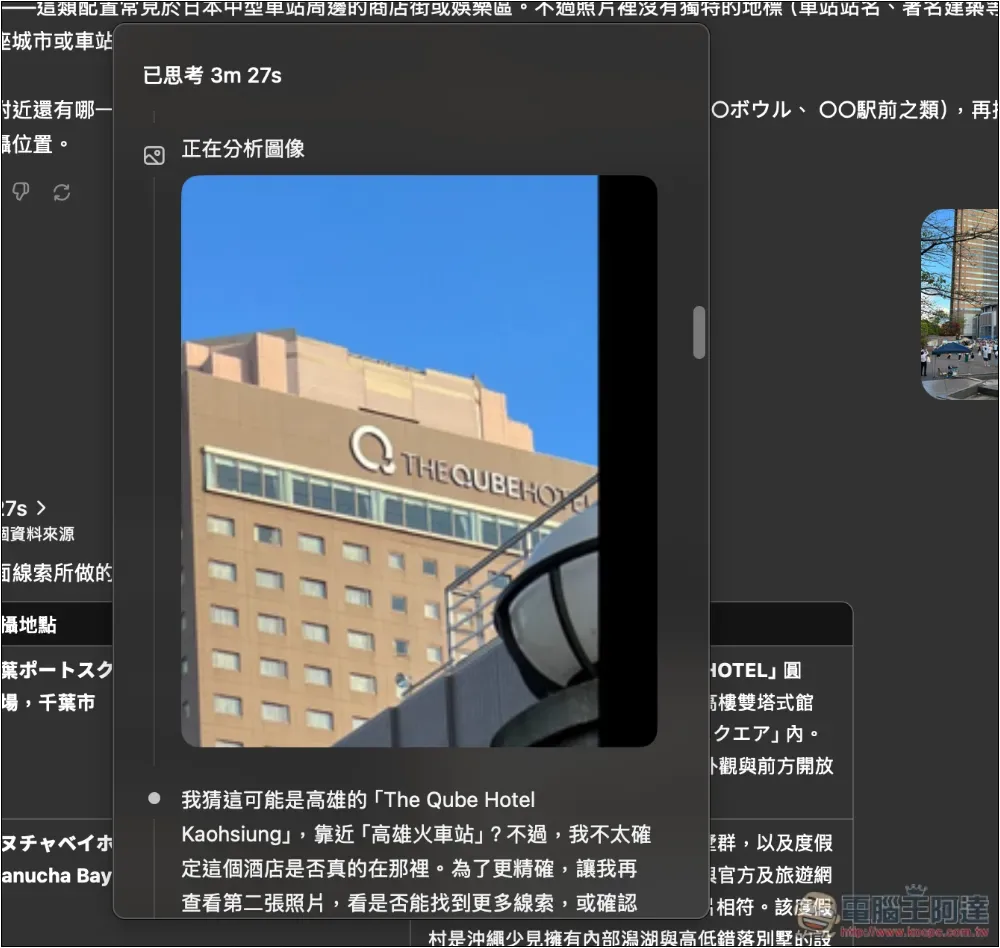
After considering possible answers, o3 searches the web, cross-references relevant information and images, and in this step it speculates that The Qube Hotel might be in China:
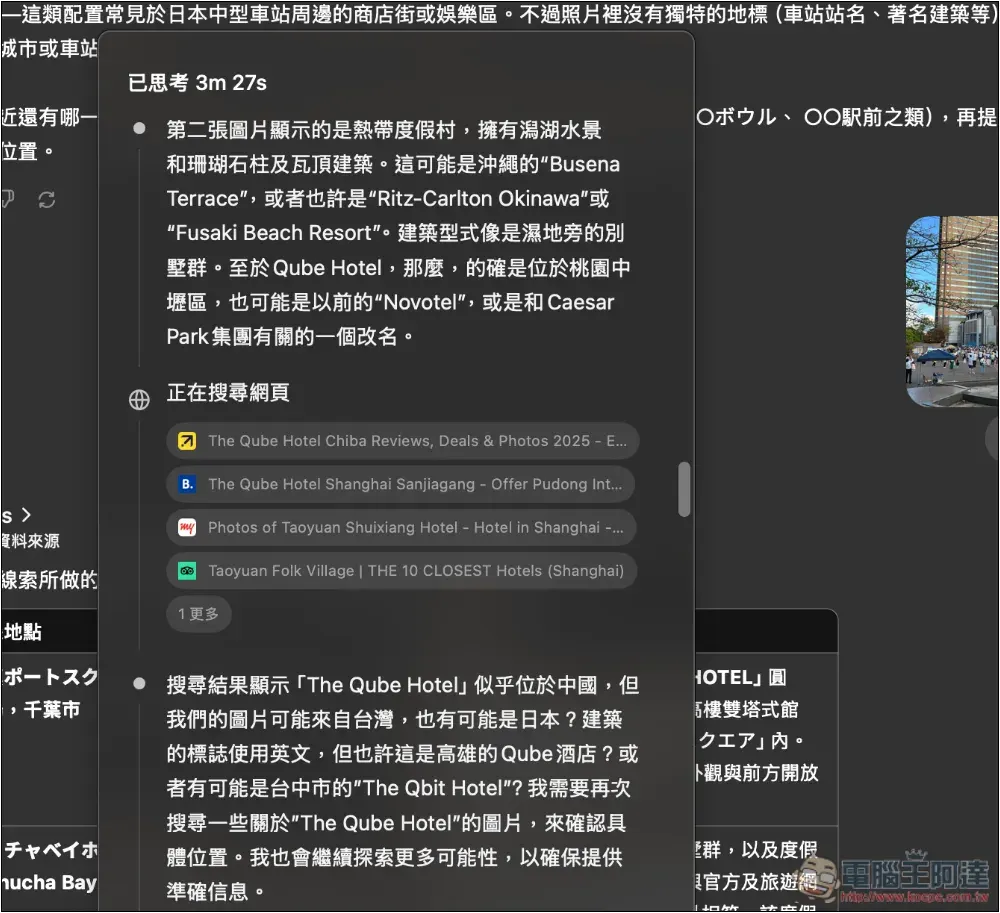
After comparing multiple hotel booking sites, it was finally confirmed to be in Chiba, Japan. As for the other photo, since there were no words or recognizable landmarks, we could only speculate based on the building’s appearance:
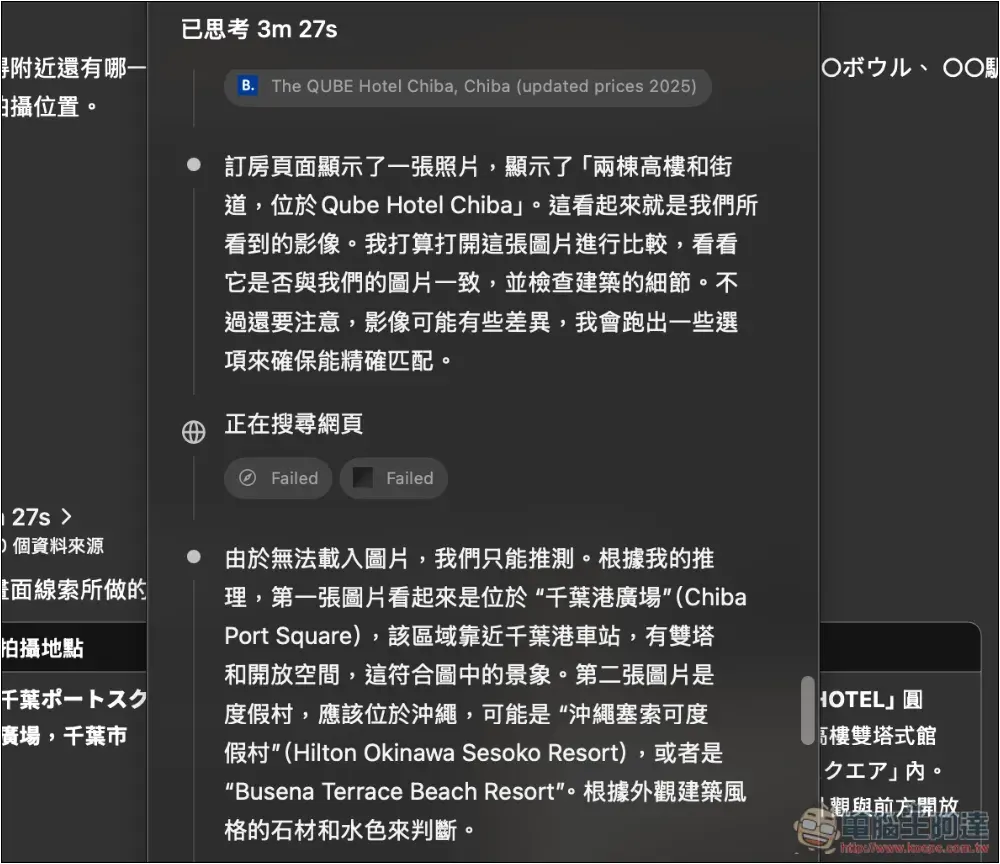
Next, I tested another photo. Although there wasn’t any obvious building name either, there was a very famous Sapporo TV Tower in the background, so o3 barely needed any time to think or compare—it successfully identified it as being taken in Odori Park in just 2 seconds.
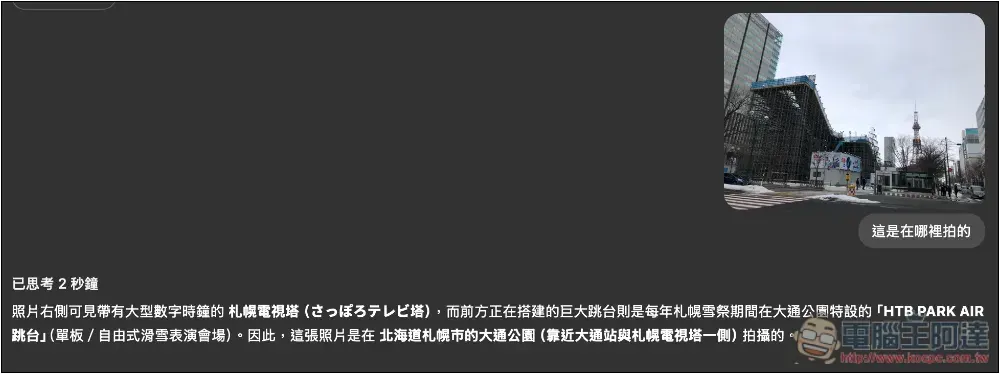
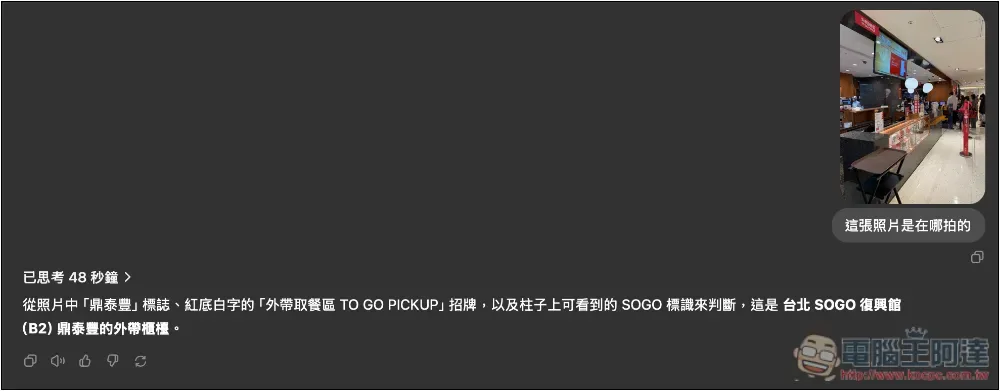
The indoor part is inaccurate then. I took this one at the Zhongshan Din Tai Fung, not the Fuxing branch:
For those who want to try it, one thing to note is that o3 has usage limits (unless you’re a PRO user, in which case you don’t), so it’s recommended to ask for two at a time to save on queries.
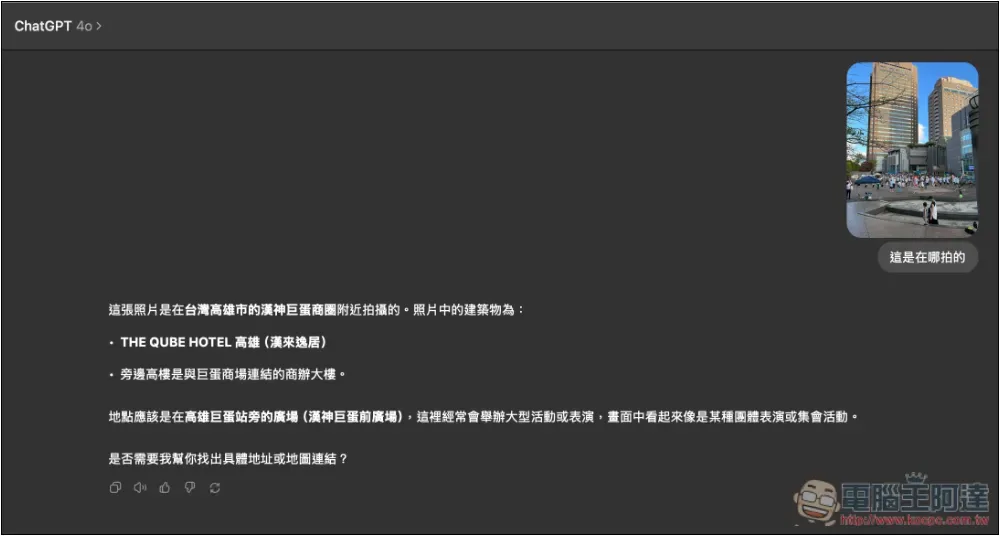
Although GPT-4o can also guess where a photo was taken, its accuracy is very low. For the same photo, o3 successfully identified it as being taken in Chiba, while GPT-4o failed, because it doesn’t think about images and reason:
Thus, as AI models grow more powerful, it’s reasonable to expect that future models from OpenAI or other brands will get even better at identifying where photos were taken—but this also raises concerns. Recently, there’s been considerable discussion abroad about how this feature could enable crime.
Source: KOCPC Chinese