


Now AI video generation technology is getting better and better, and many creators are starting to try using AI video generation tools to make short films. As we introduced earlier, foreign AI filmmaker @PJaccetturo took only nine hours and 250 USD to complete. AI Remakes Lord of the Rings Trailer in Studio Ghibli StyleThe production. Recently, Kling AI released the Kling 2.0 new video generation model. @PJaccetturo used the Kling 2.0 model to create a video about 1.5 minutes long. This time, @PJaccetturo used different AI tools from the previous Ghibli-style Lord of the Rings trailer. If you’re interested, keep watching!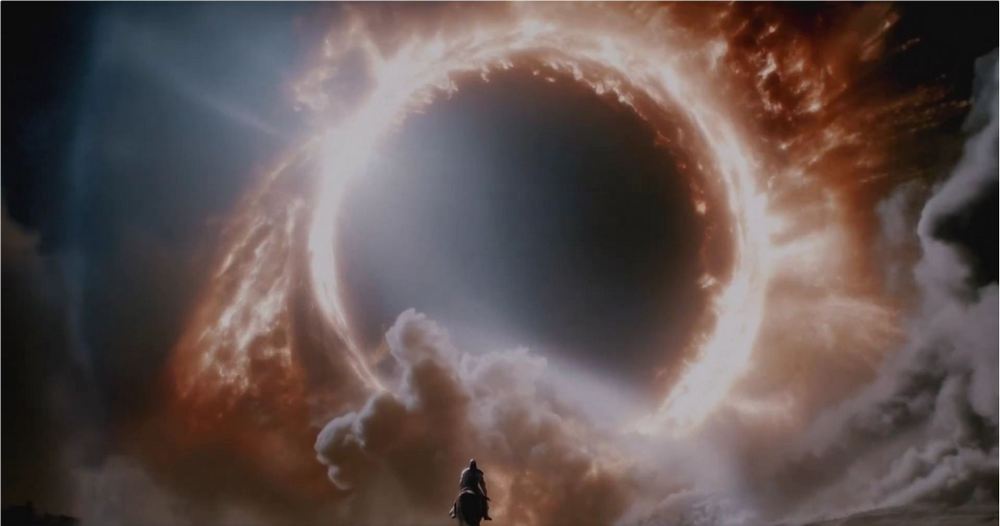
Foreign filmmakers used the latest AI tools to complete a high-quality video for only $1,250.
This time, @PJaccetturo used Kling AI’s newly released Kling 2.0 video generation model to produce the video. Compared to last time using Sora, Kling 2.0 cost more, but the resulting video quality was better. This time, @PJaccetturo spent $1,250 and about two to three days on production, because the 1.5-minute short film had no reference material, and just coming up with the initial script draft took 8 hours.
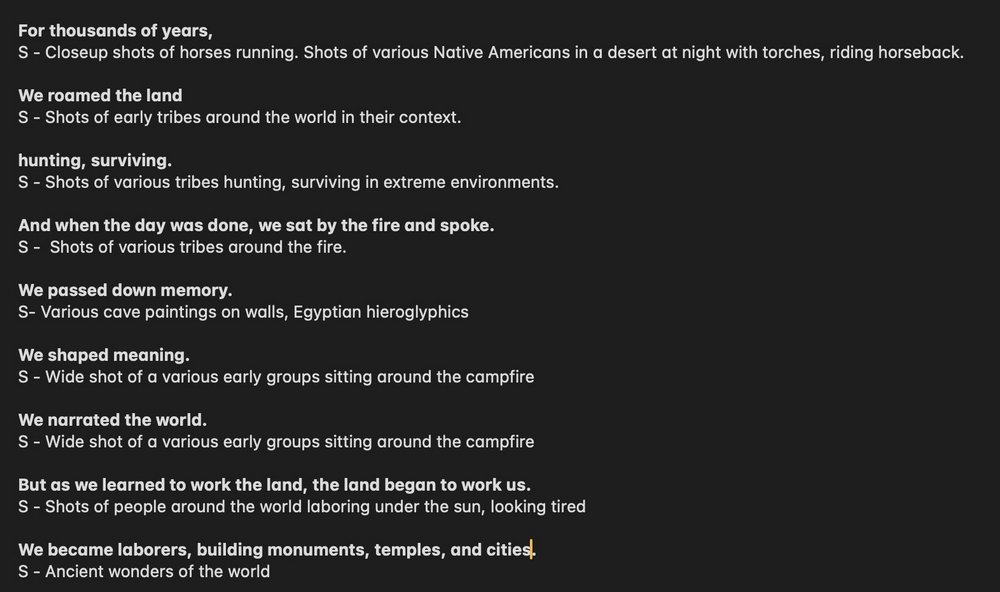
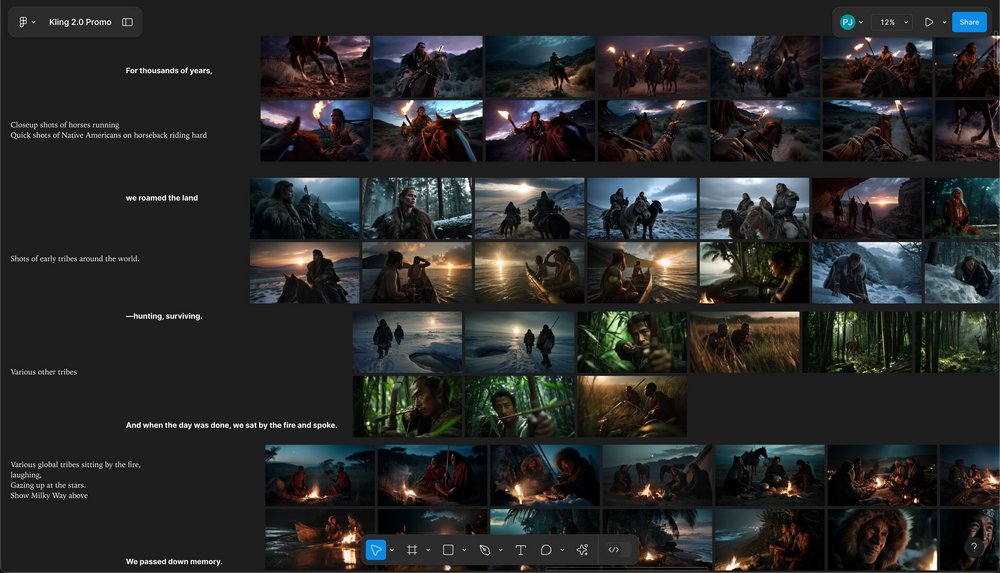
Use after thinking through the script. Used Midjourney V7 to generate all the images needed for the script, and @PJaccetturo provided some clips he didn’t include in the video but that looked really good.
6. Image Creation
Before animating, I generated all the images using Midjourney V7. It’s stunning— @DavidSHolz + team crushed it. With a 🔥 global profile + good prompts, MJ + Kling is my go-to stack. It powered my Mononoke trailer + most projects since.
Bonus unused shots: pic.twitter.com/SDVKsDfxeP— PJ Ace (@PJaccetturo) April 15, 2025
After generating, use Kling AI’s newly released Kling 2.0 to convert the images into video,@PJaccetturo said that Kling 2.0 now generates videos very quickly, and you don’t need complex prompts to get results that meet your needs. He generated 488 videos in 2 days, and the consistency and quality of these videos are quite good.
9. Kling — Part 1
Kling 2.0 is a masterpiece.
Gone are the days of slow-mo trailers. We’re entering a new era where you just prompt what you want—and the model delivers.
I animated 488 clips in 2 days. It’s consistent and cinematic. Unreal speed and quality. pic.twitter.com/MdZirUEqZ6— PJ Ace (@PJaccetturo) April 15, 2025
@PJaccetturo said that during the video production process, he needed an emotional thread to tie the whole story together—a shot that connects the past, future, and present with a single gesture. He only entered the prompt “a person slowly opening their palm and reaching forward” into Kling AI, and Kling delivered exactly what he needed on the first generation. As for camera movement, to keep things simple, he mostly used straightforward techniques like “push in shots slowly approaching the subject,” “camera orbit rotating around the target,” and “push out shots slowly moving away from the subject.”The video below is the result of simple camera movements combined with the emotional thread at the center of the video:
10. Kling — Part 2
My favorite moment: I needed a gesture to link the past (painting), future (sci-fi hand), and present (human).
I prompted: “A man slowly opens his palm and extends his hand forward.”
It was the emotional thread of the whole story—and Kling nailed it first try. pic.twitter.com/XkjB990MBR— PJ Ace (@PJaccetturo) April 15, 2025
After the video is generated, it is edited and paired with music and voiceover, with the music produced in collaboration with film composer @taubertryan, and @PJaccetturo did the voiceover for the video himself. Everyone can check out the video provided by @PJaccetturo below. Although this clip wasn’t ultimately included in the final 1.5-minute video, the effect is roughly like this.
8. Music & VO
I’ve worked with Hans Zimmer before—but not on this budget 😅
So I used the Hans Zimmer of licensable music: @taubertryan.
I ended up recording the VO myself—but here’s an early draft paired with unused visuals and AI vocals that didn’t make the final cut. pic.twitter.com/zhHowZduXL— PJ Ace (@PJaccetturo) April 15, 2025
Video editing and soundtrack are all done; the final step is color grading for this video.
13. Color (Nick’s Process)
Nick Rua did the color. His workflow:
• LUT: “Rec709 – Tommy” (Acid Bites), dialed to ~35%
• Lower highlights + saturation
• Tweak temp/tint/contrast
• Add halation
• Final touch: fine 16mm grain from Ezra Cohen pic.twitter.com/h8Wnbjk1ru— PJ Ace (@PJaccetturo) April 15, 2025
All the steps above take about 3 to 4 days to complete, with the most time-consuming part being the early-stage storyboarding and script development. The total cost is around $1,250 USD. What do you all think of the final video?
AI video quality just 10x’d overnight. I’m speechless.
Kling 2.0 just dropped and I’ve already burned through $1,250 in credits testing its limits.
I’ve never seen motion this fluid or prompts this accurate.
Here’s exactly how I made this video, step-by-step 👇🧵 pic.twitter.com/F54EfvLczj— PJ Ace (@PJaccetturo) April 15, 2025
Regarding the use of AI to create videos, some people may feel uncomfortable, believing that using AI insults professionals. @PJaccetturo says he has always been a storyteller, stating that he has been in the filmmaking industry for 15 years. From starting with a pencil, then a camera, and now a keyboard, although the tools keep changing, every work is his genuine creation. He has never believed that AI has no soul; he thinks the key is the feeling a work brings to people, not the tool used to create it. Just like the themes and content @PJaccetturo sets when writing scripts, he believes that from 15,000 BC to 3000 BC, people used their mouths to tell stories; from 3000 BC to 1990 AD, people used painting to record stories; then they evolved from storytellers into information processors. The original intention is actually to convey stories or messages, just using different tools. I wonder what everyone thinks?
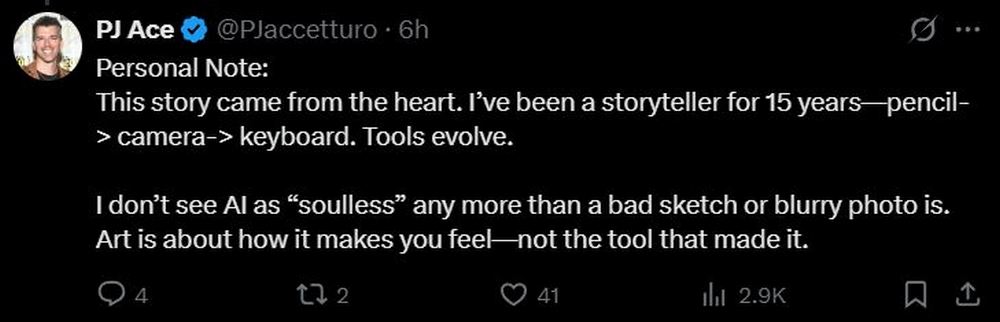
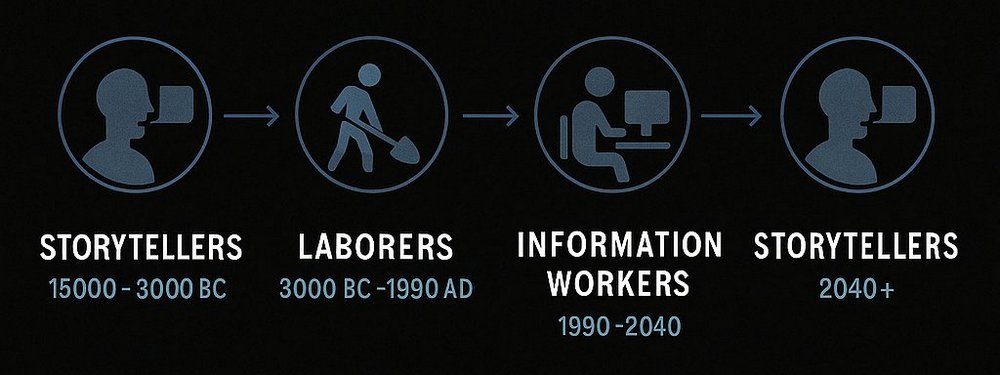
@PJaccetturo believesWhen making videos, he still collaborates with other AI creators, using AI to bring his wildly imaginative, endlessly possible sci-fi shots to life. He doesn’t think using AI is inherently bad.
7. Image Collaborators
I brought in @bygen_ai and @macbaconai for a few key sci-fi shots around “infinite possibility.” Bygen made the stunning opening 3.Mac made the final shot—maybe my favorite AI video clip ever. Give them a follow! pic.twitter.com/4nrXqhmz1k
— PJ Ace (@PJaccetturo) April 15, 2025
Source: KOCPC Chinese