


This year, China’s AI is rapidly rising—not just in models, but hardware seems to be gradually catching up to NVIDIA as well. According to foreign media reports, China’s Ant Group claims it is already training models using Huawei AI chips, with performance on par with NVIDIA’s H800. More importantly, the cost is 20% lower, meaning you can achieve training results equivalent to the H800 at a lower cost, without worrying about export ban issues. This carries significant implications for China’s AI development.
Image source:Ant Group Official Website
Chinese AI chips are not only cheaper, but their performance also seems to have reached the level of NVIDIA’s H800.
According to a Bloomberg report, Chinese fintech company Ant Group recently announced a major breakthrough in artificial intelligence, having begun using domestically produced chips to train AI models — specifically AI chips from Alibaba and Huawei. The exact models are still unclear, but Alibaba’s may be its self-developed AI chip, while Huawei’s would be from the Ascend series.
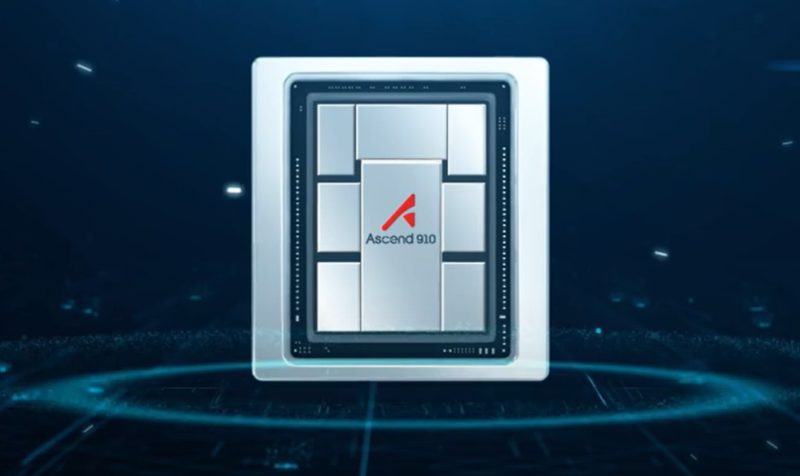
They found that the performance of domestic chips is now on par with the NVIDIA H800, while also achieving a cost saving of about 20%. This holds considerable symbolic significance for Chinese companies that have been looking for NVIDIA alternatives.
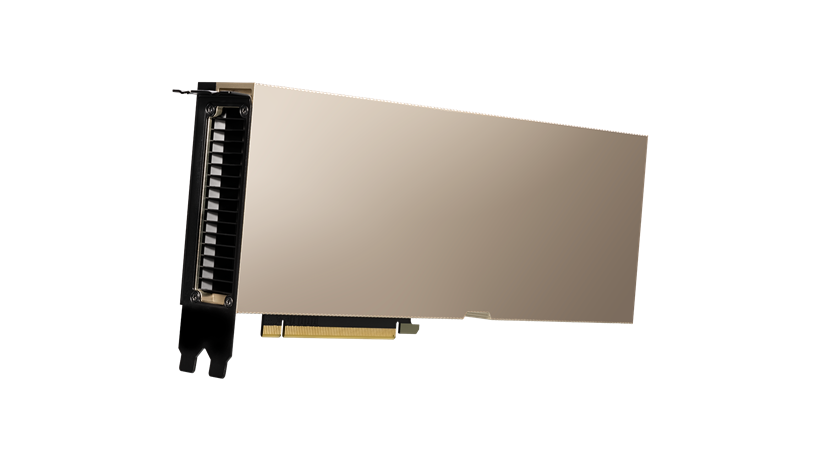
NVIDIA H800:
The report also noted that Ant Group still uses NVIDIA chips for some AI development tasks, but has been gradually shifting its focus to AMD and Chinese domestic chip manufacturers.
If this ultimately succeeds, China’s tech industry will have found an alternative solution in the face of US export restrictions on high-end chips, or even established a self-sufficient supply chain, thereby accelerating China’s AI development.
Although it looks pretty impressive, given that many Chinese companies have made bold claims in the past without actually closing the gap as much as they suggested, I think I’ll hold off on being too optimistic. It would be more convincing if there were actual products and test data out there like DeepSeek has shown.
In addition, whether China’s AI chips can sustain long-term steady improvement, and whether they can match NVIDIA and others in terms of drivers and the software ecosystem, also needs to be considered.
AMD’s AI performance currently still clearly lags behind NVIDIA’s, and even if it catches up in the future, it will still be affected by US export restrictions. So Chinese companies will still have to rely on domestic AI chips.
The NVIDIA H800 is a high-performance GPU designed specifically for the Chinese market in March 2023, based on the Hopper architecture, mainly serving as a substitute for the H100. Due to the 2022 US semiconductor export restrictions on China, NVIDIA could not directly supply the H100 to the Chinese market, so it developed the H800.
The H800 uses TSMC’s 4-nanometer process technology, contains approximately 80 billion transistors, and is equipped with 14,592 CUDA cores as well as 80GB of HBM3 memory, with memory bandwidth reaching 2.04TB/s.
DeepSeek previously claimed to have trained their DeepSeek-V3 model, which has 671 billion parameters, using just 2,000 to 3,000 NVIDIA H800 GPUs.

Data source:Bloomberg via Tom’s Hardware
Source: KOCPC Chinese