


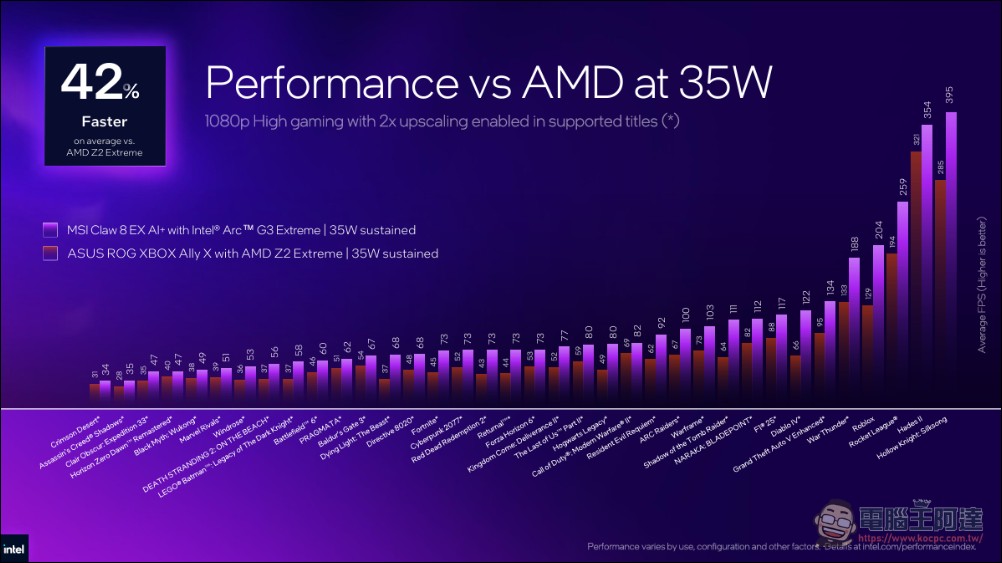
Intel officially released the Arc G series of processors designed specifically for handheld consoles at Computex 2026. The top-of-the-line Arc G3 Extreme is directly aimed at AMD Ryzen Z2 Extreme, claiming to have an average performance lead of 42% in 36 games, and the performance per watt is 2 times that of its opponents. Since ASUS ROG Ally kicked off the Windows handheld craze, AMD’s Ryzen Z series has almost monopolized the high-end handheld processor market. However, this time Intel launched the Arc G3 Extreme based on the Panther Lake architecture (Core Ultra Series 3), paired with its own Xe3 GPU architecture and XeSS 3 technology, in an attempt to surpass its opponents in three dimensions: performance, power consumption, and AI acceleration. Judging from the data disclosed so far, this goal is not empty talk.
Intel Arc G3 Extreme specifications analysis: Panther Lake architecture and Xe3 GPU
Arc G3 Extreme uses Intel’s most advanced Intel 18A process node, which is Intel’s most advanced logic process developed and manufactured in the United States. The processor configuration is 14 cores (2 P-Core + 8 E-Core + 4 LP E-Core), with a maximum P-Core clock speed of 4.7 GHz, and a 12 Xe-core Arc B390 GPU with a maximum GPU clock speed of 2.3 GHz.
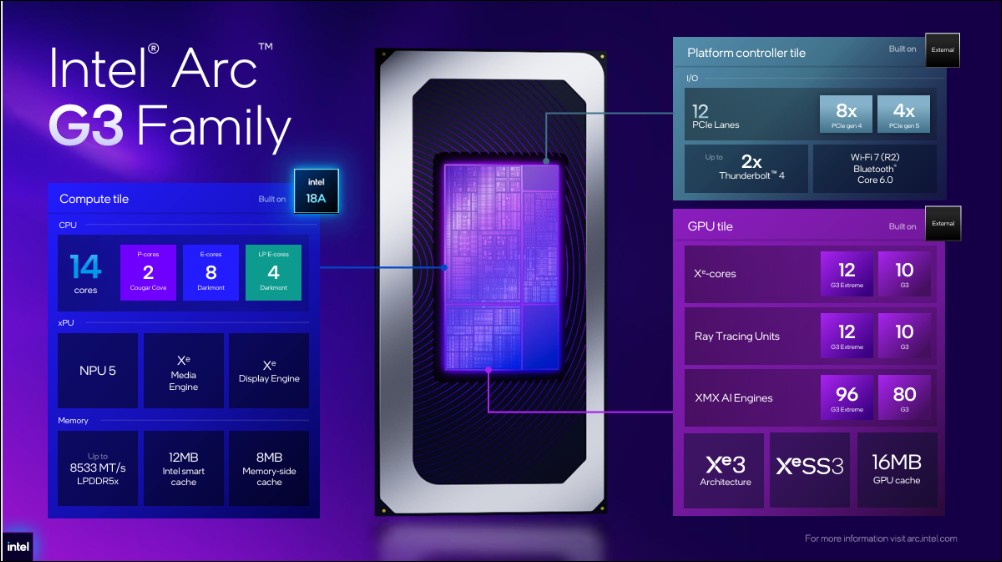
The standard version of Arc G3 has a 10-core configuration, with P-Core up to 4.6 GHz, and the GPU is also equipped with Arc B390 but with a slightly lower clock speed. Both processors support up to 32GB LPDDR5X memory and have built-in Intel Wi-Fi 7 R2, Bluetooth 6 and Thunderbolt 4 connectivity. Compared to the AMD Ryzen Z2 Extreme’s 8-core (3P + 5E) 16-thread configuration, the Arc G3 Extreme has the edge in core count, but fewer threads (14 threads vs 16 threads). However, judging from actual game performance, this difference does not seem to cause a significant disadvantage.
XeSS 3: Intel’s trump card
If hardware specifications are basic skills, then XeSS 3 is Intel’s trump card in the handheld market. This technology includes three core functions:
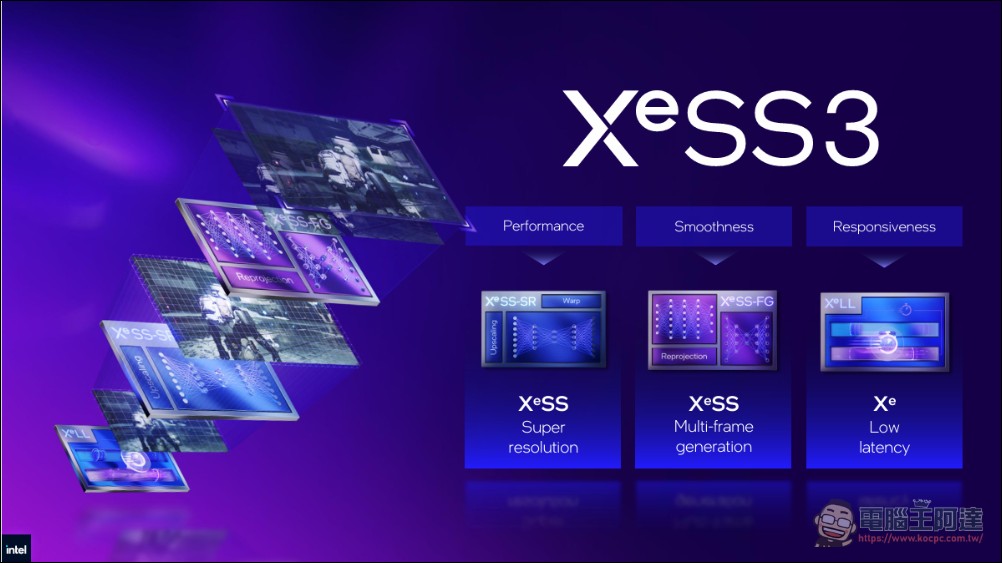
– XeSS Super Resolution: AI-based image upgrading technology, rendering at a lower resolution and then upscaling to the native resolution in exchange for a higher frame rate
– XeSS Multi-Frame Generation: Insert multiple supplementary frames between original frames to further improve smoothness
– Xe Low Latency: Integrate with the game engine to reduce input lag and make control responses more immediate
The effect of these three technologies combined is amazing. According to Intel’s official data, in the test of Cyberpunk 2077 (1080p High, 2x upscaling enabled), AMD Z2 Extreme with FSR and Frame Generation turned on ran to 121 FPS, but Arc G3 Extreme with XeSS Multi-Frame Generation went straight to 199 FPS, a gap of nearly 2 times. In an average test of 15 games, after turning on Multi-Frame Generation, the smoothness of Arc G3 Extreme was also more than 2 times that of Z2 Extreme.
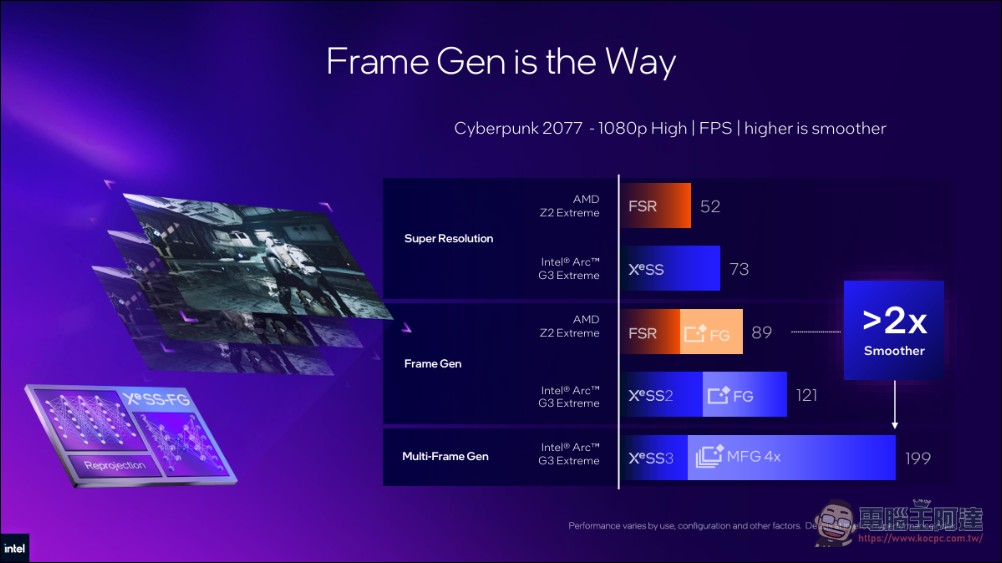
More importantly, AMD’s current RDNA 3.5 architecture does not support similar multi-frame generation technology on handheld chips. This gives Intel a clear technical advantage in the field of AI acceleration.
Actual performance measurement: official data and third-party verification
The performance data officially released by Intel is quite eye-catching:
– At 35W power consumption, the average performance of 36 games is 42% faster than Z2 Extreme
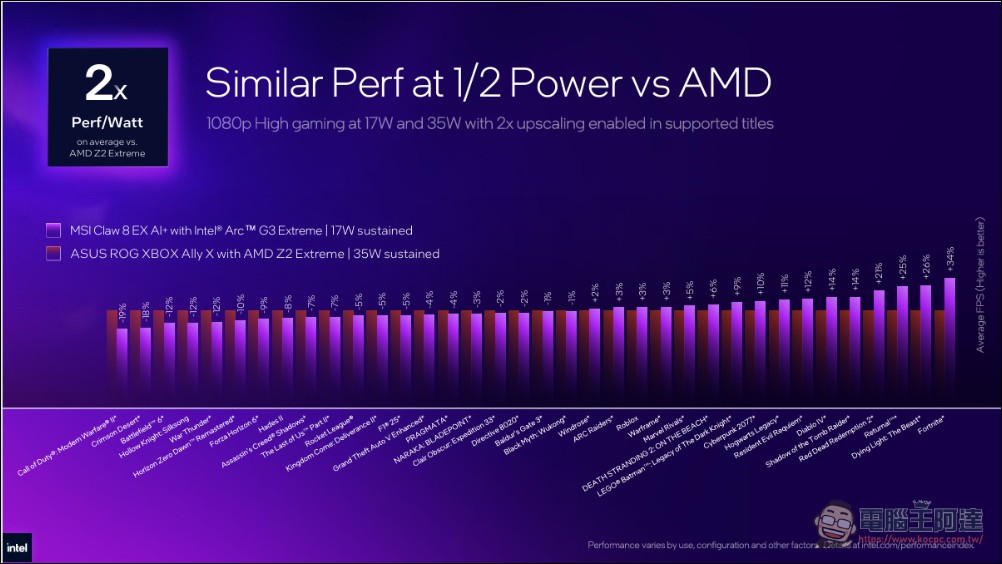
– In 17W battery life mode, the same 36 games are still 20% faster on average
– Performance per Watt is 2 times that of Z2 Extreme
– Up to 11 hours of battery life
The test conditions for these numbers are: both handheld consoles are tested at 1080p High settings with their respective 2x upscaling technologies turned on, testing the MSI Claw 8 EX AI+ (Arc G3 Extreme) and ASUS ROG Xbox Ally X (Z2 Extreme) respectively.
Third-party benchmarks also support Intel’s claims. In the PassMark test, Arc G3 Extreme scored 4,288 points in single-core and 29,622 points in multi-core, leading Z2 Extreme by about 8% (single-core) and 26% (multi-core) respectively. There is a 15% difference in the graphics test section (55 FPS vs 48 FPS).
2+12 (8+4?) https://t.co/gHhDBE6ppO pic.twitter.com/w2DOUp7c05
— X86 is dead&back (@x86deadandback) April 30, 2026
Equipped with handheld console: MSI and Acer debut
The first handheld consoles equipped with Arc G3 Extreme have been confirmed to be launched by MSI, Acer and OneXPlayer. Two of the most anticipated products are already on display at Computex 2026:
MSI Claw 8 EX AI+

– Processor: Intel Arc G3 Extreme
– Screen: 8 inches 1920×1200 120Hz IPS, supports VRR
– Memory: 32GB LPDDR5X 8533MHz
– Storage: 1TB SSD (PCIe Gen4)
– Battery: 80Whr
– Features: Hall effect rockers and triggers, high-end linear motor vibration, integrated fingerprint recognition on the power button, support for Xbox Mode and Android App Player
– Connectivity: WiFi 7, Bluetooth 6, 2x Thunderbolt 4
Acer Predator Atlas 8
– Processor: Intel Arc G3 Extreme
– Screen: 8 inches 1920×1200 120Hz IPS
– Memory: 24GB LPDDR5X
– Storage: 1TB SSD
– Battery: 80Whr (esports notebook level)
– Features: Hall effect rocker and trigger keys with light and dark feel adjustment
An Italian retailer has revealed that the MSI Claw 8 EX AI+ has a suggested selling price of 1,599 Euros (approximately NT$56,000). The price is indeed not low, but considering the 32GB memory, 80Whr large battery and top-of-the-line processor, plus the inherently higher price in Europe, the price when launched in Taiwan should not exceed 50,000.
搭載 Intel 最強核顯 Arc G3 Extreme! MSI Claw 8 EX AI+ 電競掌機遭義大利電商曝光
Xbox Mode: A handheld console can also have a console experience
Intel has introduced the “Xbox Mode” function for the Arc G series processors, which is a controller-optimized, full-screen mode similar to a console experience. In this mode, Windows 11 will switch to an operating experience similar to the Xbox interface, unified management of installed games, eliminating the inconvenience of using a joystick to control the mouse in desktop mode.
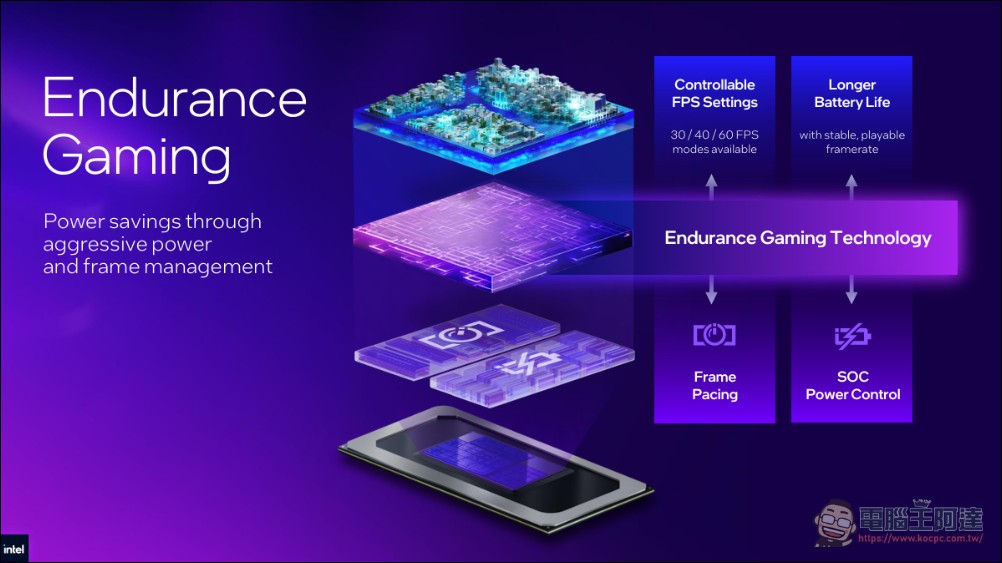
In addition, Intel also provides the Endurance Gaming function, allowing users to customize the FPS upper limit (30, 40, 60) to strike a balance between performance and battery life. Paired with Precompiled Shaders technology, precompiled shader files are downloaded from the Intel cloud to further shorten game loading times.
The new battle situation in the handheld market
The emergence of Arc G3 Extreme has transformed the handheld console market from AMD’s dominance into a true two-power showdown. Intel’s advantages lie in raw performance and the AI acceleration capabilities brought by XeSS 3, as well as the power efficiency of the 18A process. It can still maintain 20% faster performance than Z2 Extreme under 17W power consumption, which means that you can get a smooth experience when playing games in battery mode. This is the most practical selling point for handheld users.
However, AMD is not without chips. The Z2 Extreme powered by ROG Xbox Ally This handheld processor war is just about to begin.
The first batch of handheld consoles equipped with Intel Arc G3 Extreme will be available starting in June 2026, and more OEMs will join in the future. For consumers, only competition can lead to progress, and the price and performance of the handheld market are finally expected to usher in a truly virtuous cycle.
Source: KOCPC Chinese