


NVIDIA officially announced the RTX Spark super chip at Computex 2026’s GTC Taipei keynote. This is NVIDIA’s first SoC designed for consumer Windows PCs. It uses an Arm architecture CPU and a Blackwell architecture GPU, supporting up to 128GB of unified memory. China’s Bilibili technology channel “Geekerwan” released a nearly 8-minute technical analysis video, which comprehensively dismantled the chip architecture, memory bandwidth, ecosystem and software compatibility issues of Windows on Arm.
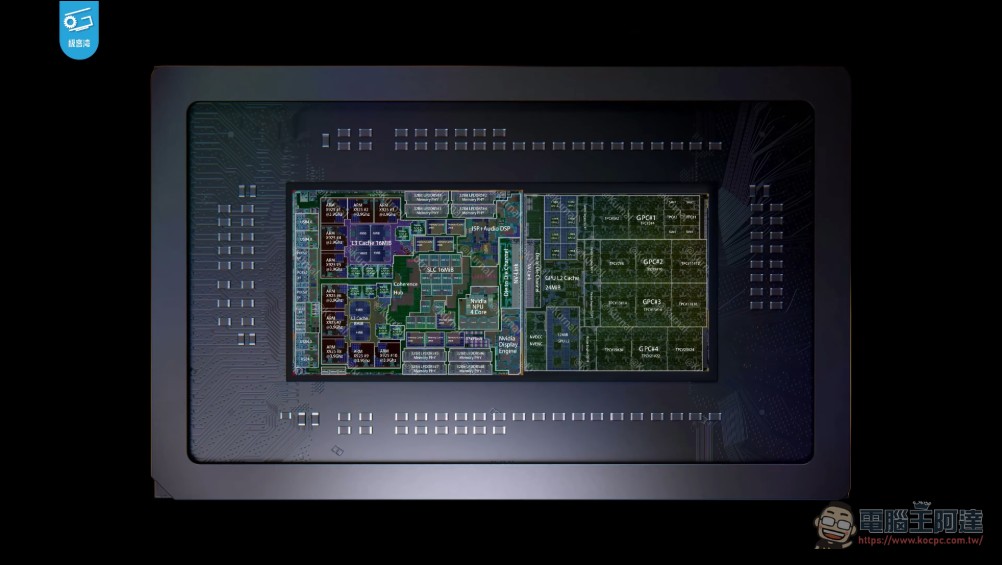
RTX Spark chip architecture: a super SoC composed of two chips
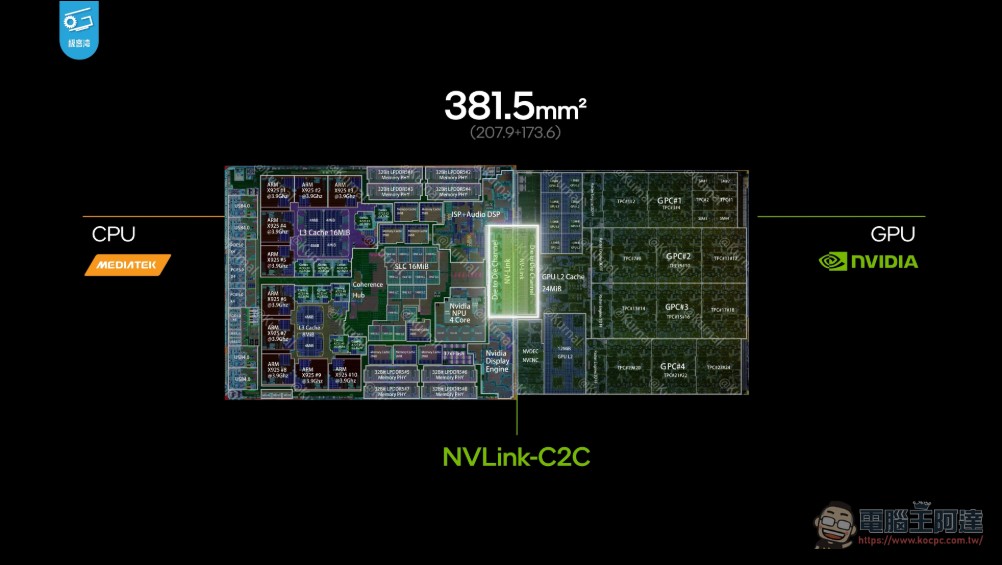
Geek Bay pointed out at the beginning that the processor equipped with RTX Spark comes from the GB10 super chip used in the previous DGX Spark desktop AI workstation, but has been optimized for power consumption in laptops and small desktops. This chip consists of two wafers with a total area of more than 380 square millimeters and is built using TSMC’s N3 process.
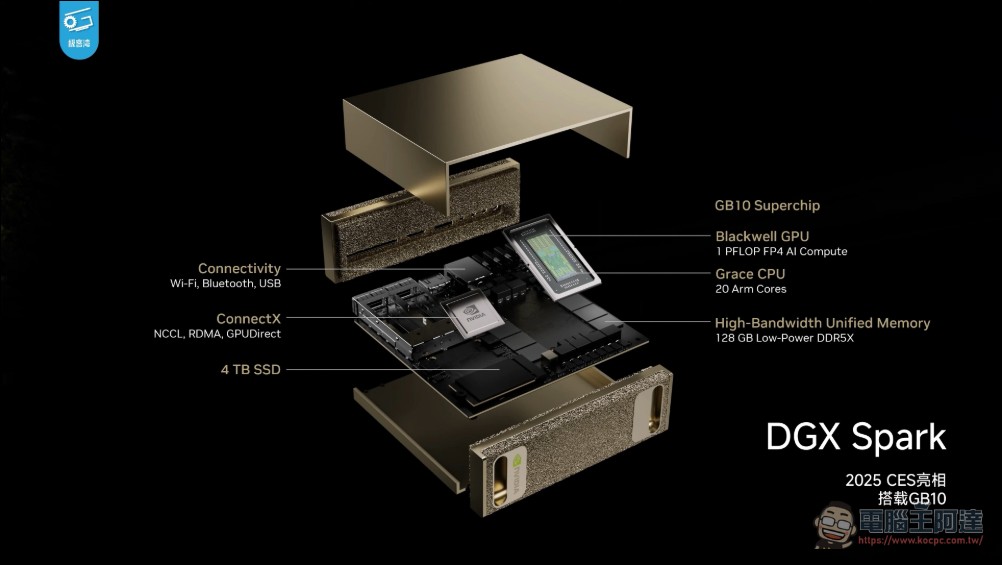
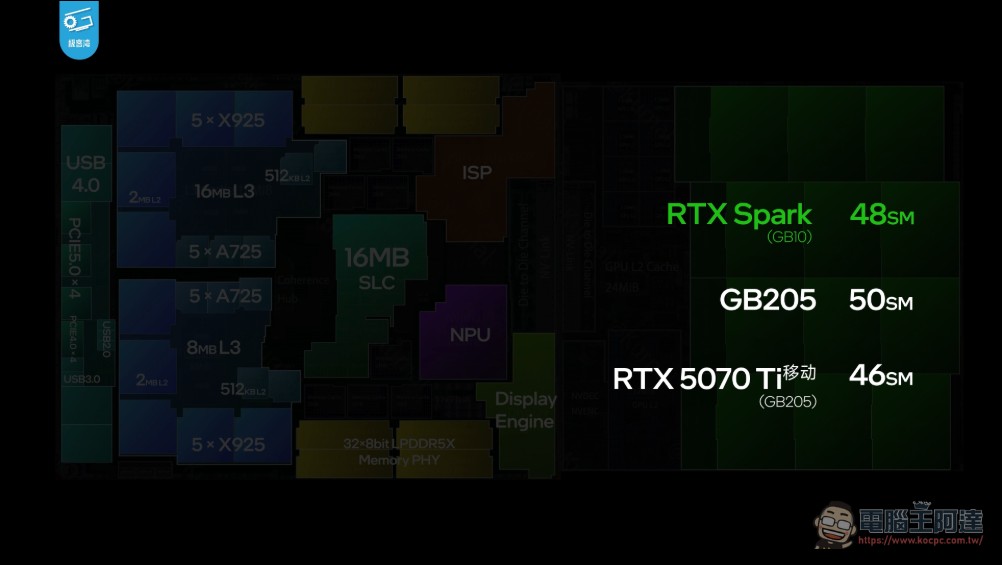
The CPU part adopts Arm architecture and is designed by MediaTek. It includes 10 Cortex-X925 ultra-large cores and 10 Cortex-A725 medium cores, equipped with 2MB and 512KB L2 cache respectively. The CPU and GPU are connected using NVLink-C2C. Geek Bay has observed that there are slight differences in appearance between the X925 ultra-large core and the MediaTek Dimensity 9400 core. The area of each core is slightly smaller. It is speculated that the back-end design has been optimized for the PC’s continuous high-frequency application environment.
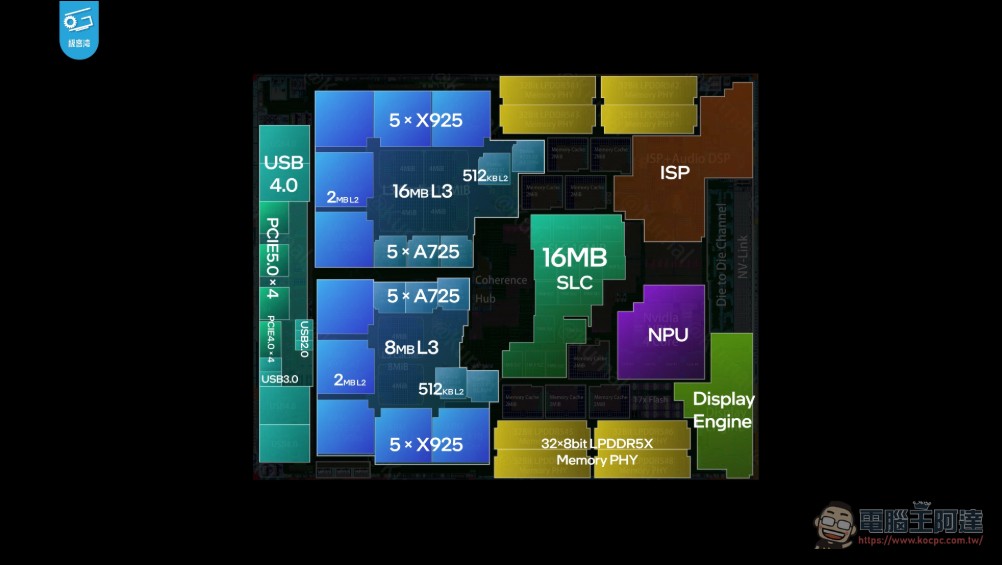
CPU cache architecture and I/O integration
The video dismantles the cache structure of the CPU in detail. The 20 cores are divided into two clusters: one cluster of 5+5 cores shares a 16MB L3 cache, and the other cluster has an 8MB shared L3 cache, for a total of 24MB of L3 cache. In addition, there is 16MB of SLC (System Level Cache) on the chip. In addition to the CPU, this chip also integrates functional areas such as NPU, Display Engine, and ISP, as well as I/O parts such as PCIe, USB, and memory controllers.
GPU: 48 SMs, close to the desktop version of RTX 5070
The GPU on the other side uses the Blackwell architecture, with a total of 48 SMs and 6,144 CUDA cores. Geek Bay pointed out that this scale is close to the GB205 core used in the desktop version of RTX 5070. If compared with laptop GPUs, it is actually larger than the mobile version of RTX 5070. The GPU has a dedicated 24MB L2 cache integrated on-chip, but considering that the memory bandwidth is much lower than that of the correspondingly sized desktop version of the 5070, the 24MB L2 cache is “not sufficient.”
Positioning analysis: not a thin and light chip, but an ultra-high-performance SoC
Geek Bay specifically clarified a common misunderstanding: before the release of RTX Spark, many people thought it was a Qualcomm Snapdragon X series. Some people even imagined that this chip could be used in thin and light notebooks. “But in fact, it is not for thin and light notebooks at all, but an ultra-high-performance SoC.” Its positioning is more similar to products such as Apple M-Pro/M-Max and AMD Ryzen AI Max 395, rather than general laptop processors.
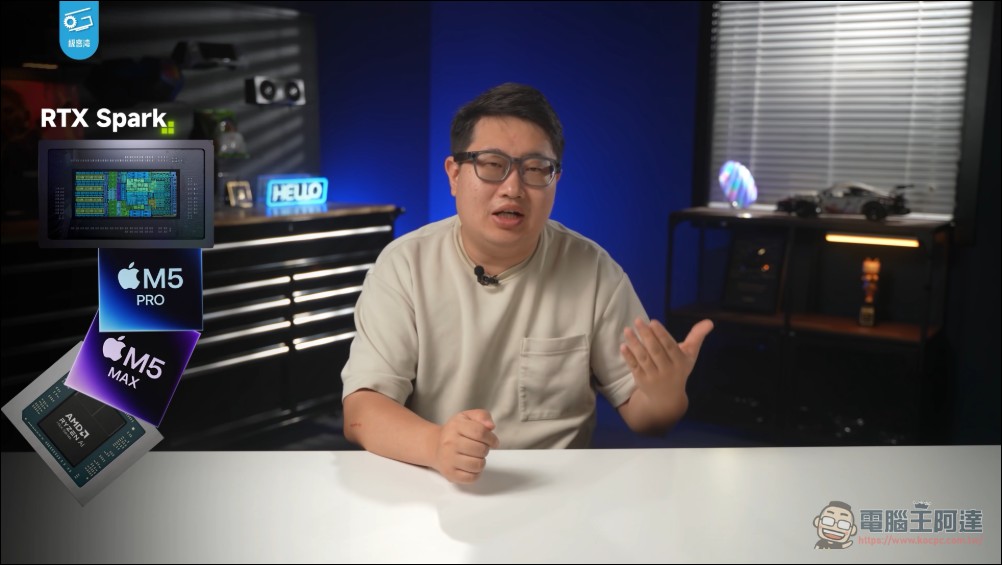
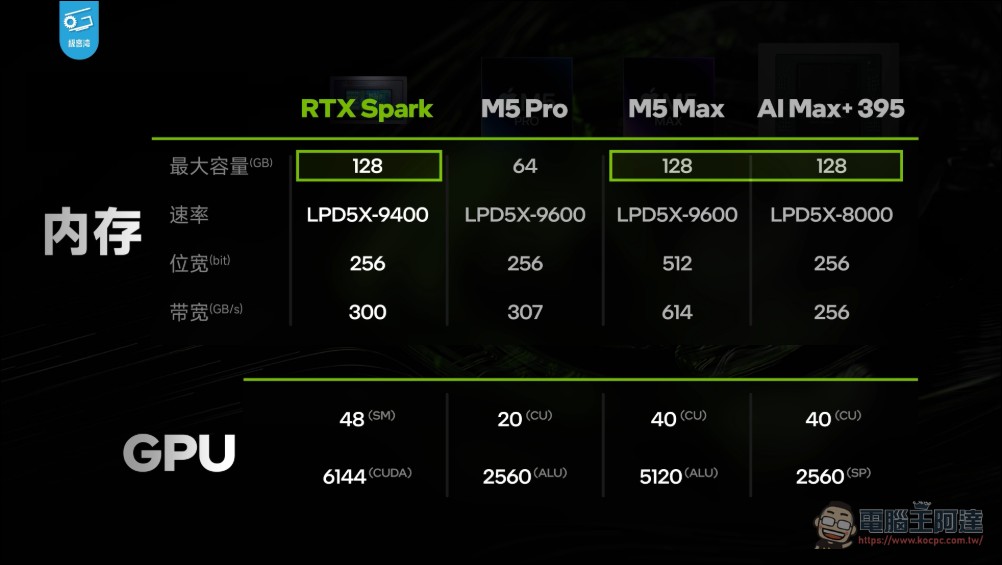
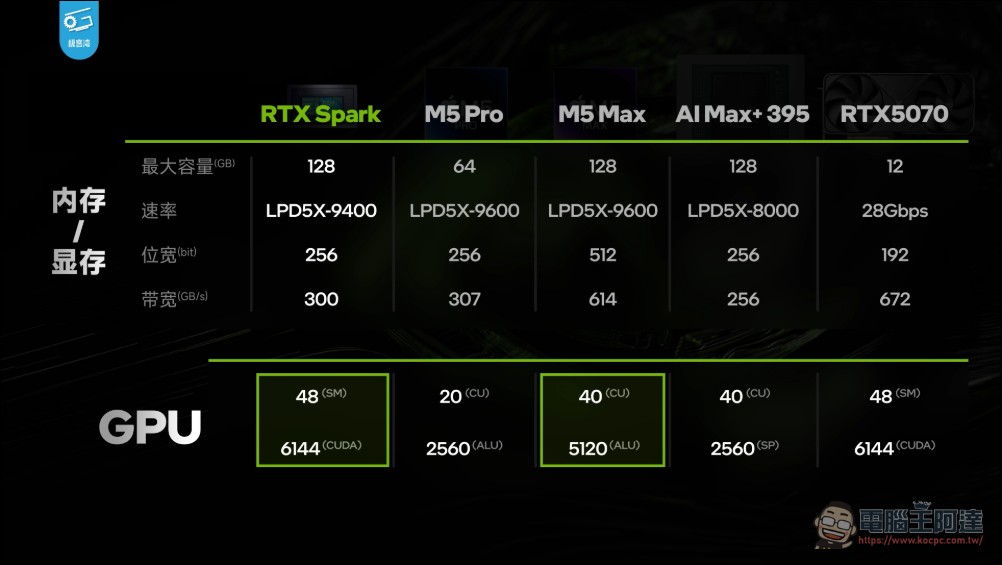
The biggest advantage of this type of SoC is that it can be paired with very large unified memory. This is a very meaningful design given the current huge demand for display memory for AI applications. RTX Spark can be configured with up to 128GB LPDDR5X 9000MHz unified memory with 256-bit bandwidth and a bandwidth of 300GB/s, which is slightly higher than the 8000MHz frequency bandwidth of AMD AI Max 395.
Memory bandwidth comparison: Apple M-Max still has the advantage
Geek Bay compared the memory bandwidth of RTX Spark with Apple M-Pro/M-Max and AMD AI Max 395. The maximum memory capacity of the three can be configured to 128GB, but the bandwidth is different: RTX Spark is 256 bits, 300GB/s; Apple M-Pro is also 307GB/s; while the bit width of M-Max is doubled to 512 bits, and the bandwidth is 614GB/s, the gap is obvious.
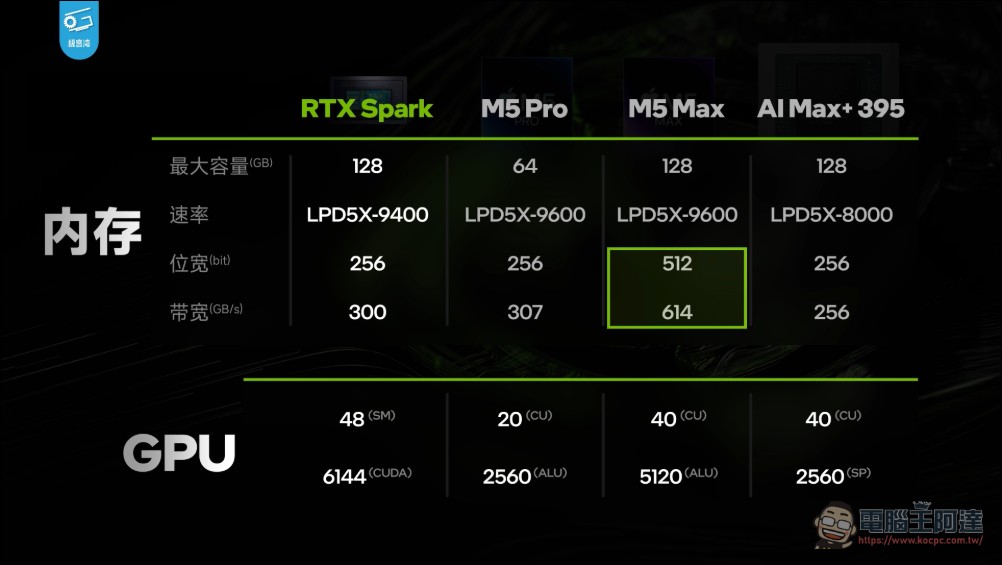
However, in terms of GPU core specifications, RTX Spark’s GB10 has obvious advantages: 48 sets of SMs and 6,144 CUDA cores, which is larger than the 40 sets of SMs of Apple M5 Max, not to mention the comparison with M-Pro and AI Max 395. Coupled with the 5th generation Tensor core, the throughput of this chip has obvious advantages over several other opponents, and it is currently one of the most suitable SoCs for AI inference.
Software Ecology: NVIDIA’s Biggest Moat
Geek Bay believes that another important part of RTX Spark is ecology. Compared with the Qualcomm Snapdragon X series in the Windows on Arm camp, NVIDIA’s ecosystem on the PC platform is much more mature. Whether it is software stacks such as CUDA, TensorRT, OptiX, or good support for games, including support for features such as ray tracing and DLSS, “NVIDIA is completely far ahead.”
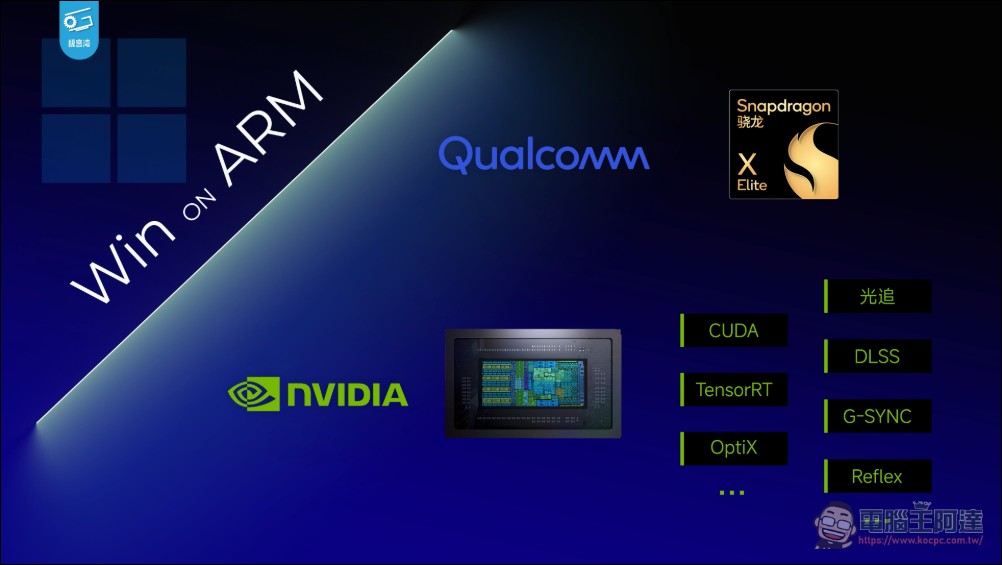
NVIDIA has also promoted applications such as Adobe, Blackmagic Design, Blender, and ComfyUI to adapt to RTX Spark. Adobe is rewriting Photoshop and Premiere from the ground up for this platform, with the goal of 2x the speed of processes such as AI, editing, color correction, and special effects. Geek Bay pointed out that due to NVIDIA’s advantages in software, AI, and game ecology, RTX Spark’s role in popularizing Windows on Arm “should be more promising than other previous chips.”
In terms of AI applications, Geek Bay believes that there is no need to worry at all. With GB205-level core specifications and 128GB of unified memory, this is probably the most suitable notebook product for local inference. NVIDIA claims that RTX Spark can run large language models with up to 120 billion parameters, and the context length can extend to 1 million tokens.
Concern: Software compatibility of Windows on Arm
However, Geek Bay also pointed out “a more worrying issue”: the software compatibility of Windows on Arm. Although the compatibility of the Prism emulation layer was indeed better than expected when testing Snapdragon
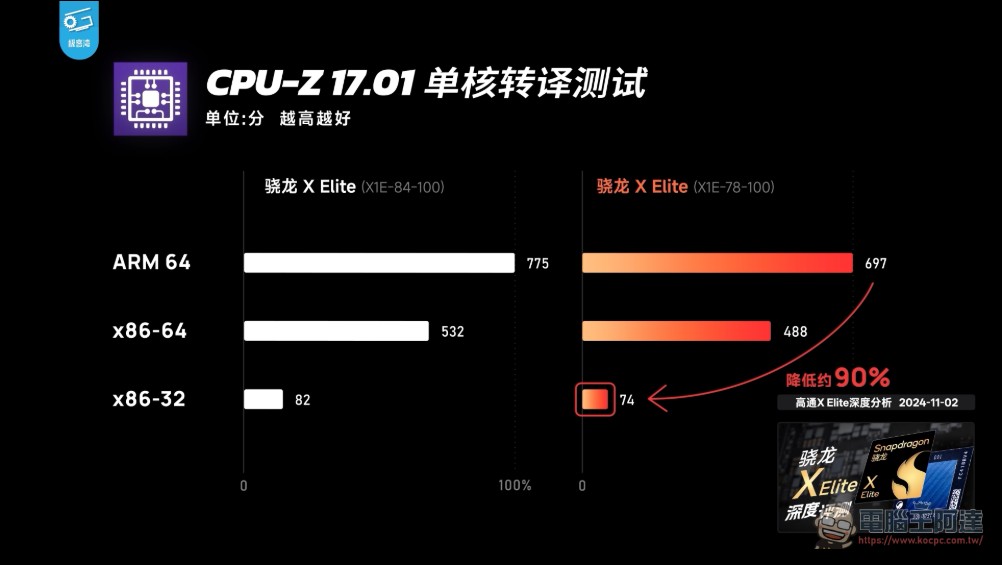
Geek Bay bluntly stated that not all software on the Windows platform will be adapted to the Arm architecture like the Mac platform. There are even a large number of 32-bit applications on the Windows platform, and many software manufacturers lack the motivation to promote native Arm adaptation. “This is a problem that Arm CPU has to face on the Windows platform.”
Product planning: Aiming at the high-end positioning of MacBook Pro
After the GTC conference, some OEM manufacturers have announced notebook products based on the RTX Spark platform. Geek Bay revealed that NVIDIA has set strict hardware specifications for laptops on the RTX Spark platform: they must use a double-layer OLED panel that complies with the NVIDIA G-Sync standard and covers at least 100% of the P3 color gamut, with a peak brightness of no less than 1,000 nits and a refresh rate of at least 120Hz. Even the connection port, battery capacity, and body design have high standards, and the battery life must be able to provide all-day battery life.
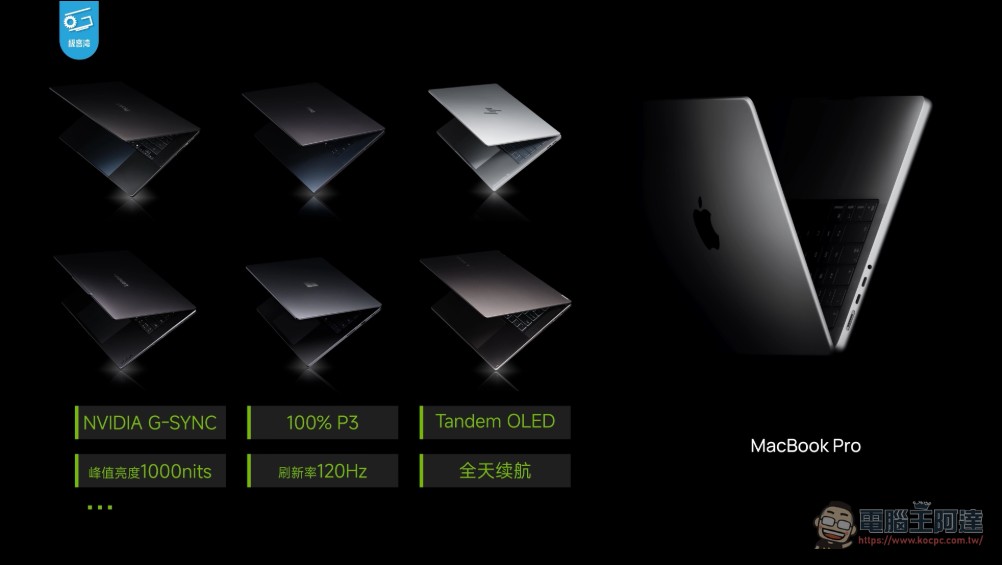
“This specification seems to be aimed at the MacBook Pro,” Geek Bay said. The initial product positioning is quite high-end, and the price of the first product is definitely not cheap. In addition to laptops, there are also small desktop computers brought by various OEM manufacturers. RTX Spark is very suitable for this form, but it is still a high-end product. It is expected to sell for more than NT$100,000 (approximately more than US$3,000), mainly targeting users with local AI needs.
Demo display: light chasing project and game performance
At the GTC conference, NVIDIA showed multiple demos. In terms of games, native Arm works include Cyberpunk 2077 and Wukong. It can be seen that DLSS and other functions are running normally, but other games are run through Prism translation. After all, translation operation cannot bring out the full performance of the CPU. Currently, Chinese game manufacturers including NetEase, Perfect World, Eagle Point, and MiHoYo are actively supporting RTX Spark games.
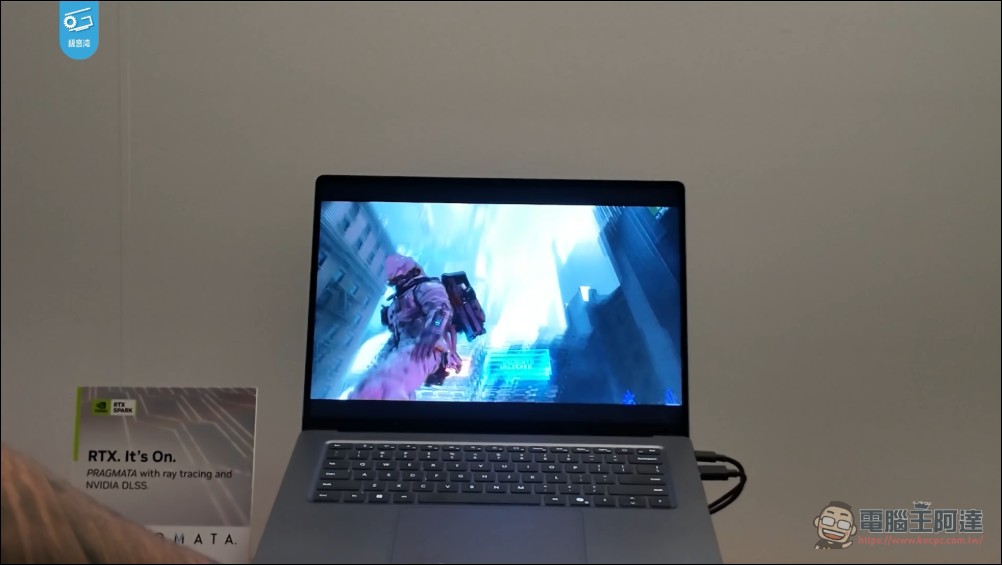
NVIDIA also showed the use of RTX Spark models to run Unreal Engine 5 “The Hacker Mission” Demo. The size of this project is quite huge. With GPU performance and huge unified memory, RTX Spark runs very smoothly. After turning on ray tracing, you can also achieve a preview performance of about 20 frames. “This should be the strongest performance among similar SoCs.”
Interested friends can also watch the video directly:
Conclusion: New hope for Arm-based PCs
The emergence of RTX Spark gives Arm architecture new competitiveness in the Windows PC market. NVIDIA relies on its deep accumulation in GPU, CUDA ecosystem and AI reasoning, combined with 128GB unified memory and MediaTek’s CPU design, to create a super SoC with eye-catching specifications. However, the software compatibility of Windows on Arm is still the biggest variable. Whether RTX Spark can truly change the PC market structure depends on the actual performance and software adaptation progress after it is launched this fall.
Source: KOCPC Chinese