


NCC recently announced the latest number of base station licenses for each county and city in Taiwan., the total number of base station licenses in Taiwan in May 2026 was 125,566, an increase of 687 from the previous month. Among them, the number of 5G base station licenses increased by 597 (accounting for 87% of the total), and the proportion of 5G base station licenses increased to 52.5%.
Taiwan mobile base station 4G and 5G latest in 2026What is the number of licenses? Taiwan’s base stations adopt the NSA architecture. Why is the number of licenses for 5G base stations higher than that of 4G base stations? The following is a summary and analysis:
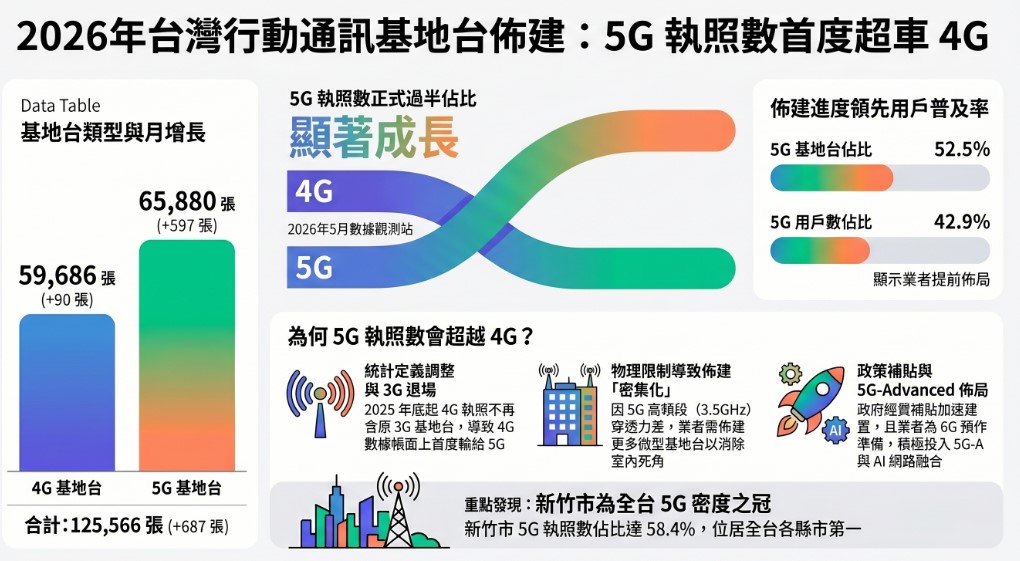
According to the latest 4G and 5G base station license numbers released by the NCC, the number of 5G base station licenses is already much higher than the number of 4G licenses. Taiwan adopts 5G NAS non-independent architecture. It is intriguing that the number of 5G base station licenses is much higher than that of 4G. The following is a summary video and detailed description of Taiwan’s latest base station license number statistics in 2026 and the discussion of the contradictions of 5G base stations:
The latest number of 4G and 5G base station licenses in 2026.
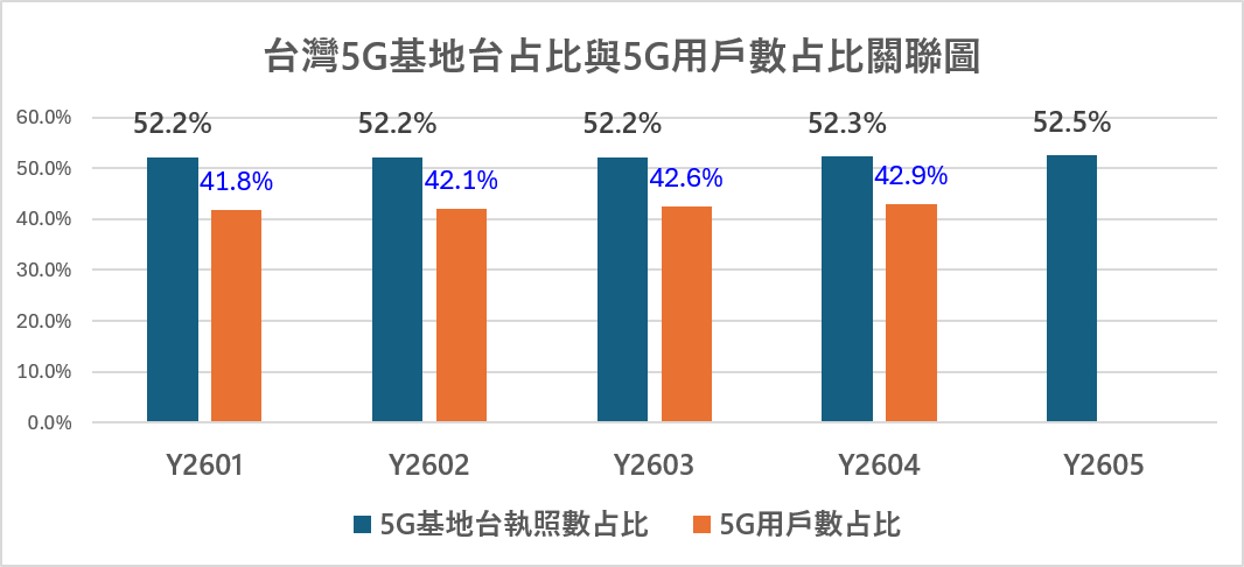
According to the latest announcement by NCC on the number of 4G and 5G base station licenses in Taiwan (May 31, 2026), the number of 4G and 5G base station licenses and the overall number of base station licenses continue to grow. The number of 4G base station licenses is 59,686 and the number of 5G base station licenses is 65,880, totaling 125,566. The overall number of licenses increased by 687 compared to the previous month (4G+90; 5G+597). The overall number of 5G base station licenses increased from 52.3% in March to 52.5% in April. The number of 5G base station licenses increased significantly compared with 4G.
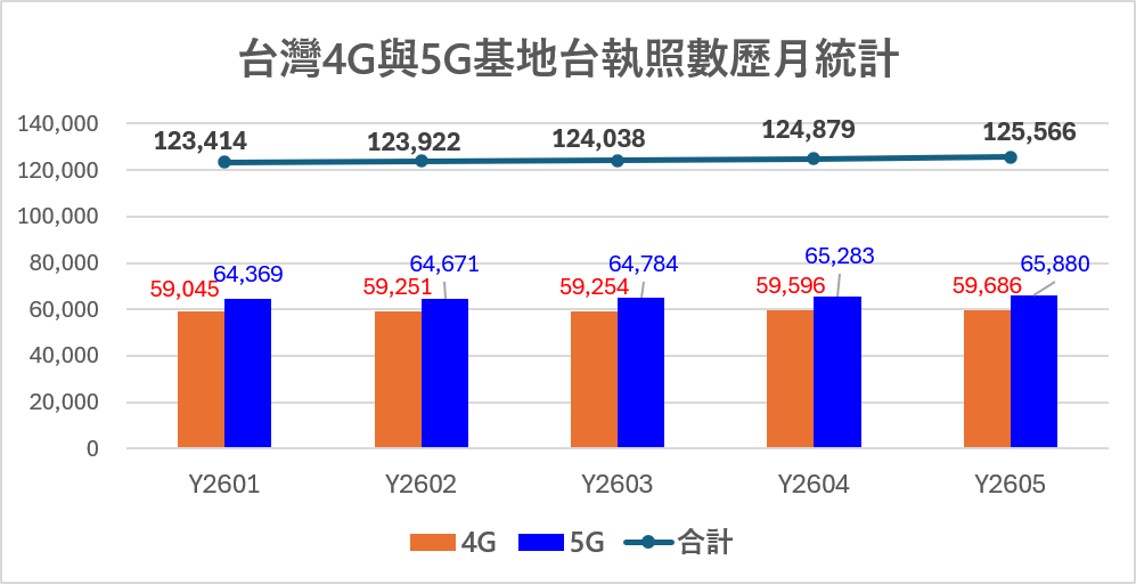
Looking at changes in the overall number of base stations in various counties and cities, the top five in the total number of new base station licenses in May were New Taipei City (+126), Taipei City (+90), Kaohsiung City (+117), Taoyuan City (+88), and Taichung City (+70) , Yunlin County (+53 licenses); the top five counties and cities with the smallest increase in the overall number of licenses are Nantou County (-1 license), Taitung County (+2 licenses), Chiayi City (+2 licenses), Penghu County (+0 licenses), Kinmen County (+3 licenses), and Lianjiang County (+3 licenses).In terms of the proportion of 5G base station licenses in various counties and cities, the top five with the highest proportion of 5G base station licenses are Hsinchu City (58.4%), Taoyuan City (56.0%), Chiayi City (55.4%), New Taipei City (54.8%), and Keelung City (54.2%); the top five counties and cities with the lowest proportion of 5G base station licenses are Kinmen County (38.6%), Taitung County (43.9%), Pingtung County (46.2%), Chiayi County (49.7%), and Penghu County (49.4%); The top five new 5G base station licenses compared to last month are New Taipei City (+109 licenses), Taoyuan City (+76 licenses), Taichung City (+74 licenses), Taipei City (+56 licenses), and Yunlin County (+49 licenses).
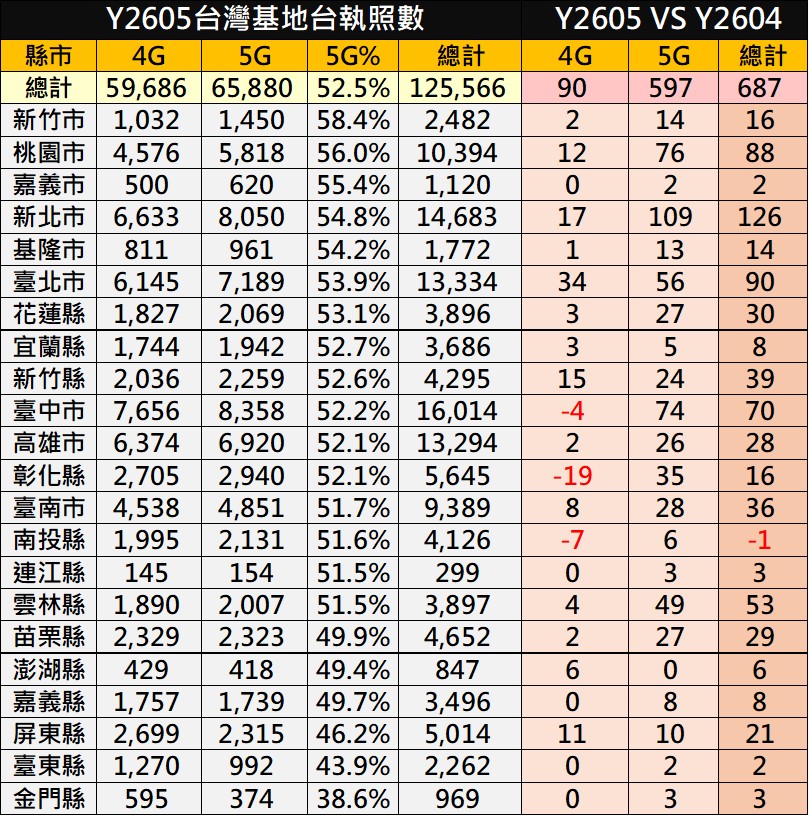
According to the latest number of mobile phone users in Taiwan (2026/04) released by the NCC, the total number of mobile phone users is 28.354 million, the number of 5G users is 12.164 million, and the number of 5G users accounts for 42.9%. The proportion of 5G base stations remains at 52.3%. It can be seen that telecom operators have made advance arrangements for the addition of base stations and maintains it at 52.2%~52.5%. The proportion of 5G users is increasing month by month at 0.3%~0.5%!
Why is the number of 5G base station licenses higher than the number of 4G base station licenses?
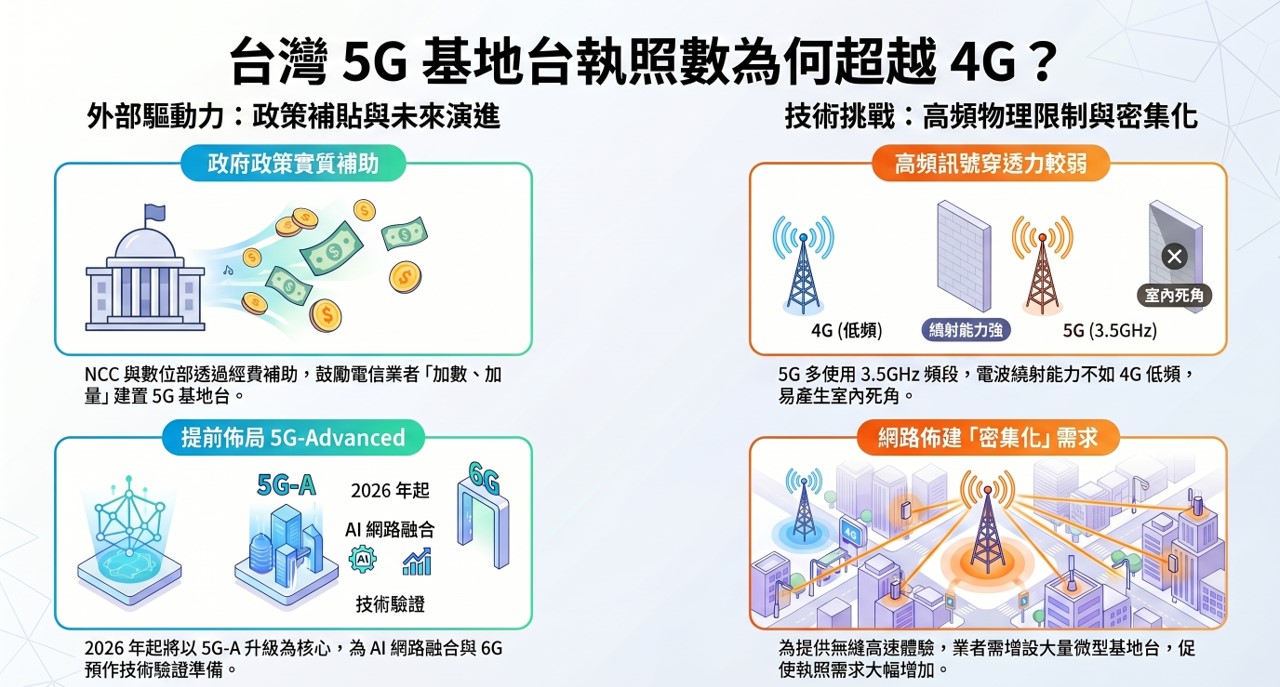
Taiwan’s 5G mobile base stations adopt a non-standalone (NSA) architecture. Most 4G and 5G base stations are co-located. In theory, the base stations of the two should be the same. However, starting from December 31, 2025, the number of 4G base station licenses counted by the NCC no longer includes “4G general base stations” (formerly 3G base stations), leaving only 58,905 4G base stations in Taiwan, which were lost to 5G base stations for the first time. The number of 5G licenses in Taiwan is higher than that of 4G, mainly due to government policies to vigorously subsidize the deployment, advance deployment of 5G-Advanced (5G-A), and the intensive network planning carried out by telecom operators to improve coverage.The detailed reasons why the number of 5G base station licenses in Taiwan exceeds that of 4G are as follows:
A. Official policy to accelerate deployment:
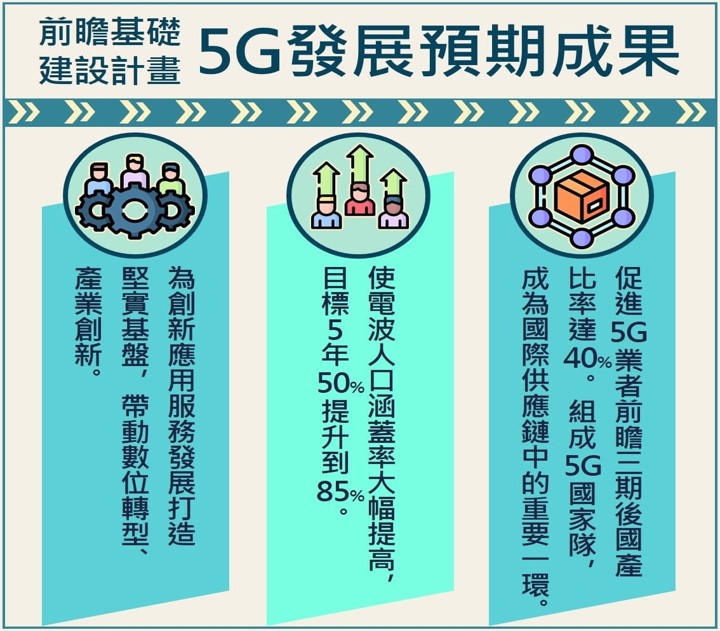
The National Communications Commission (NCC) and the Ministry of Digital Development have promoted plans to subsidize 5G network construction, using substantial funds to subsidize telecom operators to increase the number and capacity of 5G base stations to accelerate the achievement of 5G radio wave coverage for the entire Taiwan population.
B. Lay out 5G-Advanced (5G-A) in advance:
To prepare for 6G and deeply integrate AI into the underlying network architecture, Taiwan’s telecom operators’ mobile network layout from 2026 will focus on “5G Advanced (5GA)” upgrades, independent networking (SA) construction and the commercial implementation of low-orbit satellites. According to corporate estimates, the mobile network construction of the three major telecoms in 2026 is expected to unlock procurement opportunities of approximately 25 billion yuan. 5G-Advanced (5G-A) is the key mobile network construction project of the three major telecoms this year.
However, Taiwan currently has 5G-Advanced (5G-A) physical base stations and commercial network test sites. Most of them are in the technology verification and demonstration stage and have not yet been fully commercialized and open to the general public. This means that the 5G SA base stations added by telecom operators in Liudu are not available to general users, so you may not be able to use them if you see them!
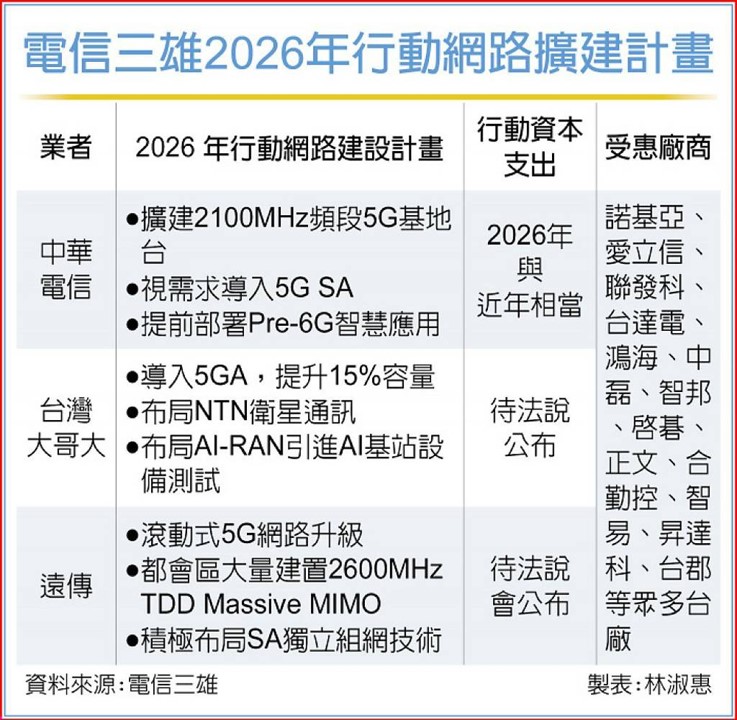
Image source: Economic Daily
C. Physical limitations of poor high-frequency penetration:
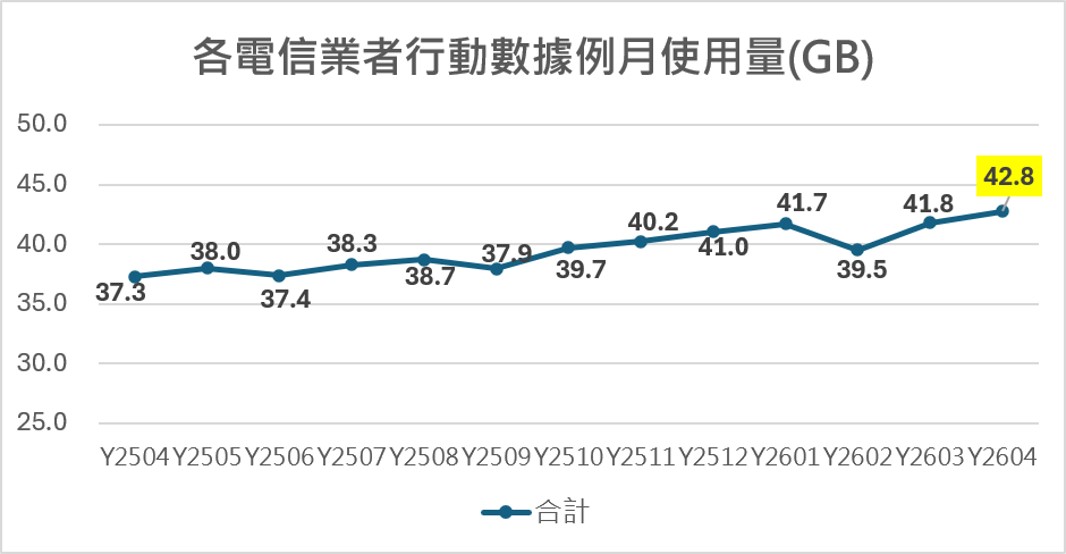
Although the number of mobile phone users in Taiwan has slightly converged due to the implementation of strict anti-fraud controls on telecommunications phone numbers, average user data usage has continued to rise, resulting in telecom operators having to expand mobile data capacity through all-optical computing networks, AI base station site selection, co-site multi-frequency… and other technologies.
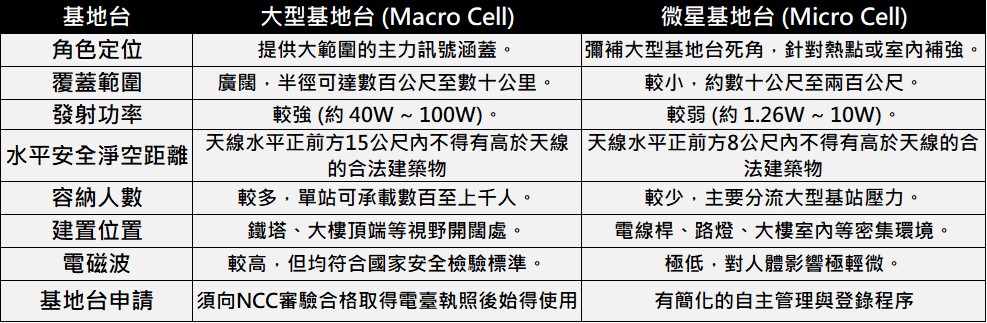
Since Taiwan’s 5G services mostly use mid-to-high frequency bands (such as 3.5GHz), the diffraction and penetration capabilities of radio waves are far inferior to the low-frequency bands of 4G. In order to avoid indoor dead spots and provide a seamless high-speed experience as users’ mobile data usage and 5G users continue to grow, in addition to frequency band refarming (Frequency Refarming), operators are also deploying more micro base stations in urban areas to “densify” the network, which in turn generates a huge demand for licenses.
However, according to the current base station application regulations, most micro base stations only have a transmit power of less than 10W. Telecom operators only need to carry out simplified independent management and login procedures in accordance with the law. It is unknown whether they will be included in the number of licenses announced by the NCC every month!
As the number of mobile users in Taiwan increases data usage, telecom operators are unable to expand their base stations and back-end networks at a pace that can keep up with the demand for data usage. Although Taiwanese operators continue to increase the number of 4G and 5G base station licenses every month, it is not equivalent to the actual number of current 4G and 5G users. In addition, the newly added 5G SA base stations are not yet available for general users. Therefore, most mobile users are probably indifferent to the increase in the number of monthly base station licenses in the telecommunications industry!
Source: KOCPC Chinese