


Musk just shared a video of himself and his team members on the X platformInterview video, the content mentioned Starlink V3, space computing platform, Mars project and xAI and other things experienced in the past “typical year”. It also showed in detail the technical architecture, mass production schedule of AI satellites, and the long-term blueprint extending from the earth’s orbit to the moon. This is not a concept video, but a product announcement with specific data, factory progress and chip specifications.
Musk reveals the ultimate blueprint: Starlink V3, space data center, lunar mass projector
Kardashov Level: A Civilization Upgrading Plan Starting from “Insignificant”
Musk moved out the Kardashov Index from the beginning (Kardashev Scale) as a framework, which he explains is the most objective way to measure the progress of civilization, by how much energy you can harness. The first type is to use all the energy on the earth, the second type is to use all the energy of the stars, and the third type is to use the energy of the entire galaxy.
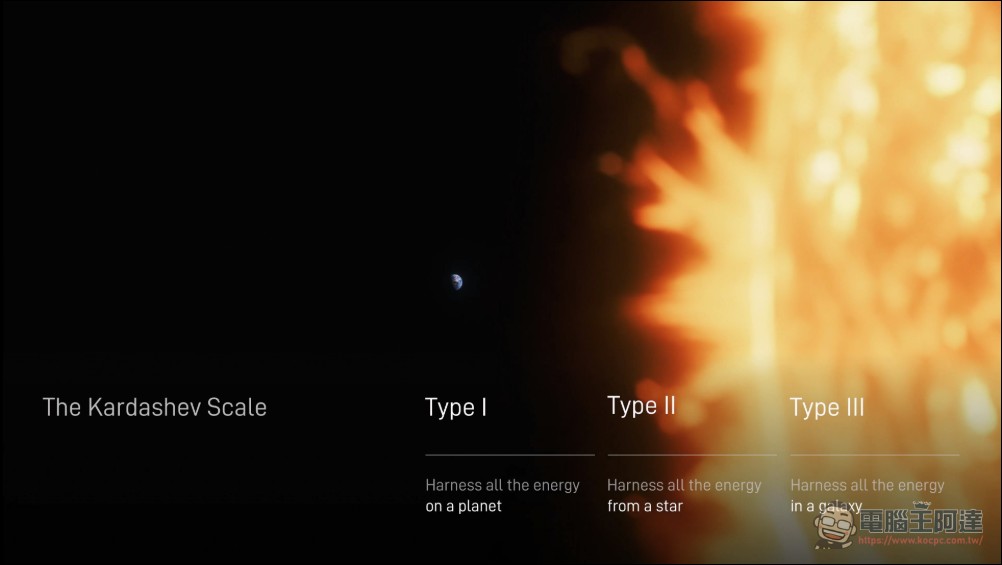
“We’re not even at the Kardashov level right now,” Musk said. “The sun accounts for 99.86% of the mass of the solar system, and the entire mass of the earth is in the category of tiny miscellaneous things. The power output we currently use is far less than one trillionth of the sun.” To start meaningful improvement, solar energy must be deployed into space. This is where AI satellites start.
AI satellite tech specs: 150 kilowatts, NVIDIA GPU rack, simpler than Starlink
SpaceX showed off a draft design for the first version of its AI satellite. Base specs are 150 kW peak power, 120 kW sustained power, roughly equivalent to a rack with an NVIDIA GV300 (72 GPUs).
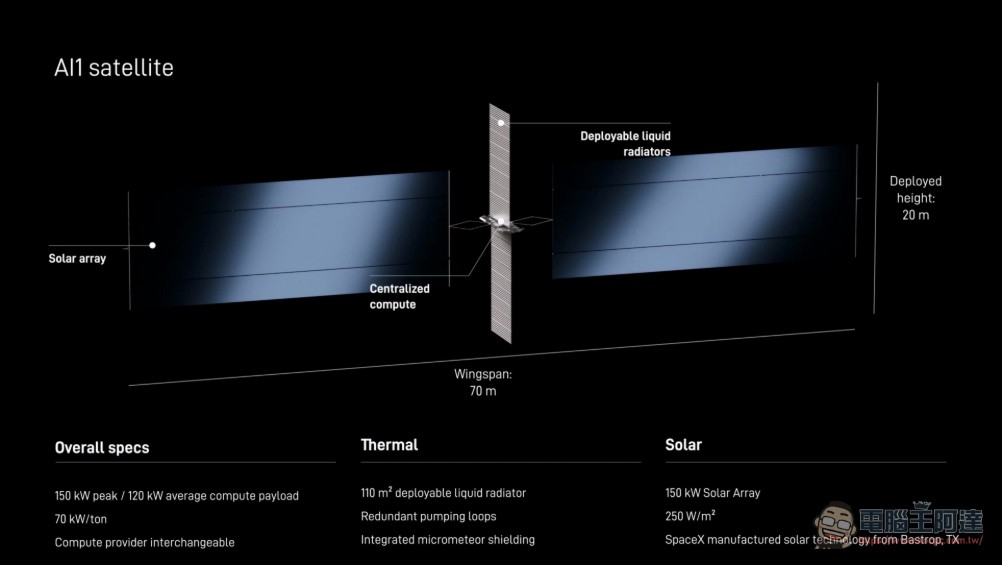
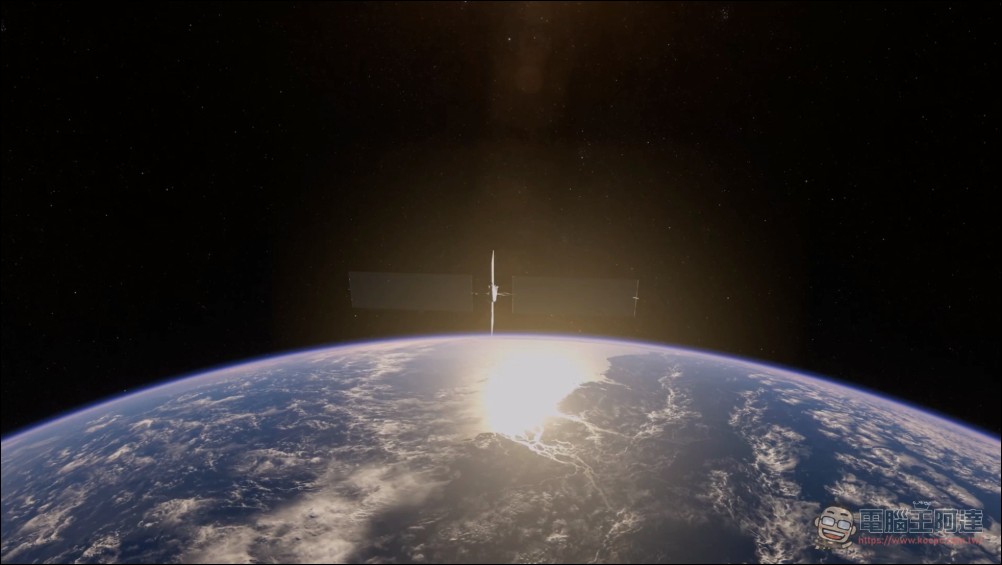
The team emphasized that AI satellites are actually simpler than existing Starlink satellites. Starlink satellites have huge phased array antennas, powered arc antennas, and a lot of laser links; AI satellites are essentially solar panels, radiators, and some laser links. “The easier one to design is the AI satellite,” said a SpaceX team member. “It’s just a little bigger.”
The radiator is designed with double-sided radiation, with the blade facing the sun, and has a heat dissipation capacity of approximately 1,400 watts per square meter. Solar panels are 250 watts per square meter. These technologies have been proven on Starlink V3 satellites, and SpaceX believes this is not a super difficult engineering problem.
Starship: the infrastructure for all projects
The premise of AI satellites is to be able to put large amounts of mass into orbit. Musk said that SpaceX has currently put about 85% to 90% of the world’s payloads into orbit through Falcon 9 and Falcon Heavy, but to increase the current number of about 2,500 tons per year to millions of tons per year, it must rely on Starship.
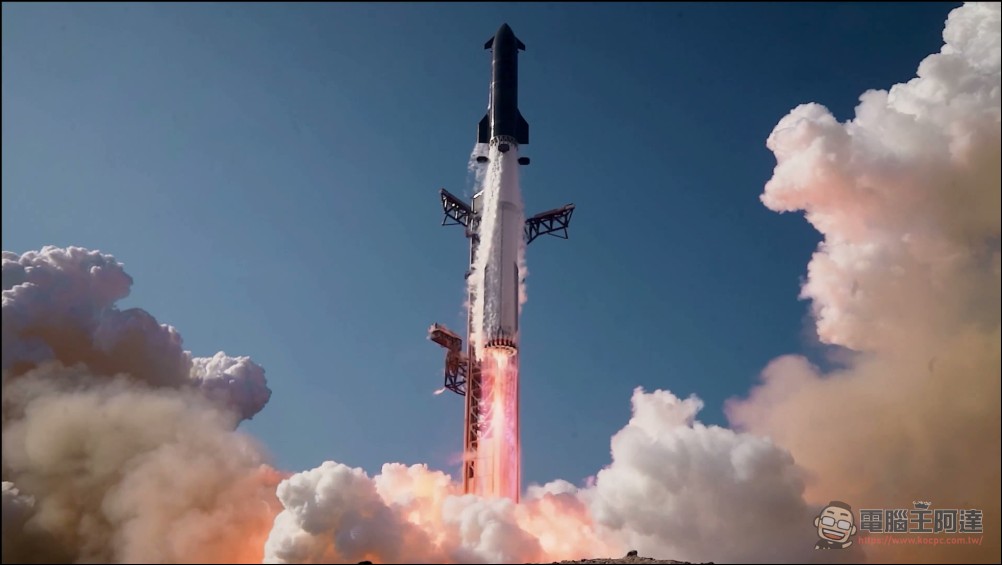
Starship V3 had more than twice the thrust of the Saturn V moon rocket, and by version four it was nearly three times more powerful. The team’s goal is to reach 1 million tons per year into orbit within three years and achieve rapid reuse. Like an airplane, the rocket will be picked up by the tower after landing, put back on the launch pad, and fly again directly without refurbishment.
“Every mode of transportation can be reused, otherwise it would be simply not feasible as a transportation system,” Musk said.
TeraFab: 100 million square feet of wafer factory
One of the most astonishing numbers in the film is the size of TeraFab. The wafer manufacturing plant in Bastrop, Texas, covers an area of approximately 100 million square feet, 10 times the size of the Tesla Gigafactory in Texas. The first phase cost approximately US$55 billion (approximately NT$1.79 trillion), and may eventually expand to US$119 billion (approximately NT$3.87 trillion).
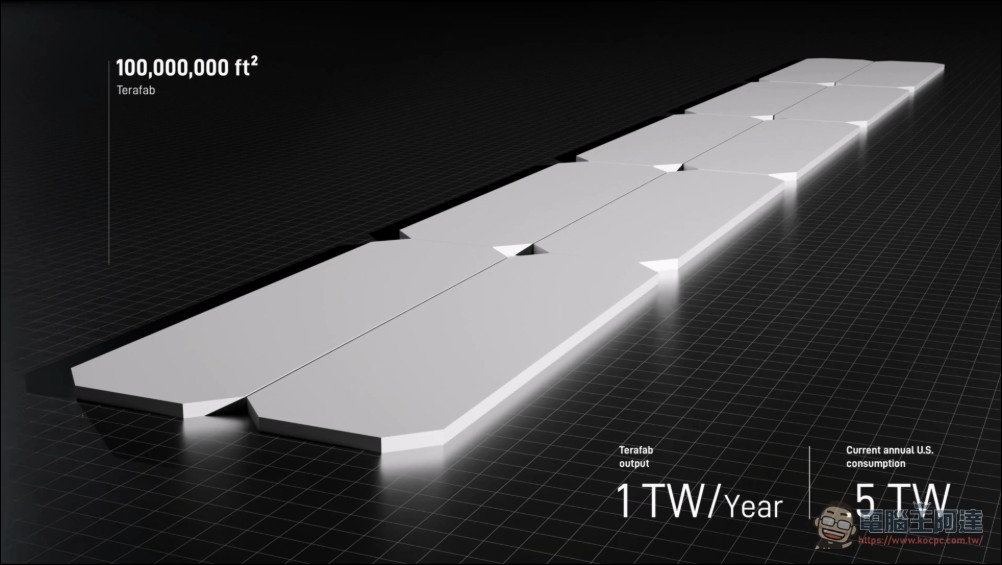
TeraFab’s goal is to produce the equivalent of 1 billion kilowatt-level chips per year, which is 1,000 gigawatts of AI computing power, equivalent to the electricity consumption of the entire United States. The reference design is currently based on NVIDIA Rubin chips, but there will also be a TPU version. Essentially, any existing chip will fit in.
SpaceX’s timeline is to reach 1 gigawatt of space AI computing power per year by the end of next year, and then expand by an order of magnitude every year: 10 to 100 gigawatts in 2.5 to 3.5 years, and eventually 1,000 gigawatts through TeraFab.
Lunar Mass Projector: The Ultimate Blueprint for Sci-Fi Grades
The final stretch of the film moves into its most daring territory. Musk mentioned that when the limits on Earth are exceeded, the next step is to build a mass driver on the moon, an electromagnetic launch system that can launch AI satellites directly from the lunar surface into orbit.
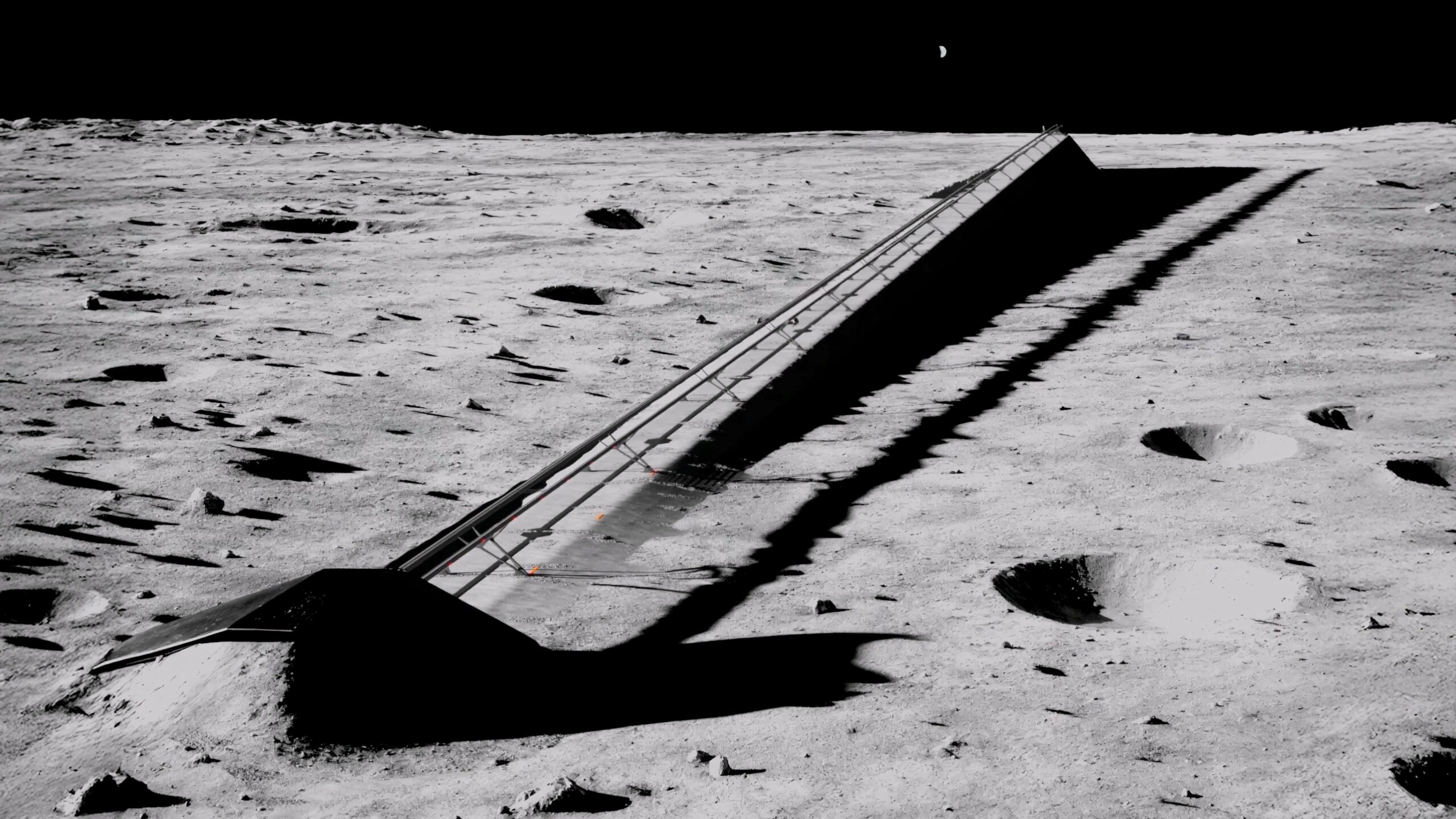
“If that doesn’t get you excited about the future, I really don’t know what will,” the team member said. Musk responded: “I’d be the first to jump there. I think everyone should go to the moon at least once.”
This concept is not proposed for the first time. Space.com reports that Musk is following the space vision proposed by Gerard O’Neill in 1974. But combining xAI’s AI computing power needs with SpaceX’s launch capabilities does make this vision closer to reality than ever before.
We have also translated this content into Chinese. Friends who are interested can take a look:
External reaction: Excitement and skepticism coexist
The video sparked a lot of discussion on social media. The reaction from the technology investment community is roughly divided into two groups:
Supporters believe that SpaceX integrates launch, satellites, AI computing power and chip manufacturing in the same ecosystem, which is unprecedented vertical integration. PitchBook’s analysis points out that Starlink is currently a stable cash flow engine, while AI satellites and TeraFab are the “growth narrative” in the SpaceX IPO story. SpaceX CFO Bret Johnsen emphasized in an interview that Starlink already has 10.3 million users, covering 164 countries, and Starship’s 10-fold cost reduction will unlock all subsequent plans.
Skeptics focus on actual execution risks. InvestorPlaceAnalytical bluntness“SpaceX IPO hit the wall of reality,” pointing out that TeraFab’s $119 billion cost, the difficulty of cooling and maintenance of the space data center, and the schedule of the lunar project are all extremely challenging. TechCrunchpoint out, Musk needs a new vision to support the valuations of both SpaceX and xAI, and “Moon Base” just fills this role.
Futurum Group’sanalyzeA more structural point of view was put forward: SpaceX’s $1.25 trillion acquisition of xAI combined the three businesses of rockets, Starlink and AI into one, but how to justify this combination before the IPO is the biggest concern for investors.
Conclusion: A plan that is being implemented, not a fantasy
Different from Musk’s “Mars colonization” vision in the past, this AI satellite project has a clear technical path and mass production schedule. Solar panels, radiators, and laser links have all been verified on Starlink V3; TeraFab has started construction, and Intel has signed on as an foundry partner; Bastrop’s satellite manufacturing facility is under construction.
But every step from 2,500 tons in orbit per year to millions of tons per year, from 1 gigawatt of space computing power to 1,000 gigawatts, from a Texas factory to a lunar mass projector, is an order of magnitude jump. Musk himself said: “This is just our best guess, not a promise.” As for whether the Haikou he boasted this time will come true, let us wait and see.
Source: KOCPC Chinese