


Adobe launched a set of AI features in Acrobat last April. The Acrobat AI Assistant can handle tasks like summarizing text and finding information across different documents — fairly standard AI capabilities, nothing groundbreaking. Now, however, Adobe has added new smart contract features that enable it to identify contracts, generate overviews, and explain specific clauses and paragraphs based on user needs.

Adobe hopes to use AI add-on features to help users understand contract content.
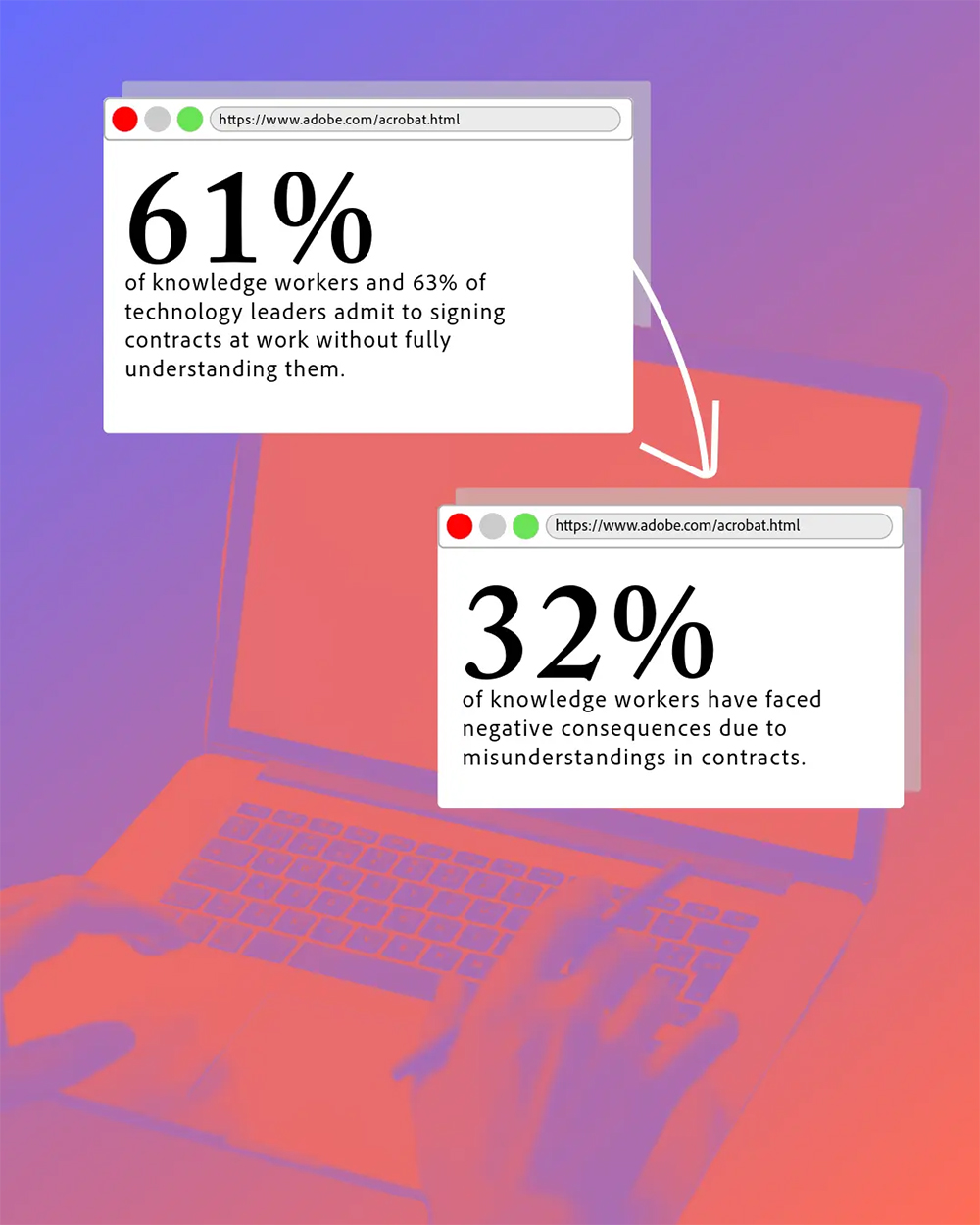
Whether it’s a service agreement, privacy policy, or labor contract, even a minor change to any clause can affect the rights and obligations of the parties involved. However, not everyone has the patience to read through a lengthy document, and even those who do may not fully understand all the legal jargon mentioned throughout. Adobe official surveyIt shows that in the U.S., 73% of consumers, 68% of knowledge workers, and 91% of small business owners sign at least one contract per month. Over 60% of white-collar workers admit that when signing contracts at work, they are not clear about the actual contents of the document. Nearly one-third of workers say they have faced labor disputes due to signing contracts they did not fully understand.
Adobe’s new smart contract feature can help address contract comprehension issues by generating overviews, identifying and defining key terms, and answering questions with references to relevant legal documents. This does not fully resolve the problems that arise when workers without a legal background or adequate legal support sign binding agreements with employers, but assuming Adobe’s AI is as reliable as the company claims, it may help ease some of the pressure of signing contracts.
Adobe will focus on Acrobat AI AssistantThe smart contract feature helps workers who frequently handle contracts, but in reality it applies to everyone. If you want to get this feature, you need to pay an additional subscription fee of US$4.99 per month on your Adobe account. If you handle a large volume of contracts, it is still quite worth considering.
Currently, the smart contract feature is initially available to English-speaking users, and in the future, it is expected to expand globally, support more languages, and benefit more people who get bleary-eyed from reading contracts.
Source: KOCPC Chinese