


There are many strange products in the PC world. For example, in the past, there were Netbooks that were miniaturized in size and built with customized Linux systems and very power-saving processors at the time. In recent years, there have been alternative models that turned PCs into handheld game consoles. GPD is particularly attentive in this regard. Their latest notebook also integrates the operation keys of the game controller, allowing users to have a novel feeling of two-in-one functions. However, they have recently taken a different approach and found a new topic. That is to discuss cooperation with Valve, which has become a hot target among players through the release of Steam Deck, to use Steam OS on the recently launched 2-in-1 laptop. If the cooperation is concluded, perhaps GPD’s computer will be the second game console with built-in Steam OS.
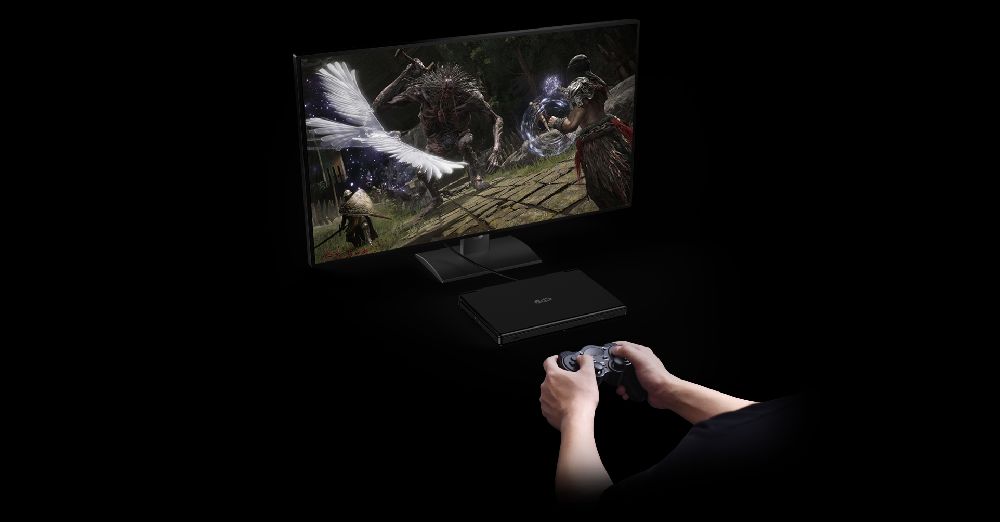
Screen size has always been a key specification for handheld game consoles, but in order to make the machine portable, the size is something that needs to be carefully considered. For example, the Nintendo Switch only has a 6.2-inch screen, while the Steam Deck uses a 7-inch screen. The larger the screen, the better the visual experience will be. Some players may think that the size of a portable device is sufficient. In the past, the screen of handheld devices was even smaller. If the games were not fun, staring at the small screen would be very hard on the eyes.
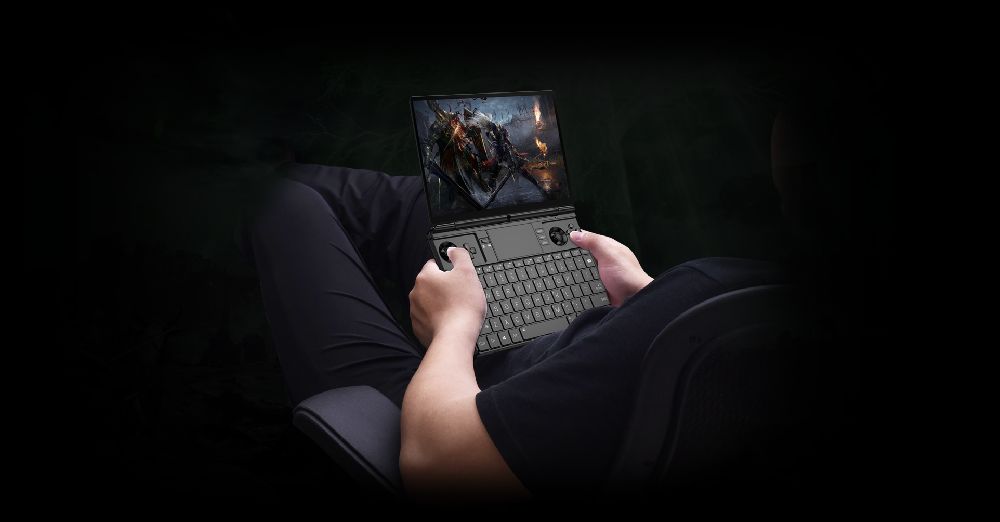
GPD’s latest new product, WIN Max 2, has a 10.1-inch touch screen with a default resolution of 1080p and a ratio of 16:10. Considering that when not playing games, WIN Max 2 is also a Netbook with only a 10.1-inch screen, so although such a screen sounds large, it looks like an ordinary small notebook screen.
In order to allow players to hold it in their hands and play, they moved the keyboard area to the outside, and placed the analog joystick, D-Pad and other buttons and trackpad in the free space, and also made shoulder keys on the back. In other words, WIN Max 2 is a two-in-one laptop that has the functions of both a laptop and a handheld computer. However, it may not be able to compete with real handhelds in terms of feel, but the idea is quite interesting and the finished product is topical. It is a product that will attract the attention of players regardless of whether it sells or not.
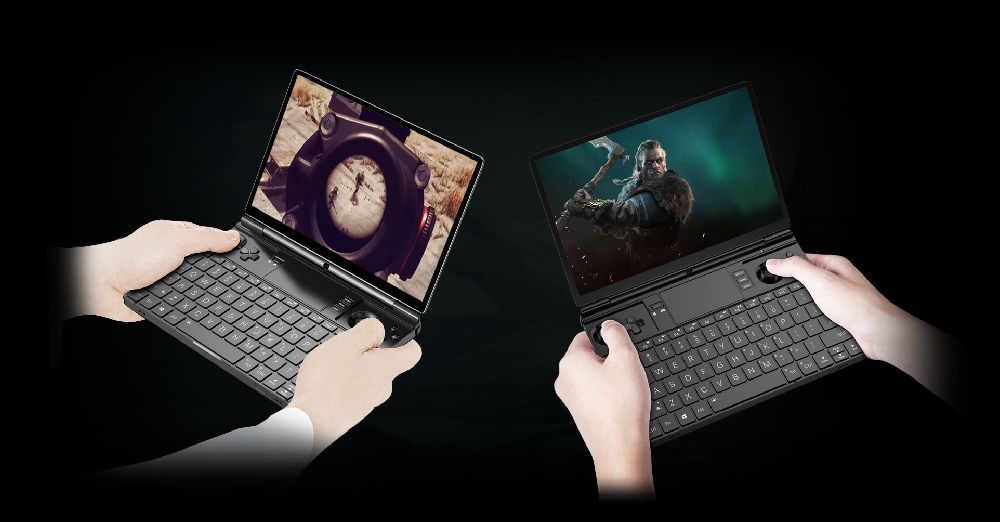
As its name suggests, GPD WIN Max 2 comes with Windows 11 as its built-in system. The processor is available in Intel and AMD versions. The Intel version uses a Core i5-1260P processor and the internal display is a Xe-LP chip with 96 CUs. The AMD version is a Ryzen 7 6800U processor and the internal graphics is a Radeon 680M chip with 12 CUs. Both versions have their own characteristics. If the competition is based on game performance, the AMD version will win the final victory. GPD WIN Max 2 is also one of the few handheld consoles currently using Ryzen 7 6000U series chips.
Currently, when GPD responded to a message from a sponsor on the product’s crowdfunding page, it revealed that they are discussing cooperation with Valve to give this handheld console with a Zen 3+ processor new operating possibilities. It is speculated that Valve may also be planning to develop the next generation of Steam Deck. Cooperation with other companies may allow Steam OS to be better optimized for more advanced hardware. The current Steam Deck only uses the Zen 2 architecture APU as the core. It is not difficult to see that Valve may continue to include AMD’s APU in component considerations when planning next-generation models.
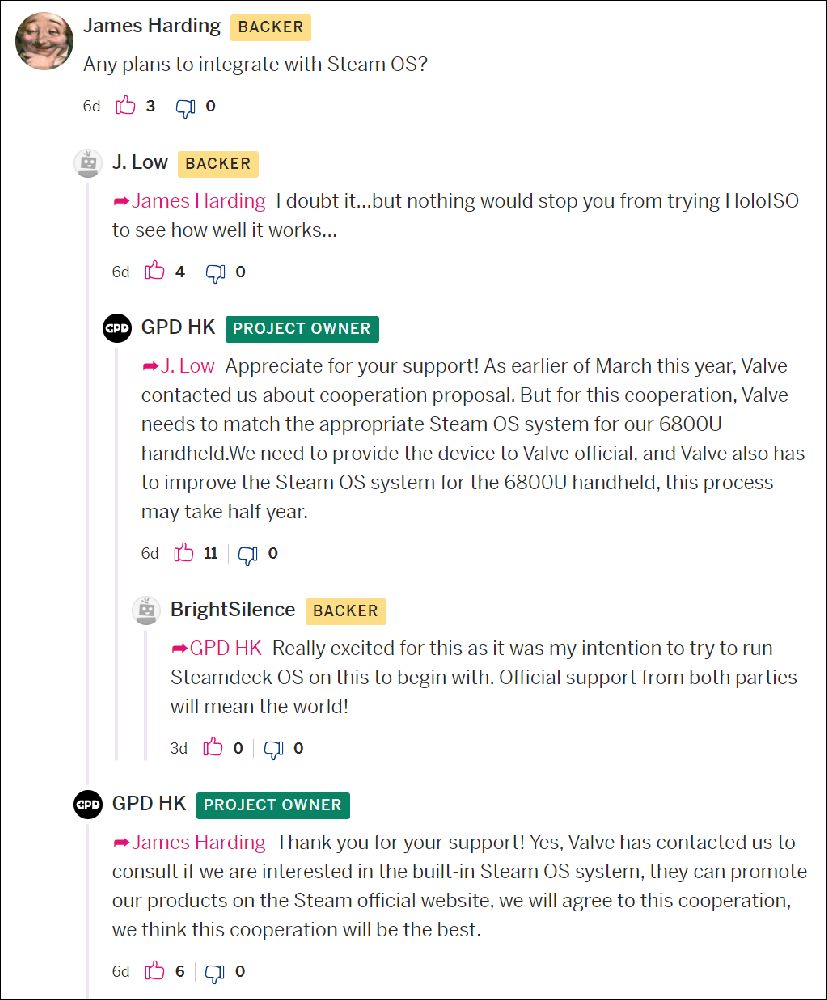
But then again, GPD will bring up Valve’s name, or it may just be a feint to carve out a piece of the pie in order to stimulate more investment, making people mistakenly think that WIN Max 2 can choose between Windows or Steam OS for gaming in the future. At present, the two parties have not officially released any news or press releases to highlight this cooperation, so there is no need to take this news too seriously for the time being. You can also think of it this way. This news is at least very helpful for GPD to promote the features of its own products, and there is no need to admit whether it is really working together to port Steam OS at this stage.
Source: KOCPC Chinese