


Agentic Vision is a key upgrade introduced in Gemini 3 Flash, enabling the model to not just “see” images but actively reason, act, and verify based on visual evidence, dramatically improving accuracy across various vision tasks. The core philosophy behind this capability is transforming visual understanding from passive recognition into “active investigation,” combining code execution with more tools planned for the future, allowing the model to solve problems through sequential exploration just like humans.
Gemini 3 Flash introduces the all-new “Agentic Vision” to enhance image response capabilities
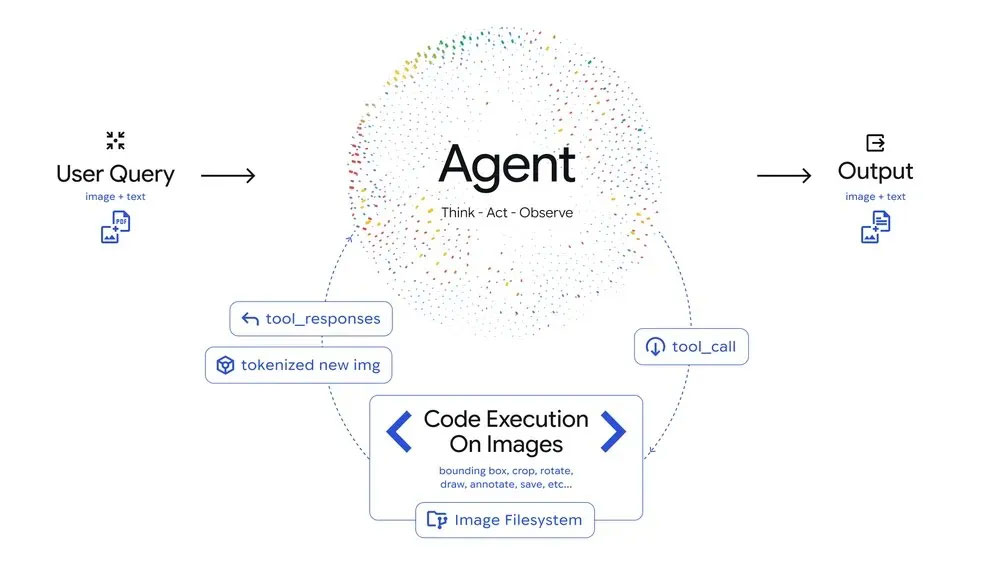
according to According to GoogleIn this new approach, Gemini 3 Flash uses images as an interactive information source and completes tasks through a “think, act, observe” loop. When a user asks a question and provides an image, the model first analyzes the query content and the initial view, deriving a multi-step processing plan. This stage is equivalent to “thinking”: the model decides which areas need to be examined, whether to zoom in on details, and whether additional computation or visual operations are needed.
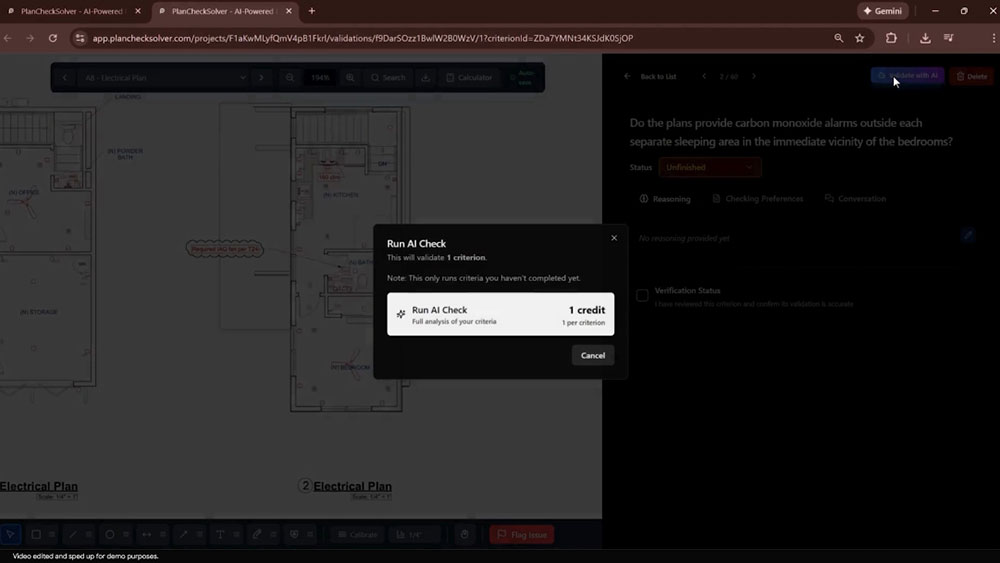
Then comes the “Action” phase. Gemini 3 Flash proactively generates and executes Python code to directly manipulate the image itself. For example, it may crop specific regions for clearer observation, rotate the image to the correct orientation, add annotations to the display, or perform more advanced analysis such as counting objects, calculating bounding boxes, measuring distances, and more. These actions no longer depend on explicit user requests, but are autonomously decided by the model based on reasoning needs.
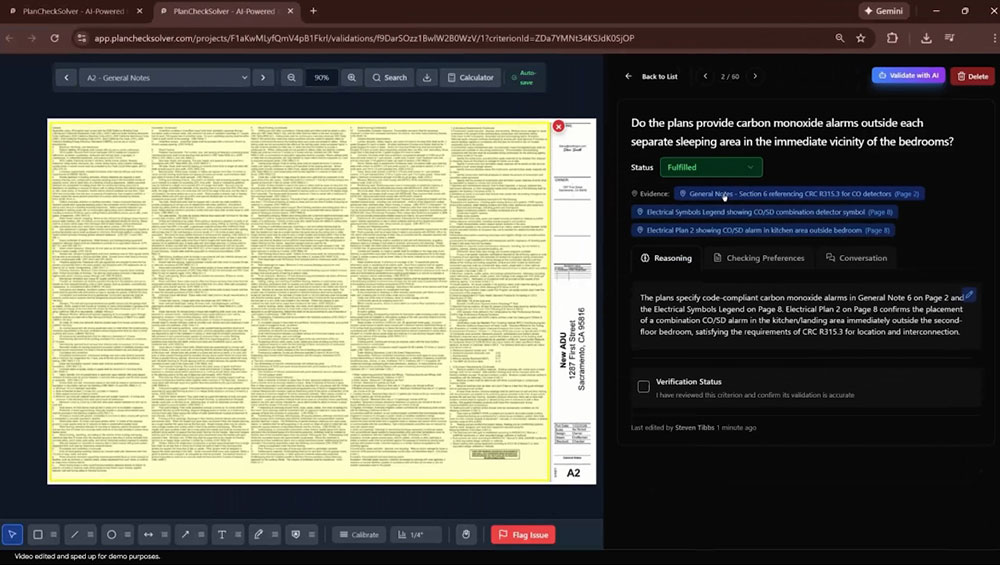
After completing the operation, the model enters the “Observation” phase. All processed, transformed, or annotated images are added to the model’s context window, enabling it to generate the final response based on a more complete information foundation. This means Gemini 3 Flash’s responses are not solely based on the original images, but rather on a series of visual evidence generated by the model itself, making the reasoning process more transparent and the results more reliable.
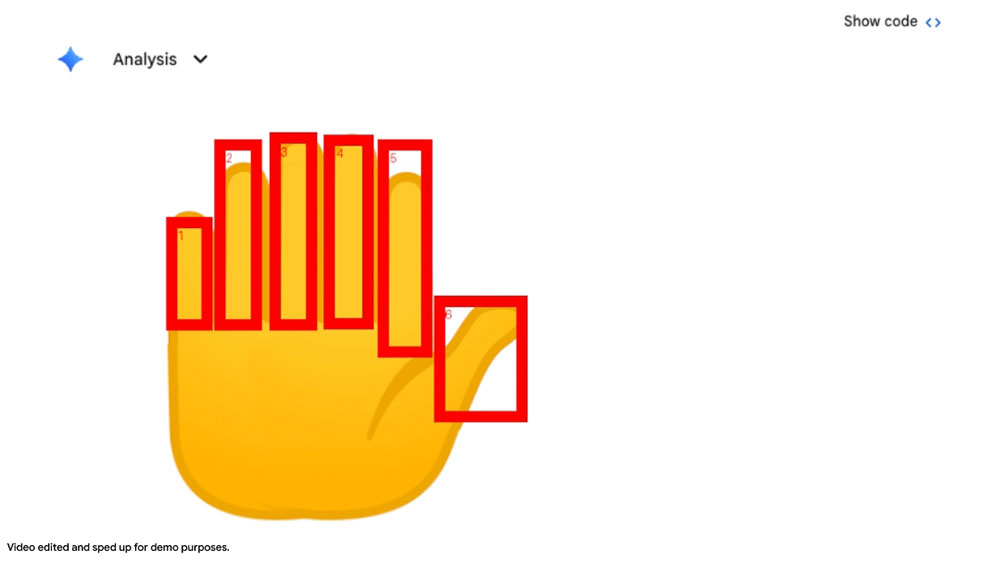
This capability enables Gemini 3 Flash to go beyond simply describing images—it can now “put its hands on the canvas” and support its reasoning programmatically. For example, in the Gemini app, the model can directly annotate fingers on an image, counting out the numbers being shown one by one. This interactive annotation is a prime example of agent vision. Beyond basic image manipulation, agent vision can also handle more complex visual information. When the model detects subtle or dense details in an image, it automatically zooms into specific areas to ensure no critical information is missed. When faced with data-dense tables or charts, the model can even execute Python code to parse the content and present findings visually, making data comprehension more intuitive.
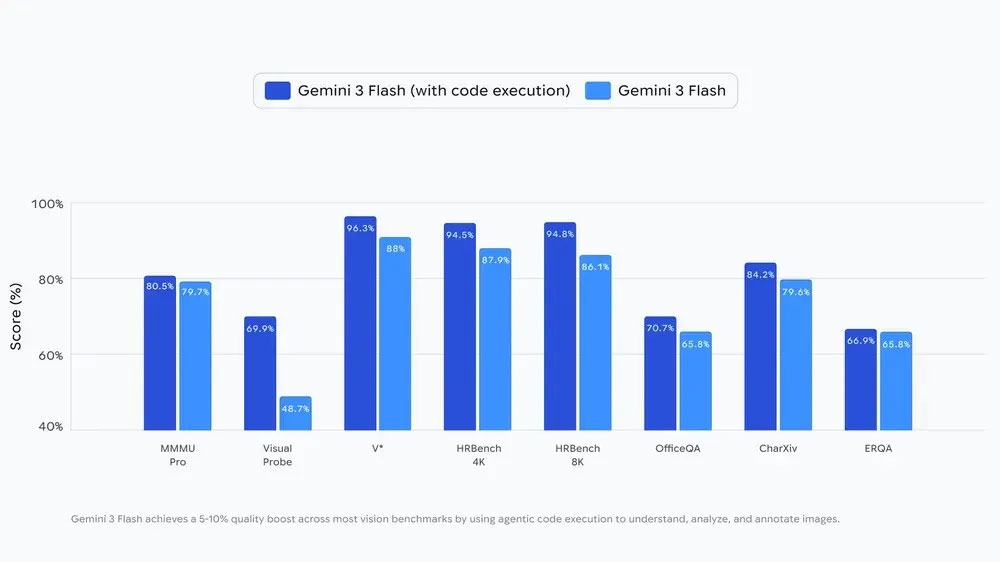
According to official testing, agentic vision with Gemini 3 Flash brings a 5% to 10% quality improvement in most visual benchmarks, demonstrating that this proactive visual reasoning can indeed effectively enhance the model’s overall performance. This capability is now being gradually rolled out to Thinking mode in Gemini applications, and is available to developers through Google AI Studio and the Gemini API on Vertex AI.
Looking ahead, Gemini 3 Flash’s Agentic Vision will become even more mature. The model will be able to rotate images with greater precision, solve visual math problems, and no longer require explicit user prompts to trigger zoom or analysis actions. In other words, Agentic Vision will be able to autonomously determine when deeper visual exploration is needed. Additionally, future tools will extend beyond code execution. Gemini will also be able to perform web searches and reverse image searches, allowing the model to supplement its visual understanding with a broader range of external information, further enhancing the completeness and reliability of reasoning. This capability is also expected to expand to other Gemini models, benefiting the entire product lineup with breakthroughs brought by Agentic Vision.
Source: KOCPC Chinese