


Google Play recently announced the launch of several new subscription and payment mechanisms, further expanding Android developers’ revenue models and business flexibility. One of the most notable updates is the introduction of more diverse subscription payment options, including a new model that can bill based on actual usage, to meet the needs of generative AI services and other new types of digital products.
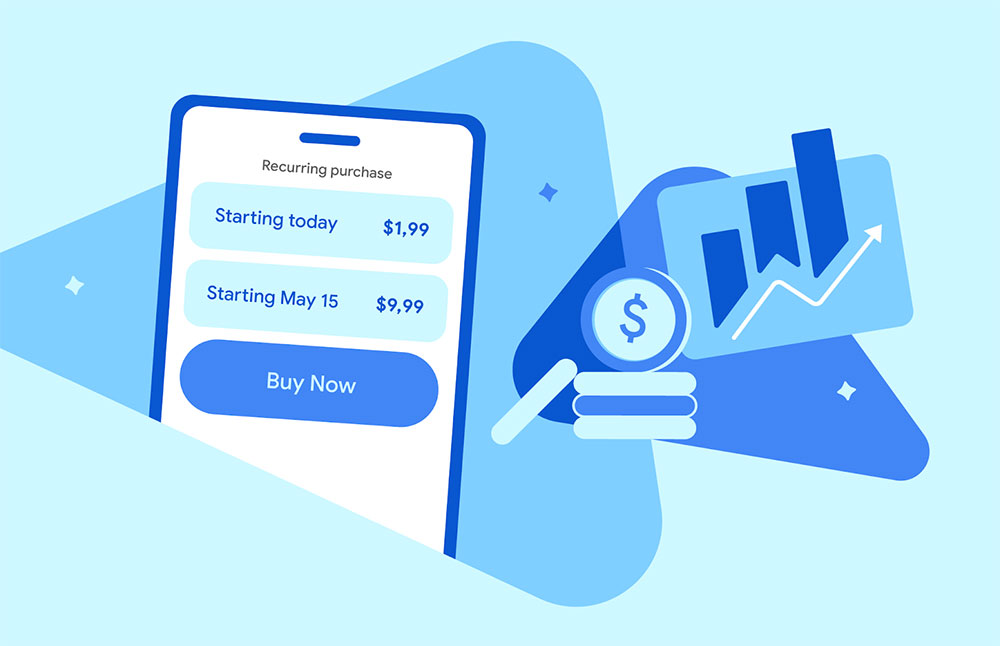
Google Play adds usage-based billing for AI apps
Google noted that with the rapid development of generative AI and as app features and service experiences become increasingly complex, the traditional fixed monthly subscription model can no longer fully meet market needs, making more flexible pricing methods necessary. The newly introduced “usage-based billing” mechanism is particularly suited to applications that require substantial computing resources or provide services based on usage frequency.

Under this model, Google introduces a mechanism called “Prepaid Metered Billing.” Users can first top up a certain amount as service credit, and when the account balance falls below a preset threshold, the system automatically completes the top-up to ensure uninterrupted service. This type of design is particularly suitable for generative AI tools, cloud services, and other digital products that need to be billed based on actual usage, allowing developers to reflect costs more accurately while making it easier for users to manage their spending.
In addition to the individual user market, Google is also targeting the needs of large organizations such as businesses and educational institutions by launching a “multi-subscription purchase” feature. Through this new mechanism, businesses, schools, or other groups can purchase multiple subscription licenses in a single transaction and then allocate them to different employees, students, or team members based on actual needs. This not only simplifies the procurement process but also helps reduce administrative costs, making it easier for organizations to deploy digital services at scale.

Another important update is the “Mixed Cart” feature. In the past, subscription services and one-time purchases usually had to be transacted separately; now, Google allows developers to sell auto-renewing subscriptions and in-app one-time products in the same cart, providing a smoother purchase experience. For consumers, this means they can purchase multiple products and services in one go; for developers, it creates more cross-selling and upsell opportunities.
For example, if a user subscribes to a premium service and also purchases related virtual goods or feature add-ons, developers can offer exclusive discounts or bundle deals to increase average order value and overall revenue performance. Google believes this integrated purchasing experience helps improve conversion rates and strengthen user stickiness.
In addition, Google has also introduced a “Cross-developer Bundles” feature, allowing different developers to collaborate on selling complementary subscription services. For example, a language learning app could partner with a travel guide service to offer a bundled subscription plan at a more favorable price than purchasing them separately. Through this cross-platform collaboration model, developers can not only expand their reach but also create a more complete value experience for users.
Google says cross-developer bundling not only applies to product collaborations between different companies, but can also be used for integrated sales of developers’ own product portfolios. Through a single purchase, consumers can obtain multiple services and enjoy greater convenience and price advantages, while developers have the opportunity to increase subscription conversion rates and long-term retention rates.

Currently, these new features have been gradually made available to developers. Some can be tried through Google’s Early Access Program, while the rest will be rolled out to more markets over time. Google hopes that more flexible subscription and sales tools will help developers respond to the rapidly changing digital services market and build business models that better meet modern consumer needs.
Source: KOCPC Chinese