


New York University mathematics professor Tristan Buckmaster announced three results in fluid dynamics proofs on Tuesday, which should have been a moment of celebration for the mathematical community. Yet the statement contained an unusual accusation: after learning of his and his collaborators’ unpublished research progress, OpenAI used massive computational resources to publish a complete proof of the same problem first. A controversy over academic integrity, the power of AI companies, and millions of dollars in computing resources erupted as a result.
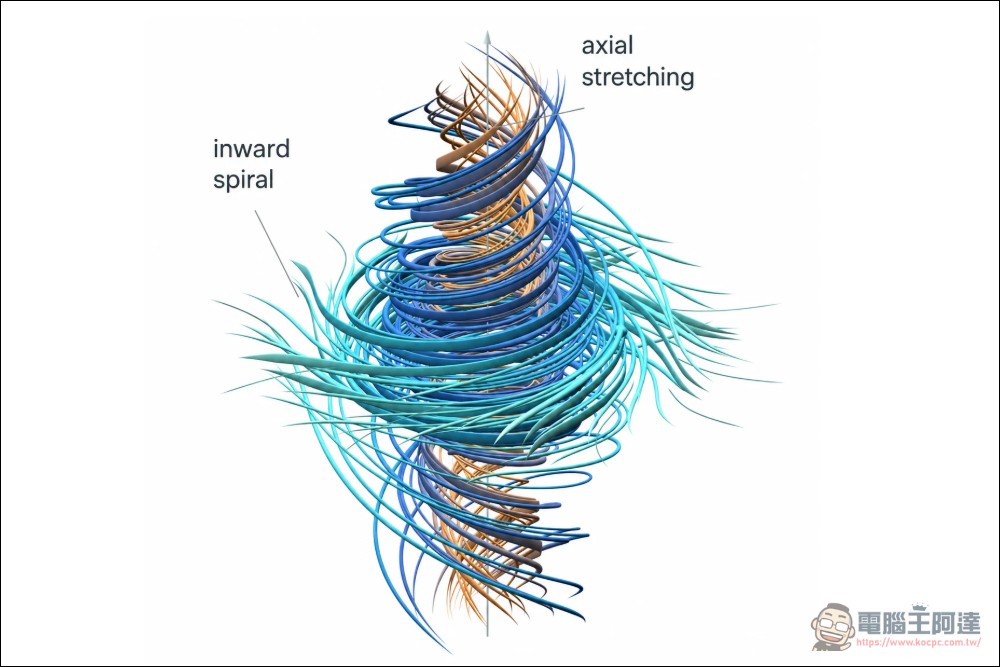
The backdrop of this event is one of the most famous problems in mathematics: the Navier-Stokes existence and smoothness problem. It is one of the seven Millennium Prize Problems established by the Clay Mathematics Institute, each carrying a $1 million reward (approximately NT$32.5 million). OpenAI claims that its unreleased next-generation model spent 88 hours coordinating about 10,000 AI agents to produce a complete proof verified by Lean. But the question is: did they reach the finish line by standing on someone else’s shoulders?
A mathematician accuses OpenAI of using massive computing power to solve a Millennium Prize problem after insiders learned of his unpublished research.
Event Origin: One Year of Research and AI Assistance
Buckmaster collaborated with mathematician Levent Alpöge, who works at Anthropic, in a personal capacity, spending nearly a year using various AI models—including OpenAI’s Codex and Anthropic’s Claude—to assist in researching the fluid blow-up problem. Although Alpöge is employed by Anthropic, this research was not conducted on behalf of the company.
By August 22 this year, the two had achieved three proofs on the relevant problem. In a statement, Buckmaster noted that they deliberately chose an unconventional research path, using smooth force to tackle the Millennium Prize Problem. “The route to the Clay problem through smooth force is one that almost no one else is studying. This is not a direction where you can feed a model a problem statement and reach it within a few days,” he wrote.
Cloud of suspicion over information leakage
In early September, the situation started to get complicated. Buckmaster said that when he and Alpöge had not yet made their results public, they learned that “information about our research progress had reached OpenAI.” When they contacted OpenAI, the company claimed it had already completed a full proof of the central problem. But when Buckmaster pressed further about when OpenAI had begun working on the problem and how many humans were involved, the answers began to become evasive. “The fact that later emerged was that an entire team was working on the problem, using an extremely insane amount of computation… In the end, both sides agreed that the original prompt had been issued only in the past few days, after information about our work had reached OpenAI,” Buckmaster said.
OpenAI confirmed this timeline in a subsequent official post, explicitly stating that the latest wave of efforts began on September 1, inspired by rumors that two Millennium Prize Problems had been solved.
We congratulate Levent Alpöge and Tristan Buckmaster on their remarkable mathematical work.
We (the researchers and the agents) did not see any of their work through any means until they released it publicly — in particular, no specific user data was accessed in order to solve… https://t.co/otJKRHnQgb
— OpenAI (@OpenAI) September 8, 2026
Concerns about Codex interaction data
Buckmaster made extensive use of OpenAI’s Codex tool during his research, feeding all research drafts into it. He specifically questioned whether OpenAI’s models had been exposed to his Codex interaction logs through training.
“I asked the model whether it had been trained on or had access to our session in Codex. I was told the model did not review user data. I asked again about training, but received no answer.” Buckmaster wrote in a statement.
OpenAI’s official response attempts to downplay this, saying that “researchers and Agents did not in any way see their work,” while also acknowledging that “although unlikely, we cannot rule out the possibility that de-identified data derived from their use of our products could help improve our models.”
Allegations of coercion and threats
The most serious allegation in the incident concerns the conduct of OpenAI researcher Sébastien Bubeck. Buckmaster claimed that Bubeck presented him with two options: first, to coordinate a joint release in which Buckmaster would publish partial results first, and OpenAI would publish the complete Navier-Stokes proof the following day; or second, for Buckmaster to write the paper independently, but with the requirement that he note the use of OpenAI’s internal models and remove Alpöge’s authorship.
Buckmaster said he rejected both proposals. When he insisted on making the controversy public, Bubeck allegedly responded, “Why would you ruin your career?” After Buckmaster fought back, Bubeck added, “If you don’t want me to be friendly, then I don’t have to be friendly.”
Bubeck and OpenAI CEO Sam Altman both publicly denied the allegations on social media. In a post on X, Bubeck called Buckmaster’s claims “false and inflammatory” and shared screenshots of conversations that he believes prove he proactively offered Buckmaster’s team the right to publish first.
A series of false and inflammatory allegations against me are currently circulating on social channels. To clarify, I came into the discussion following academic norms, and I’m disappointed that it has come to this. Anyone who knows me knows that academic standards are of the…
— Sebastien Bubeck (@SebastienBubeck) September 8, 2026
OpenAI’s response and evidence
On September 8, OpenAI officially published a complete proof of the Navier-Stokes existence and smoothness problem.Officials saidThe proof was generated by an undisclosed next-generation model that “significantly surpasses GPT-6 Astra’s capabilities.” The entire process involved about ten thousand coordinated AI agents, took 88 hours, and consumed 300 billion output tokens. At Astra’s rates, the computational cost was approximately $22.5 million (about NT$730 million).
OpenAI emphasized that the two proofs have “significant differences,” noting that even in the Euler case, the exact results of the proofs differ (forced vs unforced). The company also stated that it has no intention of claiming the US$1 million Millennium Prize reward.
The heart of the controversy: computing power is power.
Setting aside the conflicting details from both sides, this incident highlights a structural problem: when AI companies have computing resources worth tens of millions of dollars while academic researchers can only rely on limited funding and free tools, the possibility of “scooping a proof” has become a real threat. What took Buckmaster and Alpöge nearly a year to achieve, OpenAI completed in just a few days with massive computing power after learning the direction.
At the end of his statement, Buckmaster said he believed the best approach was to make as much research information publicly transparent as possible. This controversy is unlikely to fade anytime soon, as it touches on a fundamental issue in academic research in the age of AI: when computational power becomes a decisive advantage, how should the value of original thinking be measured?
Data source:1 / 2
Source: KOCPC Chinese