


As one of the largest technology companies in the world, Microsoft has continuously launched new products and services over the years while also constantly adjusting its product strategy. Some features are renamed within a short time, while others are phased out after market response falls short of expectations. For Microsoft, these changes are often decisions based on market positioning, product integration, or business strategy. However, for users, frequent brand adjustments are not necessarily always a good thing.

Microsoft’s brand renaming history is so extensive that netizens turned it into a database to record it.
Many users may have had high hopes for a new service, only to see its development halted shortly after release. Others might have just gotten used to a product’s name, only to find it rebranded in the next update. In recent years especially, Microsoft has been changing product names with increasing frequency, forcing many users to constantly readjust to new branding.
In fact, Microsoft has accumulated so many brand reinvention cases over the years that they could fill an entire database. Recognizing this trend, Microsoft Most Valuable Professional (MVP) Loryan Strant created aRebrand Registry“Brand Renaming Registry” is a website dedicated to documenting the name changes of Microsoft products over time. Through this platform, users can quickly look up the various names a product has previously used and trace its brand evolution across different periods.
Strant said he hopes this website can serve as a practical search tool while also bringing some fun to visitors. He had previously created another website, “Let Me Correct That For YouThis is a dedicated compilation of inconsistencies in Microsoft’s product naming conventions. For example, some Microsoft product names use CamelCase, such as OneDrive; but for other products, the company adopts a more traditional initial-capitalization format, such as Copilot. This inconsistency in naming logic has also become a frequent topic of discussion among many Microsoft observers.
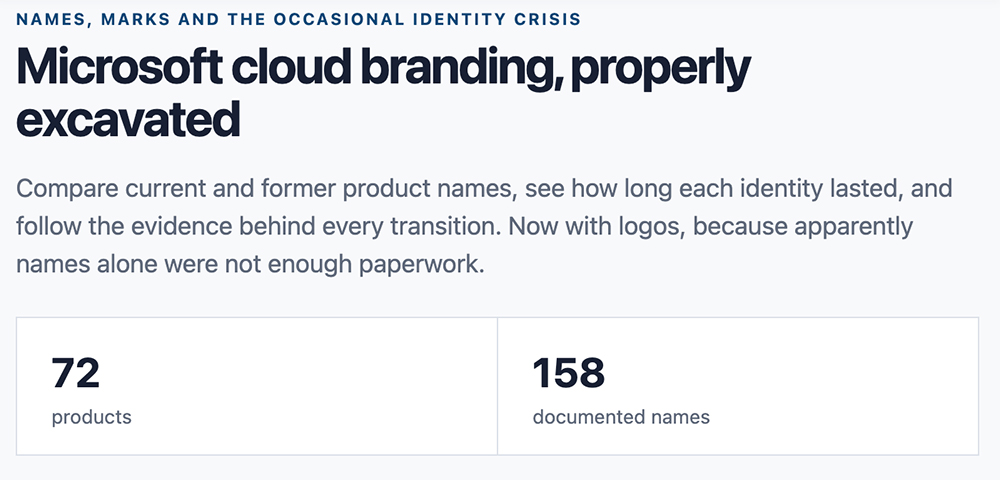
According to the website data, the “Brand Rename Registry” currently lists 72 Microsoft products still on the market, along with as many as 158 rebranding records. Notably, the site only covers existing products, so products that have been discontinued or whose services have ended are not included. From a certain perspective, if a database dedicated to recording disappeared products were to be established in the future, its content would likely be just as substantial.
Beyond serving as a historical lookup tool, the website also offers several statistical analysis features. For instance, it compiles the number of rebrandings Microsoft has undertaken each year since 2012, allowing users to clearly observe the company’s naming trend shifts across different periods. Among these, 2023 set the highest record, with 18 products or services renamed that year, making it the year with the most frequent brand adjustments in Microsoft’s history.
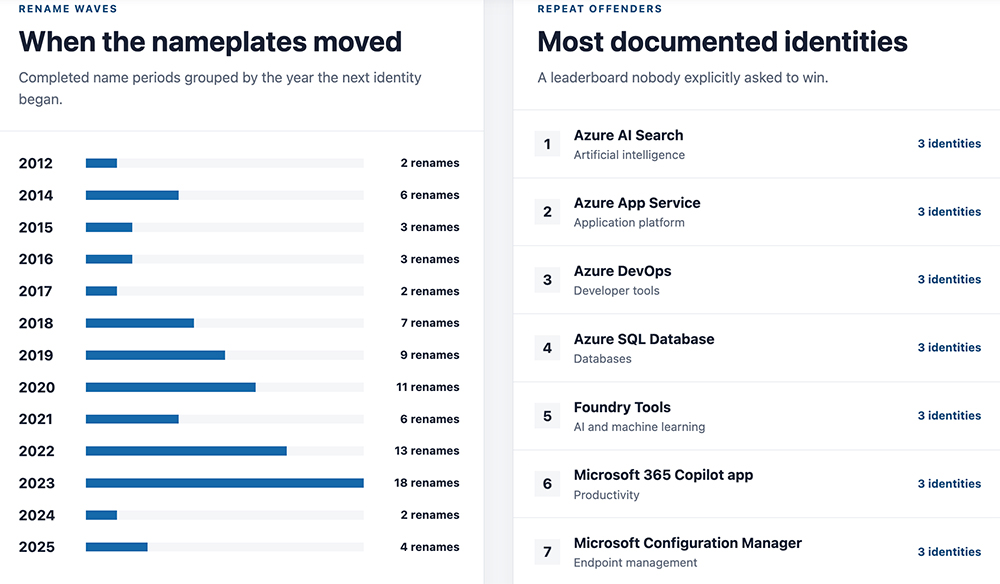
What’s more interesting is that the site also features a tool called the “Brand Rebranding Risk Index,” which tries to predict which product might be next on Microsoft’s renaming list. This metric evaluates factors such as how long the current name has been in use, how many times it has been renamed historically, and how frequently products in the same line have been renamed in the past. While the index doesn’t actually have any real predictive power, it does make for a fun talking point and entertainment tool among tech enthusiasts.
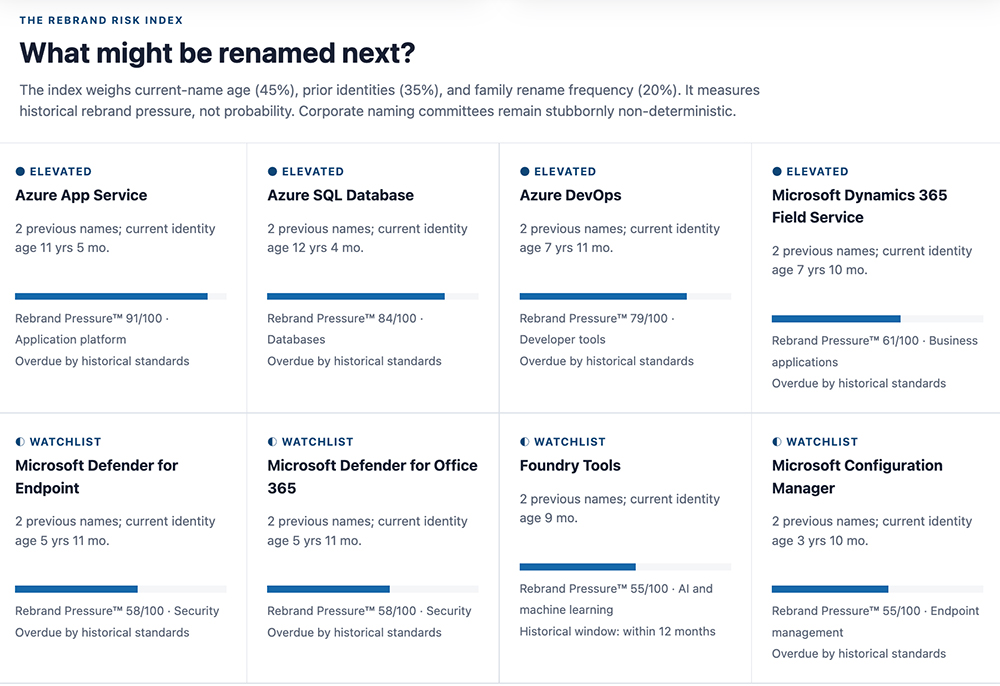
As is evident from the existence of this website, Microsoft’s brand evolution accumulated over the years has formed a unique phenomenon. When a company has enough name-change cases to warrant a full database and risk model, that in itself is quite representative. For users who have been confused by Microsoft’s product name changes over the years, the “Rebranding Registry” is not just a historical archive, but also an interesting window into the evolution of Microsoft’s branding strategy. It also gives people a fresh perspective on this tech giant’s “tradition of change” when it comes to product naming.
Source: KOCPC Chinese