


Nowadays, AI can do just about anything—translation, writing emails, drafting article outlines, helping with school homework, and more can all be handed off to AI. Using AI for the right purposes is certainly fine, but if AI is introduced into the porn industry, it creates major problems. Recently, China saw its first case where someone used AI technology to write pornographic novels for profit and was sentenced. The defendant profited around 20,000 RMB from AI and was sentenced by a Chinese court to ten months in prison, a 5,000 RMB fine, and was ordered to return the illegal gains.

China’s first case of using AI to write erotic novels for profit: defendant sentenced to 10 months in prison
Recently, the People’s Court of Dazhi City, Hubei Province, China, heard the first case involving the use of AI technology to write erotic novels for profit. The defendant, a person surnamed Ke, used AI tools to write erotic novels between November 2022 and March 2023, and used circumvention software to publish the erotic fiction on overseas pornographic websites, while also selling the novels on another website for profit.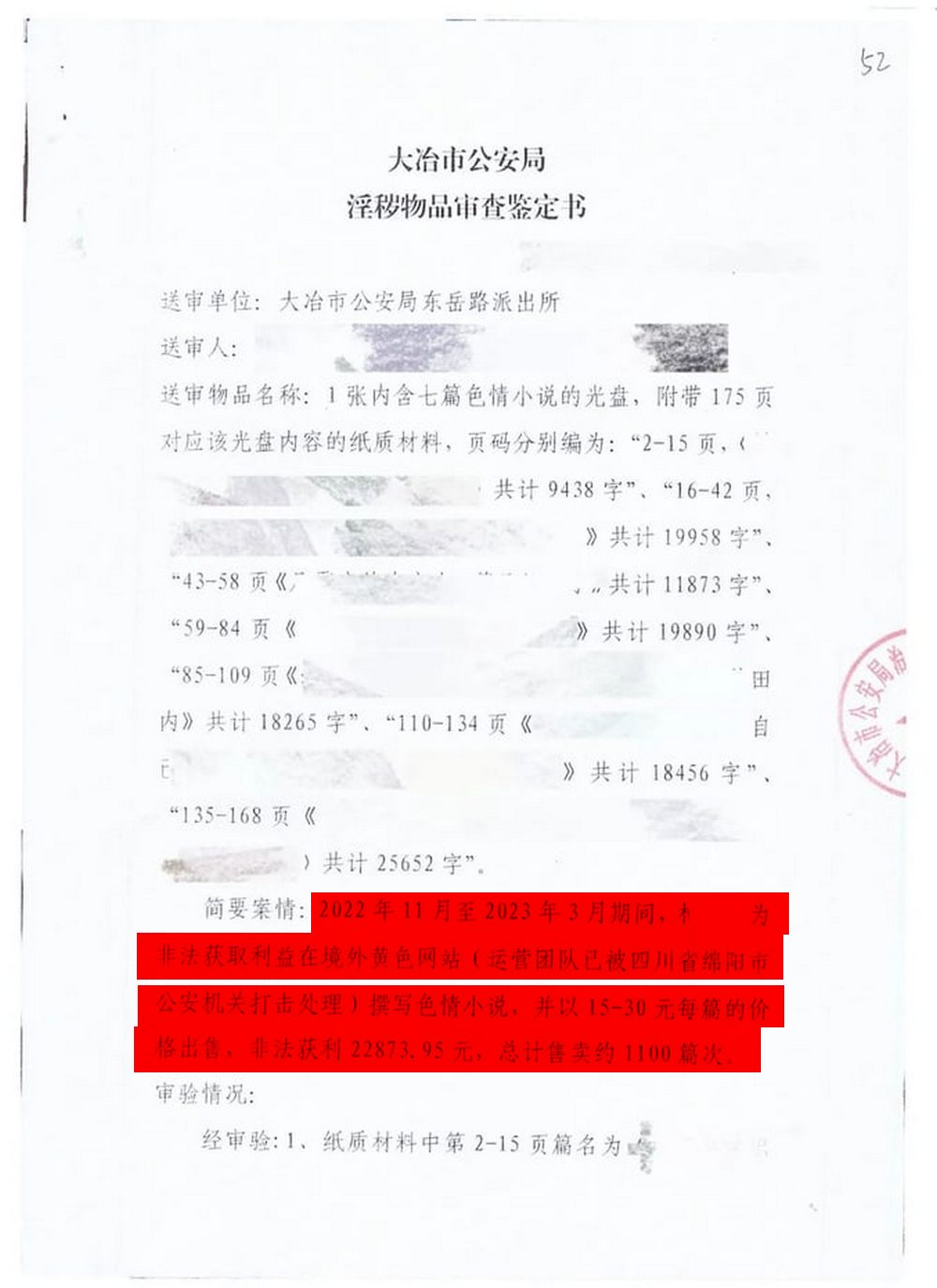
Over a five-month period, the defendant Ke published dozens of erotic novels, each priced at 15 to 30 RMB, with an average length of about 10,000 to 30,000 characters per novel. In total, he earned approximately 20,000 RMB during those five months. The novels sold by Ke were confirmed to be obscene materials after being submitted for examination and appraisal.
For the above reasons, Ke was sentenced by the People’s Court of Dazhi City, Hubei Province, China, to 10 months’ imprisonment, a fine of RMB 5,000, and ordered to return all illegal gains for the crime of producing, selling, and disseminating obscene materials for profit.

Actually, this incident is not the first case of AI being used in the adult industry; previously, South Korea has already used AI to create The incident of deepfake videos being uploaded to pornographic websitesIf AI technology cannot be reasonably regulated, it will become a highly controversial technology. China had already begun taking action on this last year.Legislation regulating AI-generated contentPeople are required to label content generated using AI. The judge handling the Ke case also called on relevant departments to strengthen regulation of AI technology and clarify the legal boundaries for its use. At the same time, they encouraged enterprises and AI developers to apply AI technology in lawful and healthy fields, promoting a balance between technological innovation and social responsibility.
Source: KOCPC Chinese